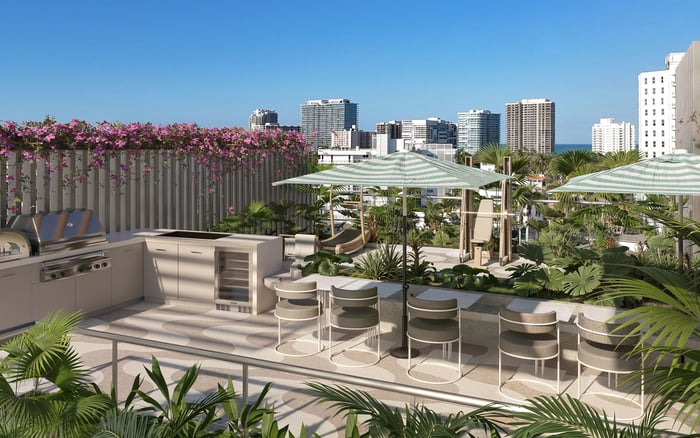
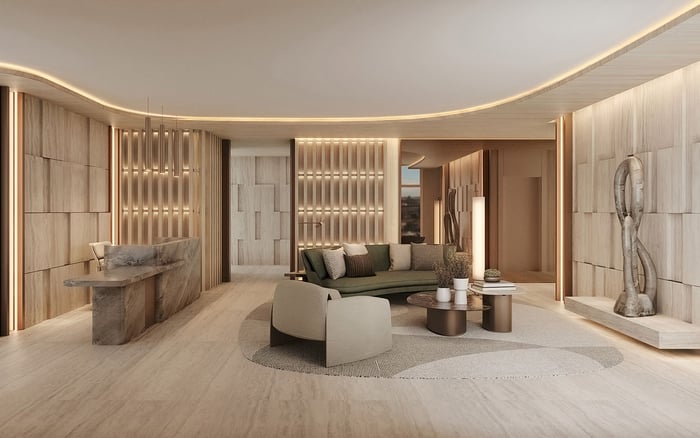
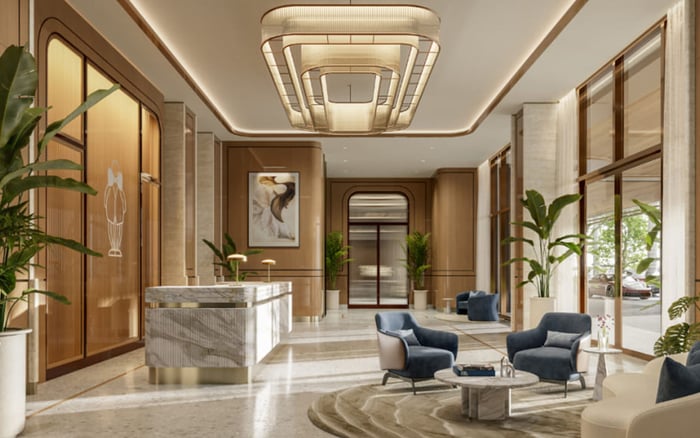
A full-time owner’s guide to comparing La Maré Bay Harbor Islands and The Residences at Mandarin Oriental Boca Raton through smart-home readiness, data privacy, and service responsiveness.
For a seasonal buyer, a residence can be judged by arrival drama, finishes, views, and the ease of occasional use. For a full-time owner, the standard is more exacting. Connectivity has to hold on a weekday morning. Access systems must be intuitive for family, staff, guests, and vendors. Maintenance must respond during ordinary routines, not just in moments of curated hospitality. Comfort systems, security, privacy, and service become part of daily life.
That is the right lens for comparing La Maré Bay Harbor Islands and The Residences at Mandarin Oriental Boca Raton. The first raises a boutique-living question: can a low-scale, intimate building support robust infrastructure and consistently responsive service for owners who live there every day? The second raises a branded-residence question: how do hotel-style operations translate into residential stability, privacy, and service priority?
In practical search language, Bay Harbor often suggests small-scale waterfront discretion, while Boca Raton may suggest branded suburban sophistication. Yet the more meaningful distinction is operational. Full-time ownership turns smart-home features from conveniences into living systems.
The first mistake sophisticated buyers can make is treating smart-home readiness as a checklist of visible devices. A residence with app-enabled controls may still lack a true integrated control backbone. For daily life, the issue is not whether one can dim lights from a phone. It is whether lighting, shading, HVAC, security, access, audio, and maintenance requests can work together reliably, without forcing owners into multiple disconnected platforms.
At La Maré Bay Harbor Islands, the essential diligence is whether the building’s boutique scale is matched by sufficiently deep technology infrastructure. Buyers should ask how residence-level systems connect to building-level systems, whether the network design supports remote work, and how issues are diagnosed when something fails. A smaller building can feel more personal, but full-time owners should confirm that intimacy does not mean thinner support.
At The Residences at Mandarin Oriental Boca Raton, the smart-home review should include a different concern: integration within a branded operating environment. The appeal of hospitality-backed living rests on smooth coordination, but owners should still clarify which systems are residential, which are shared operationally, and which vendors control long-term software and hardware decisions.
New-construction buyers should also ask whether systems are open and integrator-friendly or closed to a preferred vendor stack. The right question is not simply, “What is included?” It is, “What can I modify, who may service it, and what happens five years from now?”
For full-time residents, especially those who work remotely, connectivity is part of the residence’s utility profile. Fiber availability, in-unit Wi-Fi coverage, network equipment quality, backup connectivity options, and separation between private and shared networks should be reviewed before contract confidence replaces technical curiosity.
A high-value residence can still frustrate an owner if video calls fail in a study, terrace coverage is inconsistent, or common-area networks blur into private-use assumptions. Buyers should ask whether networking infrastructure is documented, whether equipment is owner-controlled or building-controlled, and whether upgrades require association, developer, or vendor approval.
This matters at both properties, but in different ways. La Maré’s boutique environment may offer a more intimate ownership experience, yet full-time owners should test whether that setting provides enough infrastructure depth for heavy daily use. The Residences at Mandarin Oriental Boca Raton may suggest a more layered operating platform, but buyers should confirm that residential connectivity remains private, stable, and clearly supported.
Data privacy is now a core luxury issue. In a modern residence, information can be collected through resident apps, access-control systems, cameras, smart locks, concierge platforms, package systems, and building-management software. Full-time owners generate more data than seasonal users because they interact with these systems every day.
The key questions are direct. Who owns the resident data? Which vendors can access it? How long is it retained? Is data shared across hotel, residential, developer, association, or third-party service systems? Can an owner limit permissions without losing essential functionality?
For La Maré Bay Harbor Islands, privacy diligence should focus on whether boutique service is matched by clear governance. A smaller environment can feel more discreet, but discretion should be supported by documented rules around access logs, camera footage, guest information, vendor entry, and management software.
For The Residences at Mandarin Oriental Boca Raton, privacy review deserves particular attention because branded residences may involve overlapping hospitality and residential operations. The value proposition may include elevated service, but owners should understand how guest systems, service requests, loyalty-style platforms, or hotel-adjacent workflows interact with private residential life.
Service responsiveness is where marketing language should be translated into real-world procedures. Buyers should ask about staffing hours, escalation paths, response-time standards, maintenance coverage, after-hours support, holiday staffing, and low-season staffing levels. A gracious greeting is not the same as a resilient operating model.
At La Maré, the diligence question is staffing depth. Can the boutique-service model handle routine needs, vendor coordination, after-hours requests, storm preparation, and emergency response? If an elevator issue, HVAC concern, leak, access problem, or package disruption occurs on a difficult weekend, what happens next?
At The Residences at Mandarin Oriental Boca Raton, the question is service priority. Are residential requests handled through dedicated channels, or routed through broader hotel-style operations? If hotel-style hospitality is part of the appeal, full-time owners should understand whether their daily residential needs receive clear priority and documented escalation.
The best service models are both warm and procedural. They combine human recognition with accountability, especially when an issue is inconvenient rather than glamorous.
South Florida living places pressure on buildings in ways brochures rarely capture. Full-time owners should ask how systems perform during summer heat, heavy rain, storm warnings, power interruptions, elevator outages, and peak occupancy periods. The question is not whether a building works on a perfect afternoon. It is whether it remains composed when conditions are ordinary for the region but demanding for the property.
That resilience includes physical systems and people. Are maintenance responsibilities clear? Are repair pathways documented? Are owner customizations permitted without compromising building operations? Do association documents explain technology obligations, vendor lock-in, service-level commitments, privacy language, and repair responsibilities?
For full-time ownership, these documents are not legal formalities. They are the operating constitution of daily life.
A disciplined comparison of La Maré Bay Harbor Islands and The Residences at Mandarin Oriental Boca Raton should focus on six areas: infrastructure depth, technology flexibility, privacy governance, staffing model, escalation path, and resilience under normal weekday use.
La Maré may appeal to owners who value a lower-scale, more private residential rhythm, but those owners should verify that the technology and service platform is deep enough for daily dependence. The Mandarin Oriental address may appeal to those who want branded-hospitality structure, but buyers should confirm that residential privacy and priority are protected within that broader service culture.
The more one intends to live in the residence, the less persuasive surface-level smart features become. The better question is how the building behaves when life is not being staged.
Why should full-time owners evaluate these residences differently from seasonal buyers? Full-time owners depend on connectivity, staff, access control, maintenance, and building systems every day, so small operational gaps become significant.
What is the main smart-home question at La Maré Bay Harbor Islands? Buyers should ask whether a boutique, low-scale setting has the infrastructure depth and support model needed for daily use.
What is the main smart-home question at The Residences at Mandarin Oriental Boca Raton? Buyers should clarify how branded-hospitality operations connect with private residential systems and long-term owner control.
What should buyers ask about smart-home flexibility? They should ask whether systems are open to independent integrators or limited to developer-preferred vendors and software.
Why does remote work matter in this comparison? Remote work makes fiber access, Wi-Fi coverage, network equipment, backup connectivity, and private network separation essential.
What data privacy issues deserve review? Owners should examine data collection through apps, cameras, smart locks, concierge platforms, package systems, and access controls.
Why is privacy especially important in branded residences? Hotel-style service, guest systems, loyalty platforms, and residential operations may overlap, so governance should be clear.
How should buyers test service responsiveness? They should ask about staffing hours, escalation procedures, response standards, maintenance coverage, and low-season support.
What building conditions should full-time owners ask about? Owners should review performance during summer heat, heavy rain, storm warnings, power interruptions, elevator outages, and peak occupancy.
What is the best way to shortlist comparable options for touring? Start with location fit, delivery status, and daily lifestyle priorities, then compare stacks and elevations to validate views and privacy.
When you're ready to tour or underwrite the options, connect with MILLION.
If branded residences are on your mind — as a home or as an allocation — we would be glad to share what we are seeing, privately.
Begin a quiet conversation