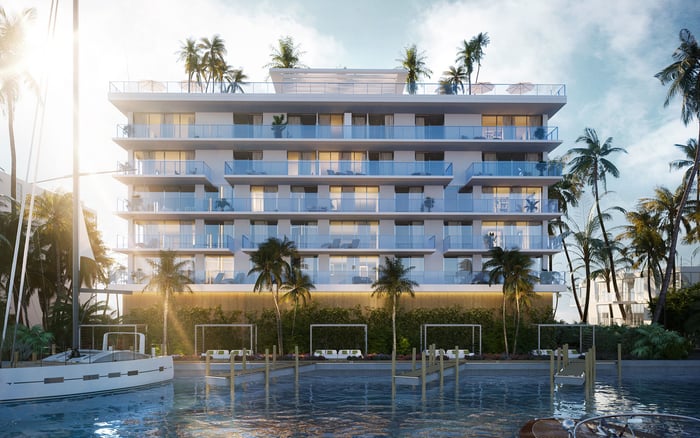
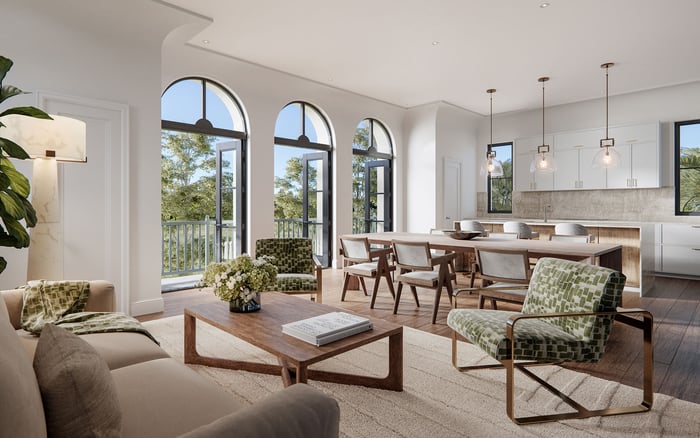
A buyer-focused due-diligence article comparing how amenity density, elevator planning, and owner control should be evaluated at La Baia North Bay Harbor Islands and The Village at Coral Gables.
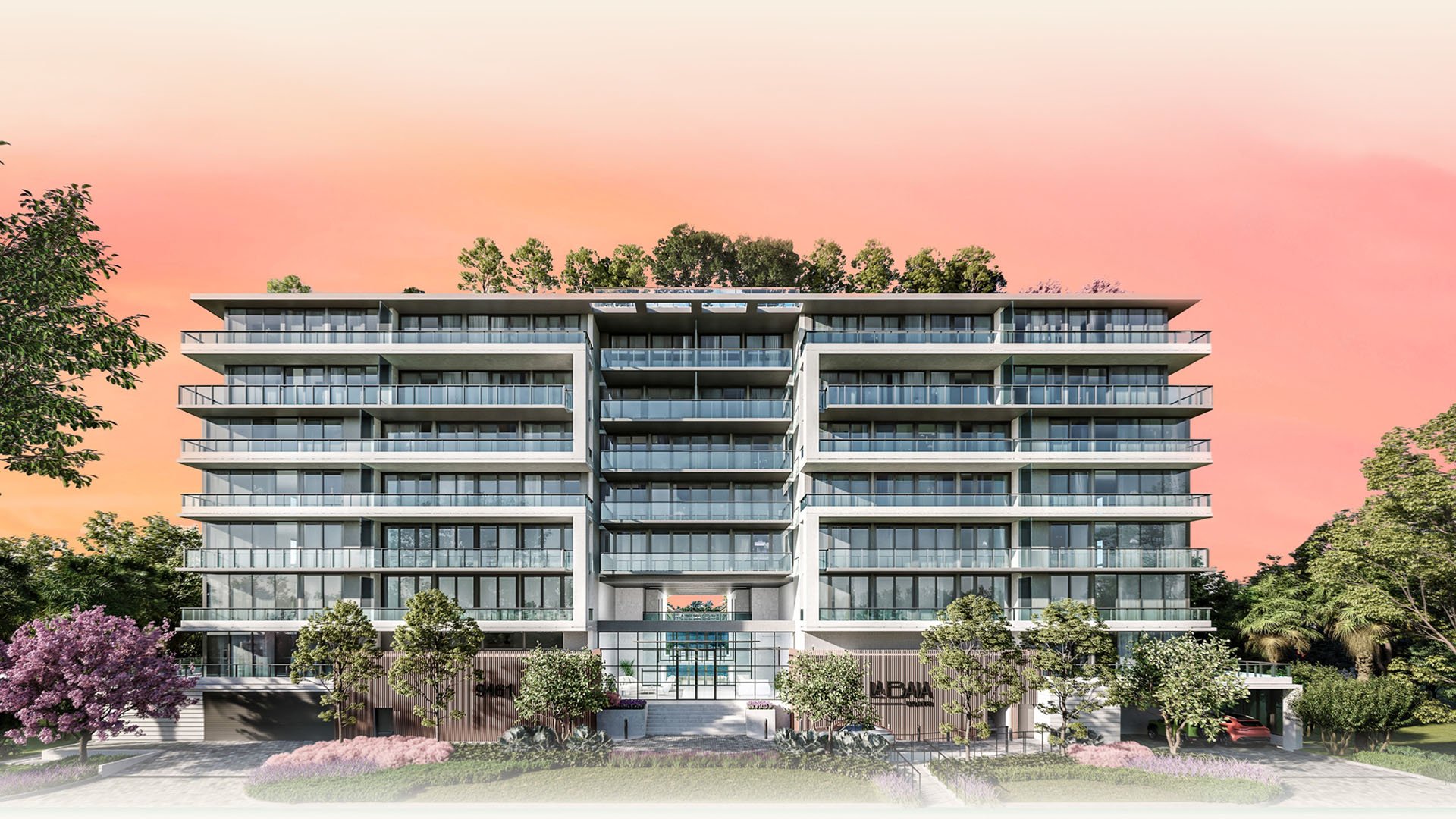
Luxury buyers often begin with architecture, finishes, views, and neighborhood identity. The more durable questions emerge later, when a residence is judged not as an image, but as a living system. Amenity density, elevator wait times, and owner control may sound operational, yet in the ultra-premium tier they shape comfort as directly as millwork, ceiling heights, or terrace depth.
That lens is especially useful when evaluating La Baia North Bay Harbor Islands alongside The Village at Coral Gables. One sits within the Bay Harbor Islands conversation, where waterfront living and boutique scale frequently drive demand. The other belongs to Coral Gables, where neighborhood fabric, walkability, and architectural continuity tend to matter as much as private interior space. The comparison is not simply Bay Harbor versus Coral Gables. It is a question of how each ownership experience performs when the building is full, the calendar is social, and the association is making decisions that affect daily life.
In new-construction luxury, amenity language can be seductive. Pools, lounges, fitness areas, wellness rooms, club spaces, and service programs are often presented as a lifestyle promise. A due-diligence buyer should translate that promise into capacity. How many households are likely to use a given space at the same time? Is the amenity intended for quiet daily use, occasional entertaining, or peak weekend demand? Does it support the way the buyer actually lives?
A smaller building with fewer amenities can feel more private if the amenity-to-residence ratio is favorable. A larger or more active community can feel effortless if spaces are layered intelligently and reservation rules are clear. The meaningful question is not whether an amenity exists. It is whether access will remain graceful during predictable moments of pressure.
For a boutique buyer, this matters acutely. Boutique living is often purchased for intimacy, discretion, and fewer shared points of friction. If a wellness space, club room, or pool deck becomes functionally scarce at the hours residents care most about, the marketing promise weakens. Conversely, restrained amenity programming can be a strength when it keeps fees, staffing, and usage patterns aligned with the actual owner profile.
Elevators rarely dominate a sales conversation, yet they are central to daily luxury. A residence can be beautifully composed, but if vertical circulation feels strained, the experience changes. Buyers should look closely at the number of elevator banks, whether service circulation is separated from resident circulation, how deliveries are handled, and how staff, guests, pets, contractors, and residents move through the building.
The most revealing questions concern peak use. Morning departures, school runs, dinner hours, holidays, service appointments, and weather events all compress demand. In South Florida, storm preparation and post-storm building operations can add another layer. A buyer does not need to predict every scenario, but should understand whether the vertical system has been planned for real residential behavior rather than average conditions.
Elevator due diligence also intersects with privacy. Direct or semi-private access, corridor length, guest routing, and service protocols can influence how protected a residence feels. For some owners, a slightly longer wait may be acceptable if privacy is elevated. For others, especially families and frequent travelers, speed and redundancy may matter more. The correct answer is lifestyle-specific.
Owner control is the least glamorous topic in a luxury presentation and often the most financially consequential. It lives in the declaration, bylaws, rules, budgets, insurance framework, reserve philosophy, leasing provisions, alteration policies, and the transition from developer control to owner governance. It also appears in the tone of management: how requests are handled, how vendors are supervised, and how consistently rules are enforced.
The best buyers treat association documents as part of the asset, not a closing formality. They want to know who controls decisions, when control changes, what expenses are anticipated, and how future capital needs may be addressed. A beautiful building with unclear governance can become less predictable. A well-run association, by contrast, can preserve both daily comfort and long-term investment confidence.
This is where the comparison between La Baia North Bay Harbor Islands and The Village at Coral Gables becomes less about which project is more visually appealing and more about ownership temperament. A waterfront-oriented buyer may prioritize dockside rhythm, privacy, and service coordination. A Coral Gables buyer may place greater weight on neighborhood integration, pedestrian life, and architectural continuity. In both cases, the association framework determines how the promise is maintained.
Bay Harbor Islands and Coral Gables are not interchangeable luxury settings. Bay Harbor Islands often attracts buyers who value a quieter island identity, proximity to the water, and a residential atmosphere that still connects easily to Miami Beach, Bal Harbour, and the broader mainland. Due diligence here should consider how arrival, parking, guest access, and service logistics preserve calm.
Coral Gables brings a different rhythm. Its appeal is often tied to civic order, mature streetscapes, dining, schools, cultural life, and a sense of permanence. At The Village at Coral Gables, the diligence lens should ask whether shared spaces, circulation, and governance reinforce that village-like character rather than simply importing a generic condominium model.
Neither context is inherently superior. The stronger choice is the one whose operational pattern matches the buyer’s week. A seasonal owner, a family with school routines, a collector who entertains, and a downsizer seeking quiet simplicity may all evaluate the same building differently.
Before a contract becomes emotional, buyers should ask practical questions in writing. What are the reservation rules for key amenities? Are there guest limits? How are private events managed? What staff roles are included in the operating budget? Which services are association obligations, and which are optional owner expenses?
For elevators, ask how residents, service providers, deliveries, and move-ins are separated. Ask what happens when one elevator is offline. Ask how peak-hour performance has been considered. If the answers are vague, the issue deserves more attention, not less.
For control, ask when owners assume governance, how budgets are reviewed, and what discretion the board has over rules, staffing, and capital planning. The most elegant projects are those where luxury is supported by clarity. The goal is not to eliminate shared ownership obligations. It is to understand them before they become lived realities.
The right residence is not only the one with the most beautiful rendering or the most expansive amenity vocabulary. It is the one where private life, shared infrastructure, and governance fit together. La Baia North Bay Harbor Islands and The Village at Coral Gables invite different lifestyle readings, but both reward the same disciplined approach.
For South Florida’s ultra-premium buyer, due diligence is not a defensive posture. It is a form of taste. It separates surface appeal from lasting ease and helps ensure that the building feels as composed on an ordinary Tuesday as it does in a presentation gallery.
Why does amenity density matter in a luxury condominium? It shows whether shared spaces are likely to feel private and usable when residents actually want them.
Is a longer amenity list always better? Not necessarily. A more focused amenity program can feel superior if it is well-scaled, well-managed, and aligned with the owner profile.
What should buyers ask about elevator wait times? Ask how many elevators serve residents, how service traffic is handled, and what happens during peak hours or maintenance.
Why is owner control important before closing? Governance affects budgets, rules, reserves, service levels, and the long-term character of the property.
How should La Baia North Bay Harbor Islands be evaluated? Buyers should study how its waterfront lifestyle, shared spaces, vertical circulation, and association structure support daily privacy.
How should The Village at Coral Gables be evaluated? Buyers should consider how its residential experience fits Coral Gables living, including walkability, neighborhood rhythm, and governance.
Can a boutique building still have amenity pressure? Yes. Even a smaller building can feel constrained if key amenities are undersized or governed by unclear reservation rules.
What documents are most important for owner control? Review the declaration, bylaws, budgets, rules, reserve approach, leasing provisions, and transition provisions.
Should seasonal owners think differently about due diligence? Yes. Seasonal use may place extra importance on management quality, guest access, maintenance coordination, and predictable rules.
What is the best way to shortlist comparable options for touring? Start with location fit, delivery status, and daily lifestyle priorities, then compare stacks and elevations to validate views and privacy.
For a tailored shortlist and next-step guidance, connect with MILLION.
If branded residences are on your mind — as a home or as an allocation — we would be glad to share what we are seeing, privately.
Begin a quiet conversation