A buyer-focused comparison of Origin Bay Harbor Islands, Mila Bay Harbor Islands, and The Village at Coral Gables through the practical lens of ownership documents, occupancy rights, and live-in help.
For South Florida buyers who employ live-in help, the most important question is rarely the most glamorous one. It is not simply whether a residence is beautiful, private, or well located. It is whether the ownership structure, floor plan, and association framework allow the household to function gracefully every day.
That makes the comparison among Origin Bay Harbor Islands, Mila Bay Harbor Islands, and The Village at Coral Gables especially nuanced. Origin Bay Harbor Islands and Mila Bay Harbor Islands are positioned in Bay Harbor Islands, while The Village at Coral Gables is positioned in Coral Gables. The locations are clear. What requires closer attention is the legal and practical framework beneath each purchase.
For a buyer with a nanny, caregiver, chef, house manager, or other live-in staff member, the correct fit is not determined by a nameplate alone. It is determined by documented ownership rights, permitted occupancy, guest and resident definitions, parking assignments, storage rights, access protocols, and the plan of the residence itself.
In the ultra-premium market, buyers often use the word “condo” as shorthand. Yet the legal model can carry very different consequences. A fee-simple condominium, a co-op, a condo-hotel structure, or a residence with unusual rental and occupancy limitations can all feel polished in a sales gallery, but they do not function identically for a family with live-in help.
The best ownership model is the one that gives the owner durable, clearly recorded rights. For live-in help, that means the governing documents should leave little room for ambiguity around who may occupy the residence, how long they may stay, whether they must be registered with the association, and whether the staff member is treated as a guest, household employee, tenant, family member, or authorized occupant.
This is not a theoretical concern. A household may need a staff member to receive deliveries, use elevators, park a car, access service areas, accompany children, care for an elder relative, or remain in residence while the owner travels. If those activities depend on informal permission, the purchase is not yet fully understood.
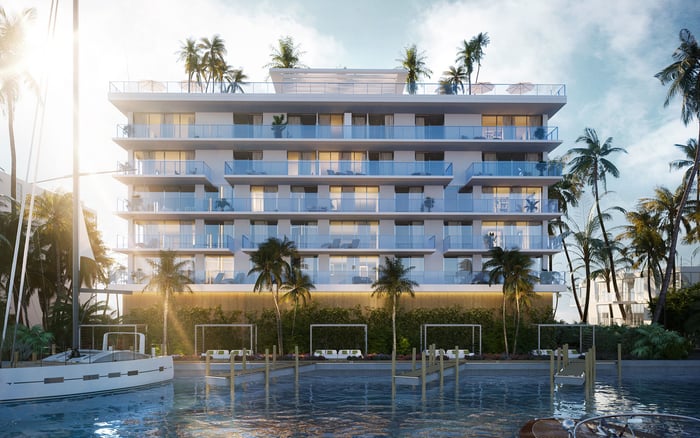
Origin Bay Harbor Islands belongs in the conversation because it is one of the three named options and is situated in Bay Harbor Islands. For buyers drawn to the Bay Harbor Islands setting, the attraction often begins with scale, discretion, and proximity to the broader northern Miami Beach and Bal Harbour orbit. Still, the live-in help question should be answered in documents, not assumptions.
For Origin Bay Harbor Islands, the buyer’s advisory team should confirm the precise ownership structure and the rules governing non-owner residents. If the residence is being evaluated as a primary home, the questions should focus on daily use: Is there a bedroom layout that gives staff privacy without compromising the family’s principal rooms? Is there an additional bath that works for staff use? Are elevator, package, access, and parking procedures compatible with a household employee who may be present independently?
If the purchase is being considered as a second home, the questions become even sharper. Can live-in help remain in the residence when the owner is away? Does the association require registration or background information for a long-term household employee? Are there rules that distinguish guests from authorized occupants? The right answer is the one written clearly enough to survive a change in board leadership or management.
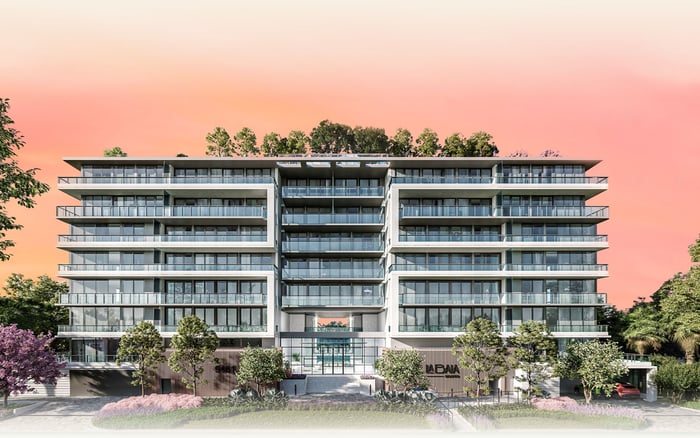
Mila Bay Harbor Islands also sits in Bay Harbor Islands and should be approached with the same discipline. The name may suggest a boutique residential experience, but boutique character is not a substitute for legal clarity. A smaller or more intimate building can be ideal for privacy, but it can also make staffing visibility more pronounced.
For a household with live-in help, the ideal Mila Bay Harbor Islands purchase would be one where the residence layout and ownership documents work together. A beautiful plan with no practical staff accommodation may create daily friction. Conversely, a more understated plan with a genuinely flexible secondary room, sensible bath placement, and clear access permissions may be more livable for a full-service household.
The key is to avoid projecting needs onto a plan that was not designed for them. A den, office, or guest room does not automatically become appropriate staff accommodation. A parking space assigned to the owner does not automatically extend to an employee. A welcoming concierge protocol does not automatically override association rules. The purchase should be tested against the household’s actual routine.
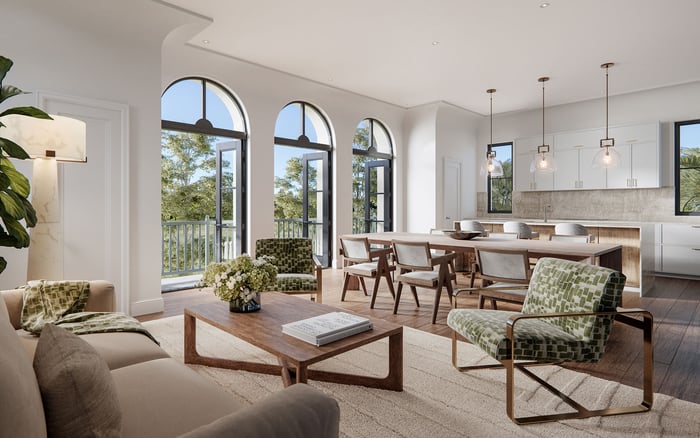
The Village at Coral Gables places the comparison in a different civic and lifestyle context: Coral Gables. For buyers who prefer Coral Gables over Bay Harbor Islands, the appeal may be grounded in neighborhood character, established streetscapes, and a different rhythm of daily life. The relevant question, however, remains the same: does The Village at Coral Gables provide a verified ownership framework that supports live-in help?
Coral Gables buyers often think carefully about permanence, household continuity, and the balance between private life and community rules. If the residence is part of a shared association structure, buyers should review the same points they would in Bay Harbor Islands: permitted occupants, minimum stay rules, vehicle rights, staff access, use of amenities, package handling, and whether household employees can be recognized in the building’s management system.
This is particularly important for families comparing new-construction residences, because design language and legal language do not always move at the same speed. A refined residential concept may be marketed with ease and elegance, but the documents must confirm whether that ease extends to the people who make a household work.
For buyers who need a condo that works for live-in help, the strongest fit is generally a straightforward residential ownership model with clear owner control, stable occupancy rights, and association rules that expressly permit the intended household arrangement. The model should not rely on short-term exceptions, informal approvals, or vague definitions.
A conventional residential condominium can be a strong candidate if its declaration, bylaws, and house rules are compatible with the intended use. A more complex model may still work, but only if the legal framework is equally clear. Any structure that blurs residence, hospitality, rental operation, or transient use deserves heightened review before a buyer assumes it can support a full-time household employee.
Long-term rentals should also be examined if the buyer may lease the residence in the future while retaining staff-related flexibility. Rental rules can affect who may occupy, how often occupants may change, and whether staff may remain tied to the residence during owner absences. Even for buyers who never intend to rent, those provisions can reveal how the association thinks about occupancy control.
The first document to review is the declaration or equivalent governing instrument. It should identify the ownership model and define the owner’s rights with precision. Next come bylaws, rules and regulations, management policies, parking exhibits, storage allocations, and any application procedures for residents, guests, and household employees.
The second review is architectural. Buyers should examine whether the plan offers a bedroom, bath, and circulation pattern that preserves dignity for staff and privacy for the family. A workable live-in help arrangement usually depends on more than square footage. It depends on adjacency, acoustics, bath access, closet space, laundry access, and the ability to move through the home without turning service into spectacle.
The third review is operational. Ask how staff are entered into the building system, whether they may receive keys or access credentials, whether they can use assigned parking, whether they can authorize vendors, and how the building treats an employee who is present when the owner is out of town. The best building for this buyer is the one where the answers are boringly clear.
Origin Bay Harbor Islands may appeal to a buyer who wants Bay Harbor living and is prepared to verify that the ownership and association documents support a staffed household. Mila Bay Harbor Islands may appeal to a buyer seeking a Bay Harbor Islands address with an intimate residential feel, provided the plan and rules align with live-in help. The Village at Coral Gables may appeal to a buyer who prioritizes Coral Gables and wants a residence whose legal and daily-use structure can accommodate household continuity.
None of the three should be judged on location alone. The correct choice is the one whose documents, plan, and management practices match the buyer’s life. For this specific use case, the winning ownership model is the most legible one: a structure that confirms who may live there, how access is handled, what rights attach to parking and storage, and how the association treats an employee who is part of the household.
In luxury real estate, discretion is often achieved through planning. The residence that works best for live-in help is not necessarily the largest or most dramatic. It is the one that lets a household operate smoothly, respectfully, and without recurring approvals.
Is Origin Bay Harbor Islands confirmed as a specific ownership model? The available project information places Origin Bay Harbor Islands in Bay Harbor Islands, but the ownership model should be verified in the governing documents.
Is Mila Bay Harbor Islands confirmed as a specific ownership model? Mila Bay Harbor Islands is positioned in Bay Harbor Islands, but buyers should confirm the legal ownership structure before relying on it for live-in help.
Is The Village at Coral Gables confirmed as a specific ownership model? The Village at Coral Gables is positioned in Coral Gables, but its ownership structure and occupancy rules should be reviewed directly.
What is the best ownership model for live-in help? The best fit is a residential model with clear owner rights, stable occupancy permissions, and rules that support the intended household arrangement.
Should buyers rely on a floor plan alone? No. A plan may look flexible, but staff accommodation also depends on association rules, access procedures, parking, and occupancy definitions.
Can live-in help stay when the owner is away? That depends on the governing documents and building policies, so the answer should be confirmed before contract deadlines.
Why do parking rights matter? A household employee may need independent access, and assigned or valet parking rules can affect daily staffing logistics.
Do rental restrictions matter if the buyer will not rent? Yes. Rental and occupancy language often reveals how the association defines authorized residents and long-term presence.
Which location is better for this buyer, Bay Harbor Islands or Coral Gables? The better location is the one that suits the family’s lifestyle and offers documents that support the household’s staffing needs.
What should be reviewed before choosing among the three? Review the ownership documents, bylaws, house rules, parking rights, floor plans, and staff access procedures before making a final choice.
For a confidential assessment and a building-by-building shortlist, connect with MILLION.
If branded residences are on your mind — as a home or as an allocation — we would be glad to share what we are seeing, privately.
Begin a quiet conversation