A disciplined framework for assessing Key Biscayne walkability, club convenience, private dining access, and the durable qualities that support future resale.

Key Biscayne offers a distinctive proposition: island privacy paired with the practical rhythm of a compact municipality. At approximately 1.7 square miles and about 14,600 residents, it has a contained, small-town character distinct from Miami’s denser urban districts. A walkability rating of 74, classified as Very Walkable, provides a useful starting point, but it cannot replace an inspection of the routes surrounding a specific residence.
Here, walkability is less about nightlife density than access to beaches, parks, daily services, and calm residential streets. Leafy blocks, bike-friendly movement, and golf-cart friendliness can reduce friction, but convenience varies by address. A home that appears close to a destination on a map may still require exposed crossings, interrupted sidewalks, limited shade, or an uncomfortable journey in poor weather.
This is where a disciplined buyer’s-guide approach matters. Walk the routes that would define an ordinary week, not an idealized vacation day. Test the journey to the beach, park, daily services, and any club you expect to use. Note realistic walking times, crossing conditions, shade, traffic, and weather exposure.
A morning visit reveals only part of the setting. Return during the afternoon and again around an evening event window. Listen for traffic and gathering noise, note curb usage, and watch for parking spillover near clubs or dining venues. The objective is to secure proximity without importing the amenity’s operational intensity into the home.
This address-level review is especially important because published walkability figures can vary substantially. The most reliable test is physical: walk the likely routes, then consider whether children, older relatives, guests, or staff would experience them with equal ease.
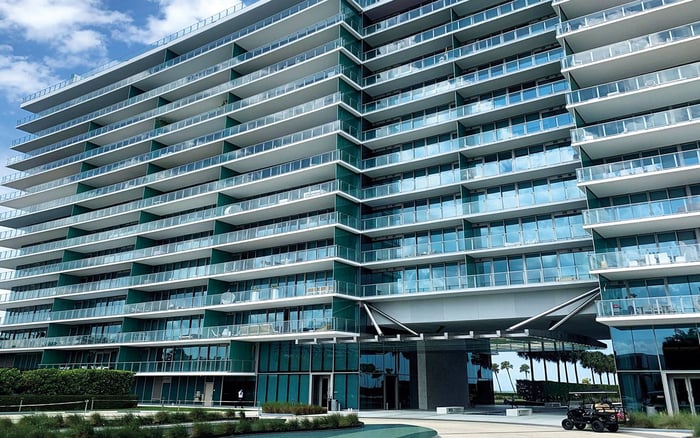
For condominium buyers, Oceana Key Biscayne can serve as one residential reference within the island’s high-end condominium market. The broader comparison should still distinguish the merits of the residence, the building, and its immediate surroundings from Key Biscayne’s general appeal.
Club proximity creates value when it supports activities a household will pursue regularly, including beach access, boating, recreation, wellness, and social events. Begin with a calendar rather than an amenity brochure. How many mornings, evenings, or weekends would the club realistically improve? Who in the household would use it, and how would guests arrive?
Confirm eligibility directly. Determine whether access is public, hotel-based, resident-only, or contingent on a separate membership. Verify application requirements, guest privileges, dining rights, recurring costs, and any practical limits before assigning value to proximity. Available details may not answer every question, and access conditions should never be assumed to transfer with a property.
Club access should remain a value filter, not the investment thesis. A future purchaser may favor privacy and quiet over an active social calendar. The strongest position is close enough for regular use yet buffered from event noise, congestion, and parking pressure.
Private dining is most compelling when it solves recurring needs: hosting without opening the residence, arranging a dependable family dinner, or accommodating guests with minimal logistics. Assess reservation reliability, service consistency, guest policies, and the actual journey from the property. A dining room that is technically nearby but difficult to book offers limited practical value.
The same reasoning applies when comparing other luxury enclaves. Park Grove Coconut Grove, The Ritz-Carlton Residences® Miami Beach, and Palazzo del Sol can frame conversations about alternative residential settings, but no project comparison replaces confirmation of access terms and daily usability at the property under consideration.
A lifestyle amenity earns its place in the purchase decision when it is repeatable, dependable, and proportionate to its cost. It should never compensate for shortcomings in privacy, building quality, or location.
Key Biscayne includes both high-end condominiums and private estates. These property types have different relationships to privacy, maintenance, shared amenities, and ease of ownership. For resale, identify the attributes that would remain desirable to a buyer with no interest in a particular club or dining room.
Durable qualities include calm, privacy, practical beach and park access, and routine convenience. Beach access should be tested as an actual route rather than accepted as a broad neighborhood benefit. Building quality and ease of management also matter, especially for a second-home buyer who may rely on staff, service providers, or deliveries.
Limited island access contributes to Key Biscayne’s privacy proposition, but it also warrants practical testing. Travel to and from the residence under different conditions, considering residents, guests, staff, service providers, and deliveries. A luxurious home should function smoothly on ordinary days, not merely present well during a scheduled showing.
First, establish whether the property works without club or dining access. Second, test walking and driving routes at several times. Third, confirm the legal and operational terms of every amenity you intend to value. Fourth, determine whether proximity introduces noise or congestion. Finally, consider the next buyer: would privacy, calm, convenience, and access to beaches or parks remain persuasive if their habits differed from yours?
That sequence preserves the pleasure of Key Biscayne while keeping the acquisition grounded. The best purchase is not necessarily the residence nearest every amenity. It is the one where daily movement feels natural, privileges are verifiable, and the underlying property remains compelling beyond a single membership or social season.
Is Key Biscayne considered walkable? It has a walkability rating of 74, classified as Very Walkable, but buyers should test routes from the exact property.
What does walkability mean on Key Biscayne? It generally centers on beaches, parks, daily services, and residential streets rather than dense nightlife.
Why should I visit at different times? Traffic, club activity, noise, and parking conditions can change materially between morning, afternoon, and evening.
Should club proximity increase what I will pay? Only if access is confirmed, the household will use it regularly, and proximity does not compromise privacy or calm.
Does nearby club access transfer with a residence? Do not assume it does. Confirm eligibility, membership requirements, guest privileges, dining rights, and associated costs.
How should private dining affect the decision? Value it for reliable hosting and repeatable service, not as a stand-alone reason to purchase the property.
Are condominiums and estates evaluated differently? Yes. They can offer different levels of privacy, amenity dependence, maintenance responsibility, and ease of ownership.
What protects long-term resale most effectively? Privacy, calm, building quality, beach and park access, and everyday convenience appeal beyond a specific club preference.
Why test island access before buying? Limited access points can affect residents, guests, staff, service providers, and deliveries under varying travel conditions.
What is the most useful final inspection step? Walk the likely routes and observe crossings, shade, traffic, noise, parking, and club activity at several times.
For a confidential assessment and a building-by-building shortlist, connect with MILLION.
If branded residences are on your mind — as a home or as an allocation — we would be glad to share what we are seeing, privately.
Begin a quiet conversation