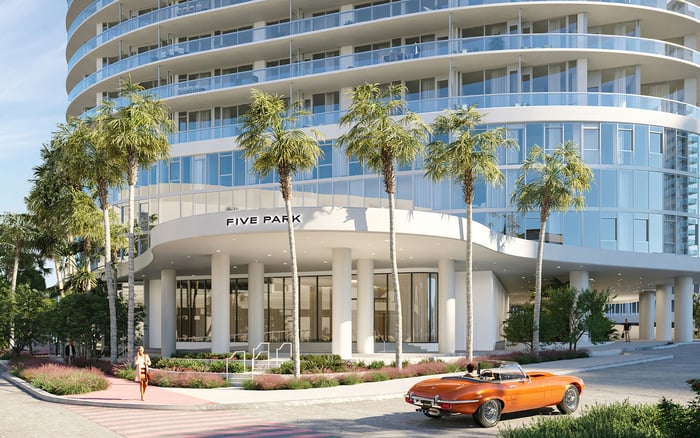
A luxury condominium purchase is also an investment in a building's financial, structural, and insurance profile. This guide explains how the condominium questionnaire can shape mortgage approval, ownership costs, and the future resale buyer pool.

A South Florida condominium may offer exceptional architecture, service, and waterfront access, but a lender evaluates more than the residence. It also reviews the condominium project. The association's reserves, insurance, delinquencies, ownership profile, litigation, commercial component, and completion status can influence whether financing is available.
A warrantable condominium satisfies the project standards applied by the relevant conventional financing program. A non-warrantable project does not meet one or more eligibility tests. That distinction can affect a buyer's mortgage options today and the depth of the financed buyer pool when the owner eventually sells.
This matters even to cash purchasers. Financing conditions can shape liquidity and negotiating leverage at resale, while association weaknesses may lead to assessments or higher carrying costs. Whether considering The Residences at 1428 Brickell or evaluating an established tower elsewhere in Brickell, careful diligence should address both the private residence and the shared enterprise behind it.
The most beautiful residence is still financially connected to the building around it.
The lender's condominium questionnaire provides a structured review of project-level risk. It commonly addresses reserve funding, assessment delinquencies, master insurance, pending litigation, ownership concentration, commercial space, construction status, phasing, and unit conveyances.
Newly completed, pre-construction, and established projects may be reviewed under different criteria. For a pre-construction acquisition, questionnaire responses can therefore be decisive even when the borrower has strong credit and substantial liquidity.
The questionnaire should not be read in isolation. Compare it with the current budget, financial statements, reserve study, Structural Integrity Reserve Study when applicable, insurance certificates, board minutes, delinquency report, litigation disclosures, and special-assessment records. In Miami Beach, a buyer comparing an oceanfront opportunity such as The Perigon Miami Beach with an established building should apply the same document discipline to each while recognizing that their underwriting reviews may differ.
Reserve funding deserves close review. Do not stop at the percentage shown in a budget. Verify the current reserve balance, the assumptions used in the reserve study, the timing and projected cost of major work, and whether planned repairs may require additional assessments. Low monthly dues are not automatically evidence of efficiency; they may reflect limited contributions or deferred maintenance.
Assessment delinquencies and concentrated ownership can also affect a lender's project review. Commercial or mixed-use space may introduce another layer of scrutiny. The applicable treatment can depend on the financing program, project structure, and lender requirements, so buyers should obtain a current project-specific assessment rather than rely on a general rule.
These are project tests, not judgments about a particular owner's wealth. A buyer considering Bentley Residences Sunny Isles should still ask how the project's current stage, ownership distribution, budget, and insurance align with the intended lender's standards. Investment planning begins with understanding which documents and conditions a future underwriter will examine.
Proof that a master policy exists is not enough. Review replacement-cost coverage, deductibles, exclusions, wind protection, and any flood coverage required for the proposed loan. Gaps in coverage or unfavorable deductible structures can complicate project approval.
Structural matters warrant equal attention. Construction-defect litigation, unresolved structural concerns, and significant code or safety issues can influence eligibility. For older South Florida towers, inspection reports, repair plans, projected costs, and reserve funding should be reviewed together rather than as separate issues.
Examine recent board minutes for discussions of inspections, concrete restoration, façade work, elevators, roofs, mechanical systems, insurance renewals, and potential capital projects. Then reconcile those discussions with the reserve study and special-assessment history. Silence in one document should not outweigh a concern identified elsewhere.
The same discipline applies beyond the immediate coastline. A purchaser exploring The Ritz-Carlton Residences® West Palm Beach should align the project's documentation with the proposed financing structure rather than assume that luxury positioning resolves project-level underwriting.
First, ask the lender whether the loan depends on conventional project eligibility, portfolio approval, or another specialized program. Individual lenders may apply additional requirements, so a rejection from one source does not necessarily eliminate every financing route. A non-warrantable unit may still qualify for portfolio or specialized financing, although choices can be more limited and underwriting may be more restrictive.
Second, request the complete association package early. Have lending, legal, insurance, and property-advisory professionals review the same current documents. Questionnaire answers can become outdated if a policy renews, litigation begins, delinquencies rise, or a board approves major work.
Third, consider contract protections appropriate to the transaction. Financing and document-review provisions should account for the time required to obtain association materials and lender approval. The precise structure belongs with qualified legal and lending advisers, particularly when deposits or construction timelines are involved.
Fourth, distinguish a curable issue from a durable constraint. A missing document may be supplied. By contrast, concentrated ownership, substantial commercial space, unresolved structural concerns, or deficient insurance may require more than administrative follow-up.
Finally, ask the resale question before buying: How would a change in project eligibility affect the next buyer's financing choices? A building that qualifies during acquisition may face a different review later if its financial, insurance, legal, or structural profile changes. Warrantability therefore belongs in the purchase analysis as both an acquisition concern and a future-marketability issue.
Warrantability is not a quality ranking, nor does non-warrantable status automatically make a residence unsuitable. It is a financing classification tied to project conditions and underwriting rules. The essential task is to understand why a project qualifies or does not qualify, which alternative financing costs and conditions may apply, and whether the building's direction supports long-term ownership.
For a discreet assessment of South Florida opportunities and the questions to raise before purchase, consult MILLION.
If branded residences are on your mind — as a home or as an allocation — we would be glad to share what we are seeing, privately.
Begin a quiet conversationIt is a condominium project that satisfies the standards applied by the relevant conventional financing program.
Future purchasers may need financing, so project eligibility can affect the size of the resale buyer pool and the owner's negotiating position.
It examines project-level matters such as reserves, delinquencies, insurance, litigation, ownership concentration, commercial space, completion, and phasing.
No. It should be compared with current budgets, financial statements, reserve studies, insurance documents, board minutes, and assessment records.
Reserves help show whether the association is preparing for major building work. Limited funding may increase the possibility of future assessments.
Elevated delinquencies can weaken association finances and may affect a lender's project-eligibility review.
A lender may view control by a single person or entity as a project-level risk, depending on the applicable program and project structure.
Review replacement-cost coverage, deductibles, exclusions, wind protection, and any flood coverage required for the proposed loan.
It may qualify for portfolio or specialized financing, but options can be more limited and underwriting may be more restrictive.
Yes. Changes in finances, insurance, litigation, ownership, structural conditions, or underwriting standards can alter eligibility before resale.