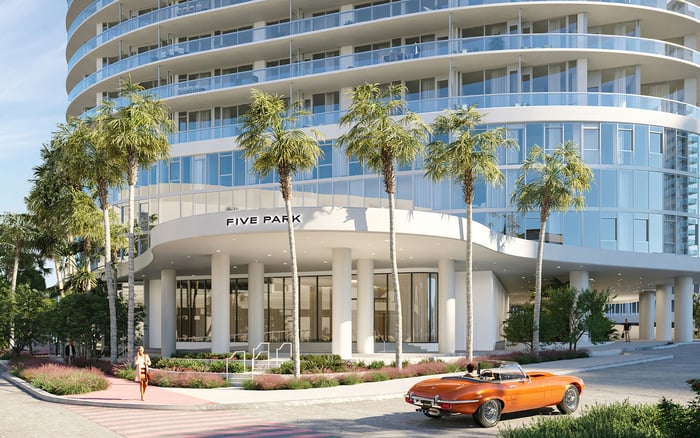
For financed penthouse buyers, the decisive luxury is not simply elevation or finish. It is an association capable of producing a clear, current package for lender review, including financial, insurance, inspection and repair records.

South Florida’s finest penthouses are usually judged by elevation, frontage, terraces and privacy. A financed acquisition introduces another measure of quality: whether the condominium project can withstand close lender scrutiny. The penthouse designation itself does not determine eligibility. The association’s finances, insurance, inspections, governance and ability to deliver documents generally matter far more.
That distinction is especially important at the upper end of the market. A spectacular residence can still prove difficult to finance if the lender encounters incomplete questionnaires, unresolved litigation, insurance concerns or uncertainty surrounding structural work. Conversely, an organized association can give a buyer, adviser and lender a clearer path through underwriting, although approval is never permanent or guaranteed.
For a financed penthouse buyer, documentary readiness is an essential form of luxury.
The strongest search therefore begins with two parallel reviews. One evaluates the residence as architecture and lifestyle; the other evaluates the building as collateral. Buyers comparing opportunities in Brickell, Miami Beach, Sunny Isles Beach and West Palm Beach should apply both standards before allowing emotion to shape contract terms.
A condominium review can extend well beyond the penthouse. Depending on the lender and loan structure, the review may consider the association questionnaire, operating budget, reserves, master insurance, inspections, litigation, owner delinquencies, occupancy composition and ownership information. Other project characteristics may also affect the lender’s assessment.
The strongest candidates for a finance-conscious search are associations that can promptly produce governing documents, current financial statements, reserve information, inspection records, insurance policies and litigation details. Speed is useful, but consistency matters more. Figures and disclosures should align across the questionnaire, budget and supporting records.
Reserve funding deserves particular attention because it can indicate how an association is preparing for major obligations. Inspection records, documented repair plans and related funding decisions also can affect a lender’s view. Buyers should ask not merely whether an inspection occurred, but whether the resulting work, decisions and timelines are clearly recorded.
Master insurance is not simply a closing-table formality. Coverage terms, deductibles and the relationship between the building’s policy and the owner’s policy may all become part of lender review.
This makes insurance analysis essential before a buyer treats any building as finance-ready. Policies, deductibles and lender standards can change between offer and closing. The same is true of reserves, assessments, litigation and repair conditions. A recent financed sale may suggest that the association is familiar with lender requests, but it does not establish approval for another residence, borrower or bank.
The discipline remains the same across different luxury settings. In Brickell, a buyer considering The Residences at 1428 Brickell can use the project as a starting point for residence-level discovery, then request the available association package for independent lender review. The project link supports discovery; it does not represent current loan eligibility.
For a Miami Beach search, The Perigon Miami Beach illustrates how buyers can pair design-driven exploration with an equally deliberate financing file. This approach keeps aesthetics and underwriting in separate but coordinated workstreams.
The same principle applies to oceanfront options in Sunny Isles Beach. Buyers exploring St. Regis® Residences Sunny Isles should verify current documents and lender requirements rather than infer financeability from branding, construction status or price point. Farther north, The Ritz-Carlton Residences® West Palm Beach offers another context in which project and borrower reviews should begin together.
Across each market, the best penthouse is the one that satisfies the buyer’s lifestyle criteria while surviving real-time scrutiny from the chosen lender. No project name, location or amenity package can substitute for that review.
The borrower’s documentation will depend on income structure, residency, assets, intended use and the lender’s requirements. Salaried, self-employed and foreign-national buyers should identify the relevant documentation early rather than assume that one standard file applies to every applicant.
Potential routes can include conventional bank mortgages, portfolio or private-bank loans, and non-bank financing. Portfolio and private-bank structures may be considered when a buyer’s assets, companies or trusts require a more individualized review. Terms remain specific to the lender, borrower, residence and condominium project.
For an investment property, a DSCR program may evaluate property cash flow as a central part of qualification. Documentation and eligibility still vary, so buyers should confirm requirements directly with the selected lender. Non-bank financing may offer another route when a traditional bank structure is unsuitable, but its terms require careful comparison.
A prudent buyer should seek lender prequalification and request the available condominium package before making or finalizing an offer. The lender, attorney, insurance adviser and real-estate adviser can then identify issues while the buyer still has negotiating leverage.
Contract terms should be reviewed with qualified advisers and should reflect the buyer’s intended due-diligence and financing process. This is particularly important when a penthouse has unusual attributes that may affect valuation or insurability. The objective is not to eliminate every variable, but to expose material variables early enough to price, structure or decline the transaction intelligently.
A practical pre-offer file can include the association questionnaire, governing documents, current financials, reserve information, master insurance, inspection records, repair plans, assessment information, litigation disclosures and delinquency data when available. Borrower documents should advance simultaneously. Parallel preparation helps prevent a beautiful residence from outrunning the practical requirements of its financing.
For discreet guidance on aligning a South Florida penthouse search with disciplined due diligence, connect with MILLION.
If branded residences are on your mind — as a home or as an allocation — we would be glad to share what we are seeing, privately.
Begin a quiet conversationNo. Financing readiness depends on the residence, borrower, condominium project and lender review rather than penthouse status alone.
It may cover the association questionnaire, finances, reserves, insurance, inspections, litigation, delinquencies and other project information.
Buyers can request available governing documents, current financials, reserve information, inspection records, insurance policies and litigation details.
Reserves can indicate how an association is preparing for major obligations. The lender may review both the available information and its consistency with other records.
Yes. Coverage terms, deductibles and related owner-policy requirements may be relevant to lender review.
Requirements vary, but the lender may request personal and business financial records. The buyer should confirm the exact file with the selected lender.
The required identification, income and asset documentation depends on the lender and loan structure. Early confirmation can help prevent avoidable delays.
It may be relevant to an investment property when the lender evaluates property cash flow as a central part of qualification.
No. Each lender, borrower, residence and condominium project is subject to its own review.
The review should begin early, ideally alongside lender prequalification and before the buyer finalizes an offer.