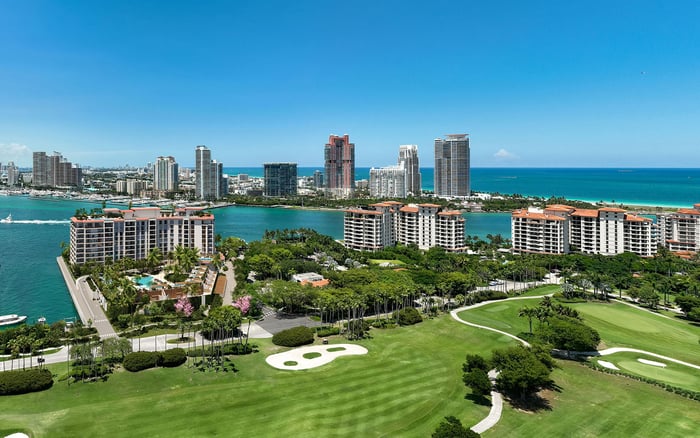
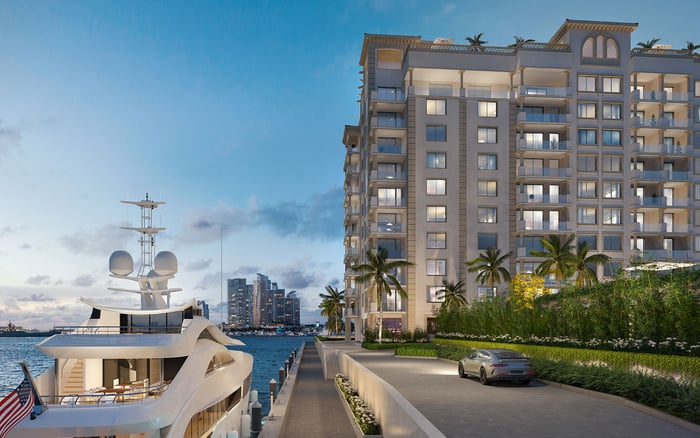
A discreet look at how The Residences at Six Fisher Island may appeal to art collectors and designers through privacy, seclusion, and Fisher Island’s residential character.
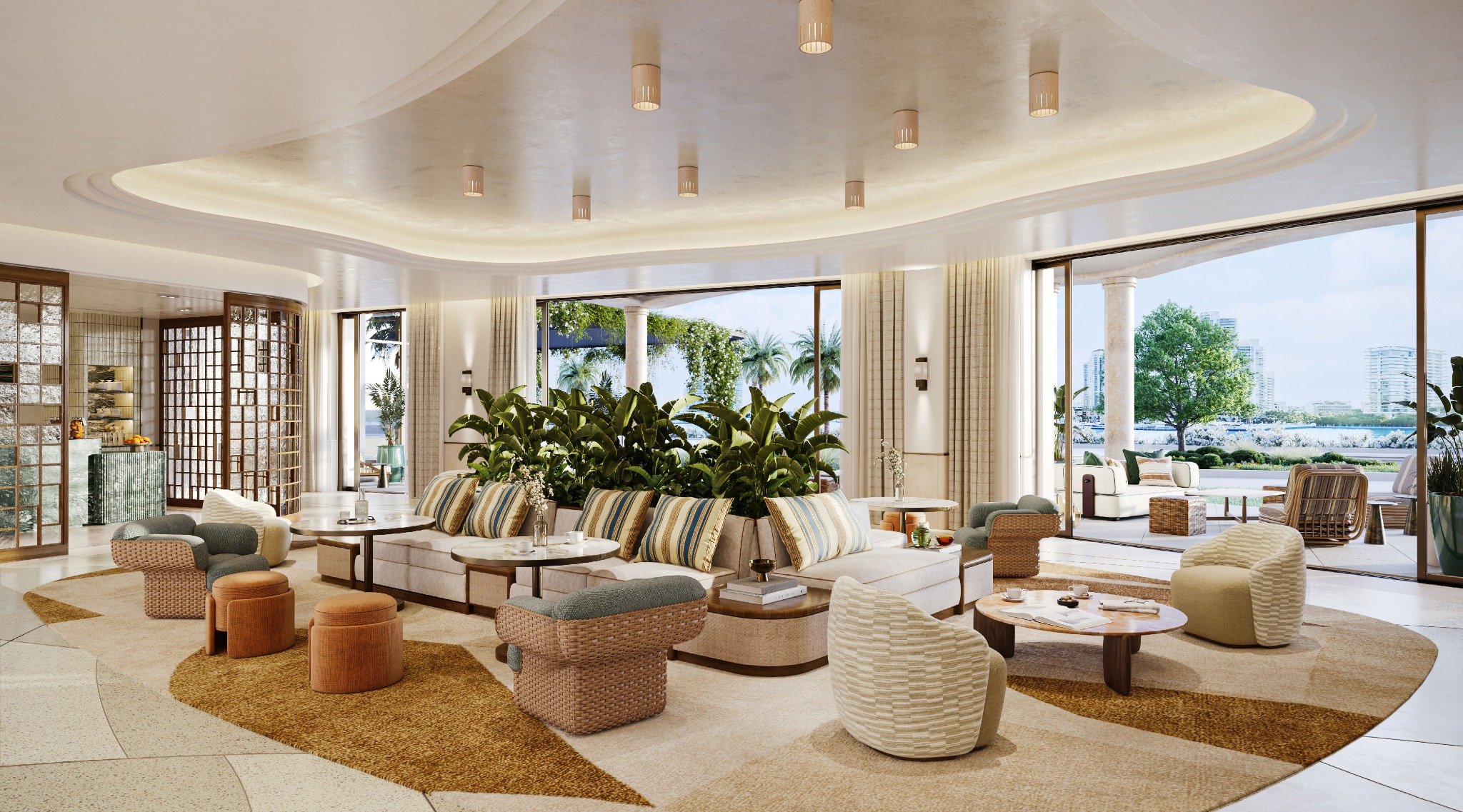
For art collectors and designers, the most compelling residential question is rarely limited to finishes. It is about control: control of arrival, control of atmosphere, control of privacy, and control of how a home frames objects, materials, and daily rituals without unnecessary exposure. That is where The Residences at Six Fisher Island becomes especially interesting.
The project is best understood through its Fisher Island context and the privacy expectations that often shape this part of the South Florida luxury conversation. Rather than relying on unverified claims about art storage, lighting systems, gallery programming, or collector services, the more useful reading is architectural and lifestyle based. The building may suit collectors and designers because of what Fisher Island represents in the buyer imagination: seclusion, a composed residential environment, and a setting removed from the more public rhythms of mainland Miami.
For a Fisher Island buyer, privacy is not an accessory. It is often the organizing principle. That matters for owners who live with important works, custom furniture, archival materials, rare books, collectible design, or simply interiors that require calm and continuity.
A serious collection changes the way a residence is evaluated. Art is not only displayed. It is protected, rotated, documented, insured, moved, photographed, loaned, and sometimes kept deliberately out of view. Even when a home is not conceived as a private museum, a discreet setting can make the practical life of collecting feel more manageable.
The Residences at Six Fisher Island appears strongest through that lens. Its Fisher Island context suggests a different emotional register from a high-visibility urban tower. A collector may value a home where guests arrive intentionally, everyday access feels contained, and the broader environment supports a quieter kind of ownership. That does not require a building to advertise art-specific amenities. In fact, many collectors prefer the opposite: discretion over spectacle, privacy over programming, and flexibility over branded declarations.
Designers may read the opportunity similarly. A restrained island setting can support interiors that are less reactive to trend and more focused on proportion, material, and long-term composition. The result may be a residence where the art is not competing with the address, but conversing with it.
For interior designers, an ultra-luxury residence on Fisher Island can invite a specific kind of brief. The most successful rooms for collectors are rarely crowded with gestures. They tend to prioritize negative space, strong circulation, careful wall relationships, controlled sightlines, and moments of pause. Whether the owner favors postwar painting, contemporary photography, collectible seating, or minimal sculpture, the home must give each object enough room to breathe.
Because the central story around The Residences at Six Fisher Island is privacy and controlled island living, the design opportunity should be understood as a framework rather than a promise of specific features. A designer evaluating the project would likely ask practical questions: How does the arrival sequence feel? Where can art be viewed from multiple angles? Which rooms should remain intimate, and which can carry larger works? How can lighting, humidity, framing, and wall systems be customized after purchase? Those are owner-led and designer-led decisions, not assumptions to attach to the building.
That distinction is important. The project’s appeal to design-minded buyers is not that it can be reduced to a checklist. It is that the setting may give a skilled team the privacy and composure needed to create something deeply personal.
Fisher Island occupies a rare position in South Florida’s luxury map because it is close to Miami while feeling set apart from the mainland. For collectors who move between dinners, fairs, openings, and private previews across the region, that duality can be powerful. The island can offer proximity without the same sense of everyday visibility.
Within that context, The Residences at Six Fisher Island sits among a small group of residential names that buyers may consider when thinking about privacy-led ownership. A client comparing The Links Estates at Fisher Island with condominium living might be weighing land, vertical living, maintenance preferences, and how much separation they want between home and public life. Similarly, references such as Palazzo del Sol and Palazzo della Luna help frame the broader Fisher Island conversation, even when each residence must be judged on its own merits.
For buyer search behavior, names such as Palazzo del Sol Fisher Island and Palazzo della Luna Fisher Island often sit close to The Residences at Six Fisher Island in the same luxury mental map. The common thread is not sameness. It is the island’s composed environment and the premium many buyers place on discretion.
South Florida offers many forms of high-end living, and not all of them serve the same personality. A buyer drawn to the social energy of Miami Beach may study a project such as The Perigon Miami Beach for a different kind of coastal experience. A collector who wants skyline energy might look elsewhere. A designer working with a client who values privacy above all may find Fisher Island more aligned with the emotional tone of the brief.
This is where The Residences at Six Fisher Island distinguishes itself conceptually. Its value to art and design audiences is not about being louder, taller, or more performative. It is about the possibility of a quieter residential life, one where the home can function as a sanctuary for objects and ideas.
For some owners, the most luxurious room is not the most decorated one. It is the room where a painting can be seen properly in morning light, where a sculpture has enough surrounding silence, where guests experience a sequence rather than a reveal, and where the interior feels protected from the outside world.
The best way to evaluate The Residences at Six Fisher Island is with a disciplined eye. Collectors should avoid assuming the existence of specialized art infrastructure unless it is confirmed in the purchase process. Instead, they should focus on what can be assessed directly: privacy, access, residence configuration, wall potential, ceiling conditions, service movement, installation logistics, and the ability to tailor interiors with a trusted design team.
Designers should approach the building as a potential canvas. The Fisher Island setting may support a slower, more considered design language, but the strength of any finished residence will depend on the owner’s program and the quality of execution. If a home is intended to hold significant works, the design process should involve art advisers, lighting consultants, conservation-aware planning, and careful coordination long before move-in.
That is the quiet promise of this address. Not a claim that it is purpose-built for every collector, and not a statement that every designer will read it the same way. Rather, The Residences at Six Fisher Island may appeal to those who believe the finest interiors begin with privacy, restraint, and control.
As a New Project in the ultra-premium conversation, it will likely be judged less by noise than by nuance. For the collector who wants a residence that supports discretion, and for the designer who wants a setting with calm authority, Fisher Island remains one of South Florida’s most compelling canvases.
Is The Residences at Six Fisher Island an ultra-luxury residential project? It is positioned in the South Florida ultra-luxury residential conversation on Fisher Island.
Why might it appeal to art collectors? Its strongest supported appeal is the Fisher Island setting, which may suit collectors who value discretion and a composed residential environment.
Does the project have confirmed art-specific amenities? No art-specific amenity should be assumed from the available information. Buyers should verify any specialized storage, lighting, or handling features directly.
Why is Fisher Island relevant to designers? Fisher Island can support a calmer design brief because the setting is often evaluated through privacy, restraint, and residential composure.
Is privacy the main design advantage discussed here? Yes. The most grounded angle is privacy, rather than unverified claims about galleries, services, or technical systems.
Should collectors involve advisers before purchasing? Yes. Art advisers, lighting consultants, and conservation-aware specialists can help determine whether a residence suits a specific collection.
How should designers evaluate the interiors? They should study circulation, wall opportunities, sightlines, lighting potential, and how the residence can be customized after purchase.
Is The Residences at Six Fisher Island comparable to every Miami luxury tower? No. Its Fisher Island context suggests a quieter, more private lifestyle than many highly public urban or beachfront settings.
Can the building work for minimalist interiors? It might, especially for owners who want restraint and negative space. The final result depends on the residence plan and design execution.
What is the key takeaway for buyers? Treat the project as a privacy-led canvas, then verify all residence-specific details before making collection or design decisions.
To compare the best-fit options with clarity, connect with MILLION.
If branded residences are on your mind — as a home or as an allocation — we would be glad to share what we are seeing, privately.
Begin a quiet conversation