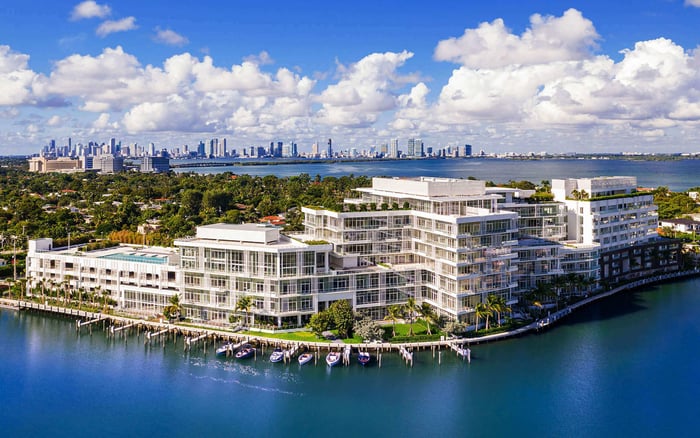
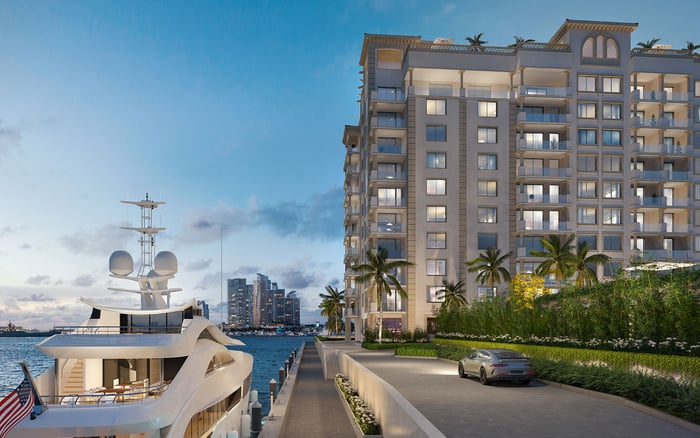
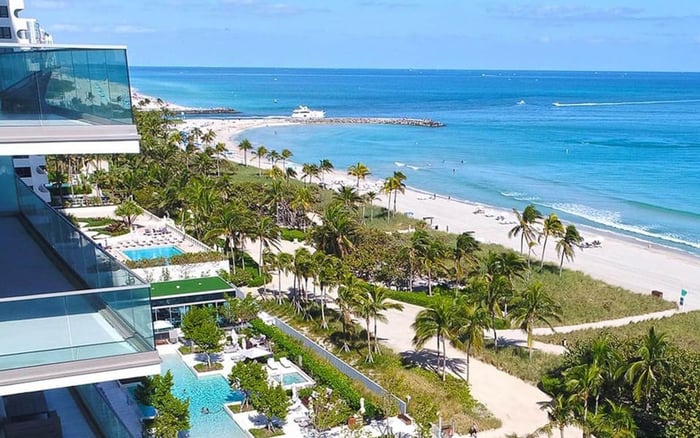
Rivage Bal Harbour pairs estate-scale condominium living with a beachfront setting. For buyers, the ownership decision should connect document-level diligence with airport-transfer testing at the hours and event dates they actually travel.
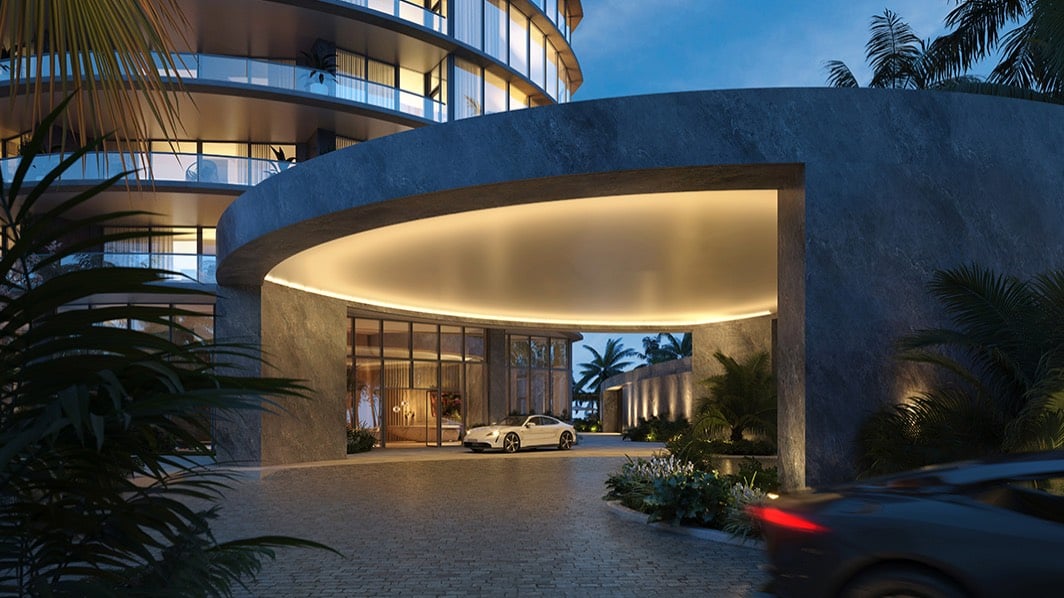
A beachfront residence can offer generous interiors and a carefully considered arrival sequence while still requiring a disciplined departure plan. At Rivage Bal Harbour, the buying decision rests on two distinct questions: what does ownership deliver within the property, and how reliably does the location fit the owner's travel calendar?
The project is positioned as an ultra-luxury residential condominium with estate-scale “sky villa” residences at 10245 Collins Avenue, Bal Harbour, FL 33154. That positioning defines the intended residential experience. It does not establish rental permissions, association control, operating costs or guaranteed services.
Airport access calls for the same distinction between presentation and practical commitment. The quoted drives are approximately 35 minutes to Miami International Airport and 40 minutes to Fort Lauderdale-Hollywood International Airport, with no specified traffic conditions. Neither estimate should become an itinerary allowance without testing the journey at the times a buyer expects to travel.
Related Group, Two Roads Development and Rockpoint comprise the development team. Architecture is by Skidmore, Owings & Merrill, with interiors by Rottet Studio. The stated residential configuration in November 2024 was 56 residences ranging from 3,300 to nearly 13,000 square feet. The earlier launch configuration was 61 residences-a distinction that makes the date of any specification important.
Residences are marketed with in-unit elevator access and private parking garages within the building. These features address the transition between car and home, particularly relevant for buyers arriving with luggage or coordinating family travel. They do not establish a particular vehicle-retrieval time, staffing arrangement or transportation service.
At launch, the advertised shared amenity offering exceeded 25,000 square feet. The program includes fitness and spa facilities, pools, dining and lounge spaces, children's recreation and beach service. Buyers should distinguish the physical offering from the terms governing its use: access, charges, hours, staffing and maintenance responsibilities all warrant confirmation.
The ownership model has two layers: the residential condominium being offered and the contractual framework that will govern daily life. A large residence and an extensive amenity program do not establish who pays for which services or how decisions are made.
Before committing, ask counsel to review the declaration, bylaws, offering documents, purchase agreement and available budget materials. Focus on rental duration and frequency, guest access, parking rights, service charges, voting arrangements, reserve provisions and expense allocation. These are diligence questions, not established Rivage restrictions or obligations.
A buyer also considering Oceana Bal Harbour should apply the same document-level scrutiny to each property. A shared Bal Harbour address does not imply equivalent ownership terms. Compare the documents, not simply the amenity descriptions.
The same discipline applies to specifications. Confirm the residence's dimensions, parking provisions and included features against the applicable contractual materials. Historical configurations provide context, but cannot substitute for the terms attached to a particular purchase.
The quoted estimates of approximately 35 minutes to MIA and 40 minutes to FLL provide an initial reference. They do not establish peak-hour or event-weekend performance, minimum journey times or a dependable five-minute advantage for one airport.
No substantiated peak-traffic or event-weekend measurements here justify assigning a longer fixed duration. Calling the estimates “off-peak” would likewise imply a measurement condition that has not been established. The appropriate response is to test relevant scenarios, not invent a more conservative number.
Break the journey into components. Residence-to-vehicle time, the road transfer and terminal-to-gate requirements each need their own allowance. On arrival, distinguish touchdown from the moment the passenger is ready for pickup. This produces a comparison useful to an owner, rather than merely attractive in a location description.
For someone weighing The Surf Club Four Seasons Surfside alongside Rivage, use the same airport, terminal, direction and departure window. Comparisons drawn from different travel conditions cannot meaningfully establish which address better supports a particular itinerary.
Start with the flight patterns you intend to use. A Friday arrival and Sunday departure warrant their own checks; a weekday business itinerary calls for another. Test both directions rather than assume the return trip will mirror the outbound journey.
Winter weekends, Art Basel week, Miami Grand Prix weekend and boat-show dates are sensible test windows when they overlap with intended use. They are not documented findings of delay on Rivage's airport routes. The purpose is to examine conditions that matter to the buyer, not presume an outcome.
For each check, record the intended departure time, airport terminal, direction, date and observed or estimated duration. Keep live journey observations separate from advance estimates. Repeat the exercise where practical: a single favorable result says little about consistency.
Then work backward from the flight's requirements. Add the appropriate airport allowance separately and choose a personal contingency based on the observations and the consequences of arriving late. The quoted drive times alone do not support a universal buffer.
The site's stated dimensions in March 2024 were 2.67 acres with 200 linear feet of ocean frontage. Its positioning as the last beachfront property to be developed in Bal Harbour is a marketing claim, not a guarantee of appreciation, freedom from future construction or exclusive shoreline rights.
For a second-home buyer, the practical question is how this setting fits the intended length and frequency of stays. A short visit places particular emphasis on arrival and departure logistics. A longer stay may place more weight on the residence itself and the amenities available during ownership. These are personal priorities, not assumed resident habits.
The strongest purchase decision brings those priorities together without conflating them. Verify the private residence and shared-service commitments in writing, then assess airport transfers under the calendar conditions that will shape actual use. Rivage's appeal need not depend on an untested drive-time promise.
For a discreet conversation about Rivage Bal Harbour and the ownership questions that matter to your travel calendar, connect with MILLION.
If branded residences are on your mind — as a home or as an allocation — we would be glad to share what we are seeing, privately.
Begin a quiet conversationRivage is marketed as an ultra-luxury residential condominium with estate-scale sky villa residences. Specific ownership rights, restrictions and financial obligations require review of the governing and offering documents.
The project's address is 10245 Collins Avenue, Bal Harbour, FL 33154.
The development team comprises Related Group, Two Roads Development and Rockpoint. Skidmore, Owings & Merrill designed the architecture, with interiors by Rottet Studio.
November 2024 specifications described 56 residences, compared with 61 in earlier launch materials. Buyers should confirm the applicable configuration in their purchase documents.
Residences are marketed with in-unit elevator access and private parking garages within the building. Those features do not establish guaranteed vehicle-retrieval times or transportation services.
Quoted estimates are approximately 35 minutes to Miami International Airport and 40 minutes to Fort Lauderdale–Hollywood International Airport. Their traffic and measurement conditions are unspecified.
No substantiated peak-hour or event-weekend measurements establish those estimates as dependable itinerary allowances. Buyers should test the journeys at their intended travel times.
Winter weekends, Art Basel week, Miami Grand Prix weekend and boat-show dates are proposed test windows when relevant to the buyer's calendar. They are not documented findings of route-specific delays.
No. Rental rules, association expenses, reserve provisions and service commitments require review of the governing documents, offering materials and available budgets.
Use the same airport, terminal, direction and departure window for each address. Evaluate the road transfer separately from residence-to-vehicle time and airport processing requirements.