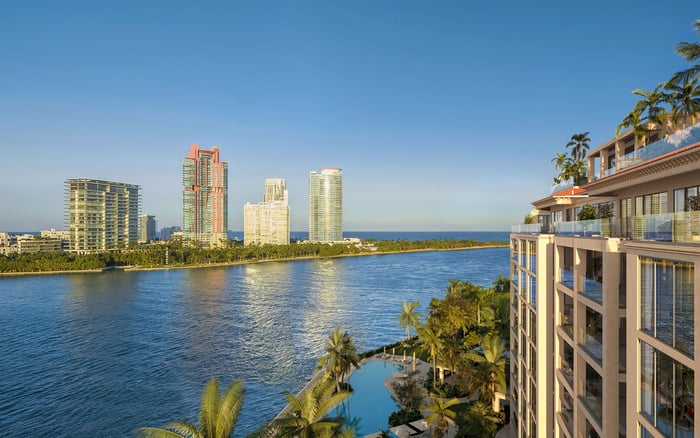
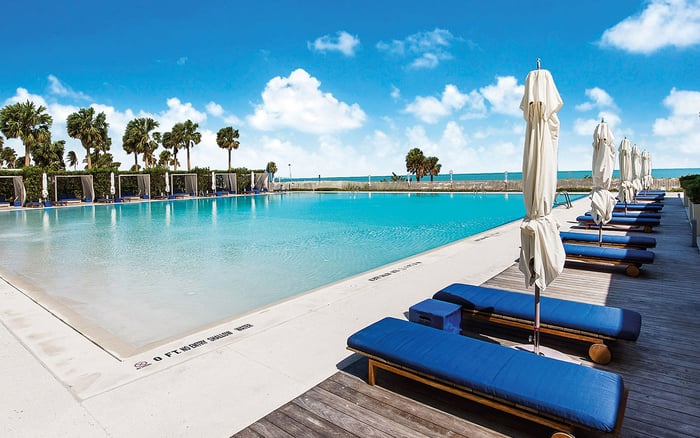
At Oceana Key Biscayne, evaluating a water-view premium means separating condominium rights from sightline protection, then testing neighboring development potential and possible coastal obligations against the specific residence.
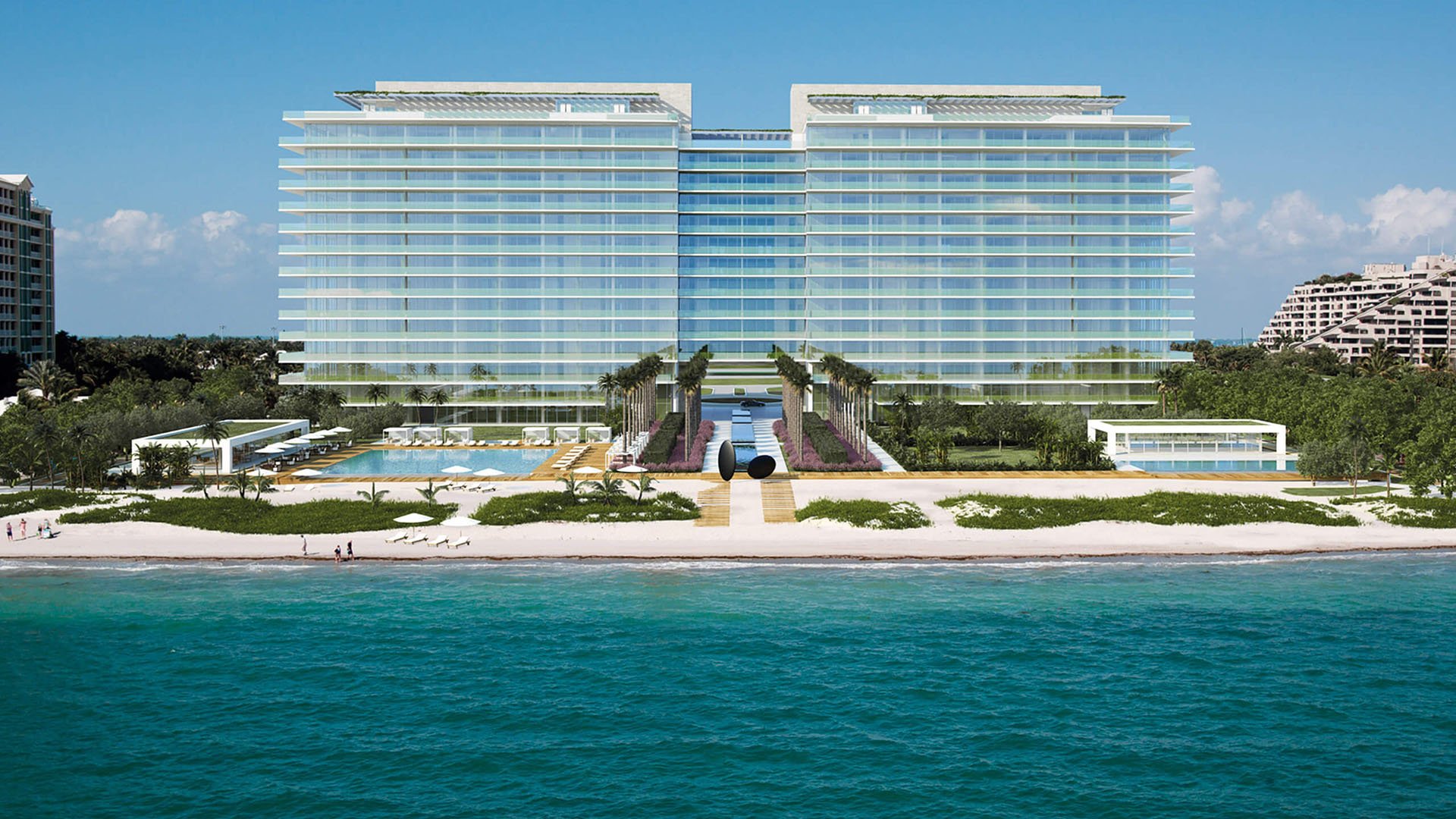
A water view is both an experience and part of the purchase price. At Oceana Key Biscayne, the essential distinction is between what a buyer owns, what the association maintains and what remains visible beyond the property. These questions belong together, but each requires different evidence.
The oceanfront condominium occupies 350-360 Ocean Drive, Key Biscayne, FL 33149, with waterfront exposure and deeded beach access. Its residential offering comprises 142 luxury residences and 12 villas. Those categories describe the offering; they do not necessarily establish separate legal ownership regimes or different assessment obligations.
The recorded declaration and amendments should establish unit boundaries, interests in common elements and any limited common elements assigned to the residence. Bylaws, budgets and board minutes should inform the review of governance and expenditure. A villa designation is no substitute for understanding those provisions.
Beach access and an uninterrupted panorama are separate matters. The former does not, by itself, establish a legal right to preserve every sightline from a living room or terrace.
Ownership review should resolve practical questions before a premium is negotiated. Which exterior areas belong to the unit? Which are common elements? Who controls landscaping, coastal improvements and changes to shared outdoor areas? How would an applicable capital project be allocated among owners?
Have counsel trace each answer to the governing documents rather than infer it from the residence type. Request current financial statements, reserve information, assessment notices and relevant meeting minutes. These are due-diligence requests, not evidence that a particular assessment or project exists.
Apply the same discipline to a comparison with Oceana Bal Harbour: evaluate each property's governing documents independently. A shared name does not imply equivalent rights or obligations.
For Oceana Key Biscayne, the objective is an ownership map connecting the residence, shared property, decision-making authority and potential expenditure. That map should accompany-not replace-a separate view analysis.
Assess a direct view across the beach independently from a lateral or diagonal view crossing neighboring land. Combining them under a description such as “unobstructed ocean view” can conceal materially different exposures.
Start with the residence itself. Record views from principal rooms and outdoor seating positions, then identify the parcels or beach areas beneath each sightline. Use surveyed grades and unit elevations rather than floor labels alone. An elevated building's first occupied level is not a reliable substitute for a measured viewing height.
Ask a qualified professional to model the relevant development envelopes against those viewing positions. The analysis should show not simply whether water remains visible, but whether the horizon, beach foreground or width of the outlook changes.
For buyers also considering 57 Ocean Miami Beach, this provides a consistent comparison framework without treating different municipalities' zoning rules as interchangeable. Compare the experience and its legal context, not just listing photographs.
Key Biscayne's 2021 zoning changes allowed single-family homes on pilings with open ground-level understories while retaining a 35-foot overall height restriction. Elevated-home height provisions measure from base flood elevation to the highest roof point. That reference matters: a nominal height limit cannot simply be placed 35 feet above the ground visible from a terrace.
Other zoning provisions identify 150-foot height allowances in certain hotel/apartment districts, subject to location-specific restrictions. These are not blanket entitlements for parcels neighboring Oceana. A credible analysis must establish the parcel's district, applicable restrictions, setbacks and measurement rules before drawing a potential building envelope.
Administrative variances can permit limited adjustments to setbacks and certain other dimensional requirements. That does not make every restriction negotiable or additional height automatically available. The buyer's review should nevertheless include relevant applications and approvals, rather than stop at a generalized zoning summary.
Key Biscayne's triangular waterfront view-corridor provision applies at rear and side lot-line intersections. It offers targeted protection, not a guarantee of an entirely open panorama. The provision also permits fences, walls or hedges up to four feet, so even a protected corridor does not exclude every low-level visual barrier.
Beach preservation rules require equally careful reading. Miami-Dade's Chapter 33F governs development seaward of the State Coastal Construction Control Line. Covered beach-area structures face a one-story, 20-foot limit above the specified flood/wave elevation-not an absolute construction prohibition.
Its 15% provision applies to each individual covered nonhabitable major structure, minor structure or restaurant relative to the permitted area. It should not be read as a blanket aggregate coverage cap. None of these provisions, considered in isolation, proves that a particular Oceana residence will experience an obstruction.
The April 7, 2023 tidal-flood-barrier draft proposes a minimum elevation of 6.50 feet NAVD88 for new or substantially repaired or rehabilitated barriers, with provision for a further two-foot increase. It also describes phased upgrades in 2035 and 2050 and an 8.50-foot NAVD88 target by January 1, 2075. These remain proposed provisions, not verified current obligations or deadlines.
NAVD88 is an elevation reference, not a measurement of wall height above local ground. Before drawing conclusions about lower-level views or association costs, confirm the operative ordinance, site applicability, surveyed elevations and any association plans. The draft does not establish that Oceana must install or raise an oceanfront seawall.
Likewise, a proposal described on June 20, 2024 involved a 14-story condominium associated with the Silver Sands motel site and a requested zoning text amendment concerning density transfer. That dated proposal illustrates redevelopment interest; it does not establish current approval status or an obstruction to Oceana's views.
Price the residence in two stages. First, ask an appraiser to establish a supported comparison using relevant sales and adjustments for size, condition, floor, orientation and other applicable factors. Then examine how much of the asking-price difference is plausibly attributable to the view. There is no substantiated percentage premium to apply here.
Test that difference against the present outlook, verified permissible development and separately labeled proposal scenarios. Do not assign unsupported probabilities or automatic discounts. The purpose is to identify the portion of the price that depends on a particular view remaining unchanged.
A compelling purchase can still carry uncertainty. A more defensible decision rests on understanding that uncertainty, the governing rights and the possible financial exposure before committing to the premium.
For a considered approach to South Florida waterfront ownership, explore MILLION.
If branded residences are on your mind — as a home or as an allocation — we would be glad to share what we are seeing, privately.
Begin a quiet conversationOceana Key Biscayne is an oceanfront condominium at 350–360 Ocean Drive, Key Biscayne, FL 33149, with waterfront exposure and deeded beach access.
The offering comprises 142 luxury residences and 12 villas. Those categories alone do not establish separate ownership regimes or assessment allocations.
Review the recorded declaration and amendments for unit boundaries and common-element interests. Bylaws, budgets and board minutes help clarify governance and expenditure.
Deeded beach access does not by itself establish protection for every sightline. View protection requires a separate review of applicable rights and development restrictions.
A direct beach outlook and a sightline across neighboring parcels can encounter different development restrictions. Each should be tested using the residence's measured elevation and relevant parcel information.
The cited 35-foot restriction concerns single-family homes, not every zoning district. Elevated-home height measurement also depends on base flood elevation.
No. The triangular corridor protection is limited, and the provision permits fences, walls or hedges up to four feet.
The April 7, 2023 draft does not establish an operative requirement for Oceana. Adoption, site applicability and association plans must be confirmed before drawing that conclusion.
No. The proposal described on June 20, 2024 does not establish current approval status or demonstrate that a particular Oceana residence will lose its view.
No substantiated percentage is established here. Use relevant comparable sales and residence-specific sightline analysis to evaluate the asking-price difference.