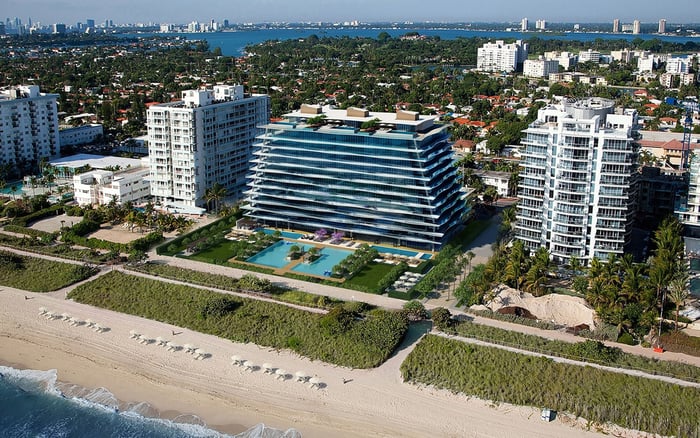
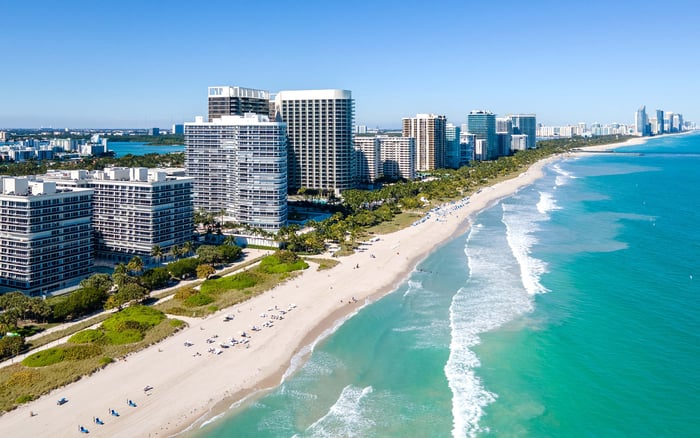
For a Surfside oceanfront condominium, due diligence extends beyond the residence and its appraisal. The association's structural record, reserves, insurance, litigation, governance and repair funding can determine both present-day loan eligibility and the breadth of a future resale market.
For an oceanfront acquisition in Surfside, the most consequential document may not describe the residence at all. The condominium questionnaire examines the project surrounding it: ownership patterns, rental concentration, association finances, reserves, insurance, litigation and other eligibility factors. These building-level conditions are assessed separately from the purchaser's credit profile and the unit appraisal.
That distinction is essential. Even a financially exceptional borrower can encounter limited conventional financing if the project does not satisfy applicable agency standards. The same logic extends to investment, second-home and resale planning: the next buyer's access to credit can affect liquidity, even when the current purchase is entirely in cash.
Fannie Mae's Condominium Project Questionnaire, Form 1076, provides lenders with a standardized way to collect project information. Its use is optional, although lenders are encouraged to use it and retain it in the mortgage file. Completion alone does not guarantee approval. The lender must evaluate the responses, apply the relevant review method and consider any internal overlays or restrictions.
Following the 2021 Champlain Towers South collapse, condominium reviews expanded to examine deferred maintenance, structural integrity and building safety more closely. A supplement introduced in January 2022 addresses inspections, known defects or damage, code violations, planned repairs and the funding available to complete them.
Buyers comparing Arte Surfside with Ocean House Surfside should request the completed questionnaire early rather than wait for a late-stage underwriting decision. Its answers provide a map for deeper investigation.
The questionnaire and structural supplement should sit alongside the current association budget, financial statements, reserve study, engineering reports, inspection records, meeting minutes, master insurance policies, litigation disclosures and special-assessment information. Together, these materials reveal whether a concise answer on a form is supported by the building's operating record.
Recent reserve work warrants particular attention. Stale or missing projections can obscure deferred maintenance or insufficient funding for major components. In an older oceanfront tower, reserve assumptions should be compared with the expected timing and estimated cost of concrete restoration, waterproofing, balcony work, roofing and elevators. If an answer identifies a defect, violation, repair program or funding gap, obtain the underlying engineering documents, contracts, budgets and payment schedule.
Meeting minutes can add crucial context. They may show how long an issue has been under discussion, whether bids have been obtained, how owners responded to a proposed assessment and whether the scope has changed. Insurance merits equal scrutiny because adequate master coverage forms part of the project eligibility analysis.
A warrantable condominium satisfies applicable agency standards, allowing an eligible unit mortgage to enter ordinary conventional financing channels. A non-warrantable project generally cannot support mortgages backed by Fannie Mae or Freddie Mac, regardless of an individual buyer's financial strength.
Alternative financing may remain available. Portfolio lenders can retain loans rather than sell them to the government-sponsored enterprises, while specialty non-warrantable programs commonly require down payments of roughly 20% to 30%. Terms and availability vary, so the intended lender should review the project before contractual deadlines become pressing.
For high loan-to-value conventional financing, lenders commonly seek an association budget that allocates at least 10% of annual income to reserves, adequate master insurance and no ineligible project characteristics. These factors are not a substitute for a full review. Active association litigation, inadequate reserves, low owner occupancy, concentrated ownership, excessive commercial space and condotel or short-term-rental characteristics can also raise concerns.
A buyer considering The Delmore Surfside or The Surf Club Four Seasons Surfside should ask the lender not only whether it can finance the unit, but also which project-review path it expects to use and whether the property appears on an internal restricted list.
A loan approval answers one lender's question for a particular transaction at a particular time. It does not replace the buyer's own review of disclosed defects, deferred maintenance, violations or incomplete repair funding. Nor does it establish that another lender will reach the same conclusion.
An association in a previously unapproved project can complete the questionnaire, allowing a lender to analyze completion status, finances, insurance and litigation. Yet warrantability can change after closing if new inspections, lawsuits, reserve shortfalls or major repair programs alter the project's eligibility.
The file should therefore be treated as a living risk record rather than a closing formality. The strongest version aligns every questionnaire response with dated supporting material and identifies who will pay, when the work will occur and whether funding is already secured.
A smaller pool of eligible lenders can reduce the number of financed purchasers able to compete for a residence. That can weaken resale liquidity, particularly when alternative loans require larger equity commitments. Cash removes financing risk from today's closing, but not from tomorrow's buyer pool.
The prudent strategy is to evaluate both present eligibility and foreseeable pressure points. Confirm current standards with the intended lender, review the association's capital plan and revisit material building developments throughout ownership. In Surfside, financing optionality belongs alongside view, floor plan and privacy as a core component of long-term value.
What is Form 1076? It is a condominium project questionnaire used to collect building-level information for a lender's eligibility review.
Is the condominium questionnaire mandatory? Its use is optional, although lenders are encouraged to use it and retain it in the mortgage file.
Does a completed questionnaire guarantee loan approval? No. The lender still evaluates the responses, applicable agency standards and its own overlays or restrictions.
What does warrantable mean? It means the project satisfies applicable agency standards, allowing eligible unit loans to enter conventional financing channels.
Can a strong borrower finance a non-warrantable condominium conventionally? Fannie Mae and Freddie Mac generally will not back a mortgage in a non-warrantable project, regardless of the borrower's financial strength.
Are loans available for non-warrantable projects? Portfolio and specialty lenders may offer financing, often with larger down payments and a narrower selection of programs.
Which supporting documents should a buyer request? Request budgets, financial statements, reserve studies, engineering and inspection records, meeting minutes, insurance, litigation disclosures and assessment details.
Why are reserve studies important? A recent study can reveal whether projected funding aligns with major maintenance and repair obligations.
Can warrantability change after purchase? Yes. New inspections, litigation, reserve shortfalls or major repair programs can change project eligibility.
Why should a cash buyer care about warrantability? A future purchaser may need agency-backed financing, so project eligibility can influence the depth of the resale market.
If you'd like a private walkthrough and a curated shortlist, connect with MILLION.
If branded residences are on your mind — as a home or as an allocation — we would be glad to share what we are seeing, privately.
Begin a quiet conversation