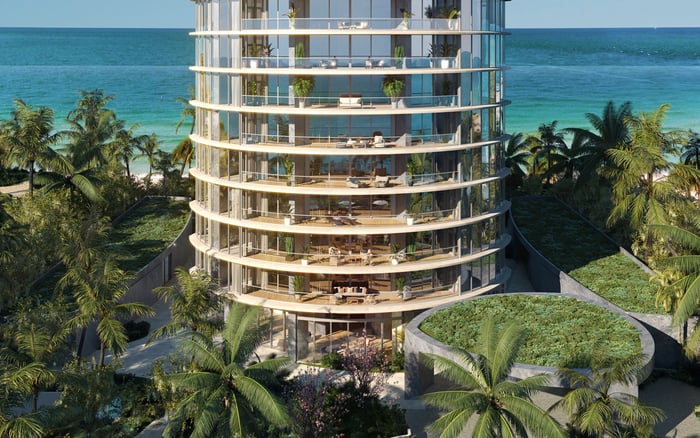
A disciplined Bal Harbour condo review traces shoreline ownership, seawall costs, dredging exposure, coastal plans, flood status, and insurance before closing.

An oceanfront residence in Bal Harbour is purchased not only with a view, but with an interest in a complex coastal system. The critical due-diligence question is not simply whether a seawall, dune crossing, service path, dock, or shoreline structure exists. It is who owns it, who controls it, who must maintain it, and how any future expense reaches the unit owner.
Florida condominium law generally makes an association responsible for maintaining, repairing, and replacing common elements. If the declaration classifies a seawall as a common element, that obligation usually rests with the association. A declaration can, however, assign maintenance of a limited common element to the owners entitled to use it, making assumptions based on physical location unreliable.
Start with the recorded declaration, all amendments, plats, surveys, exhibits, easements, development agreements, and relevant approvals. Read them together. The objective is to classify every shoreline asset as a common element, limited common element, individually owned property, public area, or infrastructure governed by a separate agreement.
At the shoreline, ownership language is the beginning of every cost analysis.
This standard applies whether the buyer is evaluating Oceana Bal Harbour, Rivage Bal Harbour, or another condominium along the same coastal edge. Comparable geography does not guarantee comparable obligations.
The seawall file should include the latest engineering assessment, inspection photographs, repair recommendations, proposals, permit history, contracts, warranties, reserve-study entries, special-assessment history, and outstanding association loans. Board minutes and owner communications may reveal whether deterioration, design alternatives, access constraints, or funding choices are already under discussion.
When a seawall is a common element, the board generally has discretion to select the repair method and contractor within its maintenance authority. Yet a buyer should determine whether contemplated work is classified as necessary maintenance, repair, or replacement-or as an elective material alteration. That distinction can affect voting requirements. The declaration may specify the approval threshold for a material alteration; if it is silent, Florida law generally calls for approval by 75% of the voting interests. Necessary repair work can be treated differently.
Ask counsel to reconcile the proposed scope with the declaration and prior board action. Ask an engineer to distinguish current conditions from conceptual upgrades. Then test the reserve allocation against the estimated scope, timing, contingencies, permitting, and access costs. A polished lobby does not answer a shoreline funding question.
No universal dredging obligation should be inferred from an oceanfront address. Any relevant duty may arise from the declaration, a recorded easement, submerged-land documentation, a permit, a marina or dock agreement, or a development agreement. Even without an obvious marina, the records warrant review if plats or title materials identify water-related rights or channels.
The buyer's attorney should look for language governing maintenance dredging, depth standards, sediment removal, disposal, environmental approvals, access, cost sharing, and indemnity. Confirm whether an obligation is active, contingent, expired, transferred, or dependent on governmental authorization. Permit records and association minutes should be compared with recorded documents, not reviewed in isolation.
This distinction is useful when comparing a pure beach relationship with other forms of waterfront ownership. A residence at The Delmore Surfside may belong in a broader coastal comparison, but the legal analysis must remain parcel-specific. Marketing descriptions and neighboring practices cannot substitute for the recorded chain of responsibility.
Bal Harbour maintains the jetty, its navigational light, and the area from the dune's eastern edge to hotel or condominium property fences. That public role does not automatically extend to privately owned condominium infrastructure. Certain hotels and condominiums governed by development agreements must maintain the service-path segment directly behind their properties and within their boundary lines.
A current boundary survey should therefore locate the mean high-water line, dune, seawall, service path, fences, beach-access routes, public easements, and any temporary construction easements. Overlay the survey with recorded agreements and available project maps. This is especially important because public nourishment, dune, groin, or seawall initiatives can intersect with private boundaries and access areas.
The recommended regional coastal plan contemplates approximately 6.1 miles of periodic beach nourishment, with dune and berm features extending through Bal Harbour, Surfside, and parts of Miami Beach. It also includes a series of groins in Bal Harbour intended to reduce erosion and coastal-storm risk. Other planning materials have considered seawalls at the landward edge of the existing dune and the possible removal of buried walls to create greater continuity. Buyers should verify the currently adopted scope rather than rely on a conceptual map.
Florida also regulates construction and excavation involving seawalls, revetments, hotels, apartments, and related structures within 50 feet of the mean high-water line. Any proposed private work should be reviewed for applicable approvals, design constraints, and access requirements.
Most of Bal Harbour lies within a Special Flood Hazard Area, but the unit's exact flood zone and Base Flood Elevation must be confirmed. Miami-Dade requires disclosure when improved real estate being sold lies within such an area. Flood insurance is also required for federally related mortgage loans secured by buildings in these zones.
Bal Harbour's floodplain-management participation provides an approximately 10% National Flood Insurance Program premium discount for properties in AE flood zones. That community-level benefit is no substitute for building-specific underwriting. Improvements or storm damage exceeding 50% of a building's market value can trigger compliance with current floodplain and Florida Building Code requirements, potentially changing the scope and economics of restoration.
Request complete flood and wind policies, declarations, deductibles, exclusions, appraisals, claims history, loss runs, renewal terms, and current quotes. Identify whether deductibles are percentage-based, how they would be funded, and whether reserves or credit facilities are intended to absorb any uninsured portion. Compare insured values with the association's appraisal and the physical assets shown in the survey.
For context beyond Bal Harbour, The Perigon Miami Beach can serve as another coastal property in a buyer's comparative review. Even so, policy structure, flood designation, governing documents, and shoreline responsibilities must be examined building by building.
The strongest file is organized as a single risk matrix. For each asset or exposure, record ownership, maintenance responsibility, decision authority, funding source, current condition, planned work, permits, insurance treatment, and unresolved questions. Reconcile inconsistencies among the declaration, survey, title commitment, reserve study, engineering materials, board minutes, and policies before the contingency period expires.
The final review should also identify pending assessments, association borrowing, open claims, temporary easements, owner-vote requirements, and the practical route contractors would use to reach the shoreline. Counsel, engineering, insurance, title, and survey findings should converge on the same boundary and cost narrative.
For readers of MILLION Buyer's Guides, the essential investment principle is precise: Oceanfront and waterfront value should be evaluated alongside enforceable obligations, resilient funding, and documented beach-access rights.
For discreet guidance on South Florida's finest coastal residences, connect with MILLION.
If branded residences are on your mind — as a home or as an allocation — we would be glad to share what we are seeing, privately.
Begin a quiet conversationThe association generally maintains it when the declaration classifies it as a common element. The governing documents can assign responsibility differently for limited common elements.
Review the declaration, amendments, plats, surveys, easements, title materials, and development agreements together.
The board generally has discretion to select the repair method and contractor as part of its maintenance authority.
Necessary repair may be treated differently from a material alteration, which can require the owner approval specified in the declaration or otherwise 75% of voting interests.
No universal obligation should be assumed. Any duty must be traced through recorded documents, permits, submerged-land records, or marina and dock agreements.
The Village maintains the jetty, its navigational light, and the area between the dune's eastern edge and property fences, not automatically private condominium infrastructure.
It should locate property lines, the mean high-water line, dunes, seawalls, service paths, fences, access routes, and relevant easements.
Yes, most of the Village is designated within a Special Flood Hazard Area, but buyers should confirm the unit's exact zone and Base Flood Elevation.
Request full flood and wind policies, deductibles, exclusions, appraisals, claims history, loss runs, renewal terms, and current quotes.
Improvements or storm damage exceeding 50% of a building's market value can trigger compliance with current floodplain and Florida Building Code requirements.