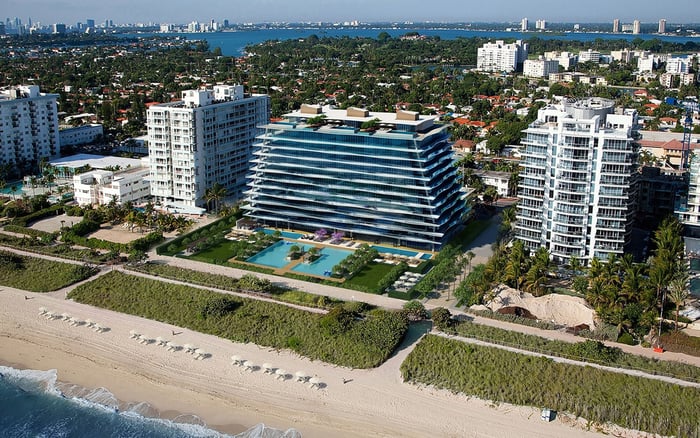
A serious Surfside condominium review goes beyond the current monthly assessment. The essential record follows governance from developer turnover through the first owner-controlled budget and into the current year, separating recurring service costs from reserve funding and testing whether charges have truly stabilized.

For a waterfront residence in Surfside, the most revealing financial document is rarely the latest monthly dues statement. A stronger inquiry begins at the moment control passed from the developer to the owners. Record the effective turnover date, obtain the turnover certificate, and preserve the budgets, minutes and financial statements from both sides of the transition.
Governance matters because a developer-appointed board and an owner-controlled board may make different assumptions about staffing, insurance, maintenance and reserve funding. A polished service program may initially rest on estimates that change once owners inherit the building's full operating obligations. An increase is not inherently problematic; its cause is what matters.
This discipline applies across the Surfside market, whether the residence is at Arte Surfside, Ocean House Surfside or another oceanfront condominium. Each association has its own declaration, allocation formula, contracts and budget history. Neighborhood prestige is no substitute for property-specific records.
The meaningful number is not simply today's assessment, but the path that produced it.
Place the final developer-era budget beside the first budget adopted by the owner-controlled board. Compare them line by line rather than relying on total assessments. At minimum, isolate operations, reserve contributions, insurance, staffing and maintenance. Then add the current annual budget, which details authorized operating expenditures, planned capital investment, reserves and the present basis for regular assessments.
The comparison should identify costs that appeared, disappeared or were materially recast after turnover. Examine management, concierge, front desk, security, maintenance, bookkeeping, cleaning, landscaping, pool care, common-area utilities and elevator service. These are distinct recurring cost centers, even when the budget groups several under a single contract.
Insurance warrants its own schedule. Separate property, liability, directors-and-officers and windstorm coverage, then compare premiums and coverage structures across the same years. Insurance can materially affect assessments, so a higher total budget should not automatically be read as service inflation.
For buyers considering Fendi Château Residences Surfside or The Surf Club Four Seasons Surfside, the luxury proposition may include an extensive service environment. The due-diligence question is not whether service is expensive in the abstract. It is whether the budget clearly identifies what owners receive, funds that offering consistently and distinguishes it from future capital needs.
A quoted monthly figure is incomplete until it reconciles with the declaration and adopted budget. Begin with the general calculation: operating expenses, reserve contributions and administrative costs, less other association revenue, allocated among the assessed residences. Confirm whether that allocation is equal, based on unit size, tied to percentage ownership or governed by another formula in the condominium documents.
Apply the formula to the specific residence. The resulting annual and monthly amounts should match the assessment schedule, subject to any separately billed items. If they do not, request an explanation and supporting resolution rather than treating a sales sheet or estoppel figure as the entire story.
Next, identify precisely what the charge includes. Utilities, parking, in-residence services, insurance obligations and other expenses may remain owner-paid. A higher association charge that includes broad common services cannot be compared cleanly with a lower charge that excludes meaningful costs. This distinction is especially important in a resale, where historical invoices can separate regular obligations from temporary credits, catch-up charges or special assessments.
Recurring operations and reserve contributions answer different questions. Operations fund the building's current service level; reserves prepare for longer-term capital work. Combining the two can make a well-funded association appear operationally costly-or an underfunded association deceptively efficient.
Create separate columns for payroll and contracted services, utilities, insurance, administration, repairs and maintenance, operating contingency, and reserve contributions. As an analytical benchmark rather than a legal requirement, operations may represent approximately 70 to 90 percent of a budget and reserves approximately 10 to 30 percent. The building's governing documents and actual obligations remain controlling.
Investigate whether earlier budgets reduced or waived reserve funding. Obtain reserve balances, the governing reserve policy and any rules covering operating surpluses or transfers into capital reserves. Approximately 90 to 150 days of operating costs can serve as a useful liquidity benchmark, but it remains a reference point unless the association has formally adopted it.
Reserve adequacy is central to waterfront condominium due diligence. The history of Champlain Towers South demonstrated the danger of major unfunded repairs, limited reserves and a large special assessment converging. The file should therefore connect reserve balances to known capital obligations rather than assess cash in isolation.
Build a multiyear table with one row for each budget year and columns for total assessments, operating costs, reserve contributions and the subject residence's charge. Add separate columns for insurance, staffing and maintenance when records permit. Preserve each adopted budget with its assessment schedule and related board presentation so that every change can be traced to an operating or reserve assumption.
Stabilization does not mean the assessment never rises. It means the pattern becomes intelligible. Recurring service lines should show a supportable trajectory, reserve funding should follow an articulated policy, and unusual changes should correspond to identifiable decisions. Undocumented volatility is more concerning than a transparent increase tied to insurance, staffing or planned capital funding.
Procurement controls add another layer. Review how major service contracts are approved, renewed and competitively tested. Illustrative controls include seeking three written quotations where possible above $3,000 and competitive bids above $20,000. These thresholds are not rules for an unrelated condominium; they demonstrate the type of control a buyer should seek in the property's governing policy.
A residence's service costs should be evaluated alongside the consistency and scope of the experience delivered. At The Delmore Surfside or any other high-service property, the decisive evidence remains the association's declaration, turnover materials, adopted budgets, financial statements, reserve records, insurance schedules, contracts, assessment notices and minutes.
The completed file should answer three questions cleanly: when owners assumed control, what changed in their first budget, and whether current charges reflect a stable service model with credible capital funding. When those answers reconcile across several years, the assessment becomes more than a monthly expense. It becomes a legible measure of governance, service quality and financial stewardship.
For discreet guidance on evaluating a Surfside waterfront residence, connect with MILLION.
If branded residences are on your mind — as a home or as an allocation — we would be glad to share what we are seeing, privately.
Begin a quiet conversationIt establishes the point when owners assumed governance and helps separate developer-era financial assumptions from owner-controlled decisions.
Compare the final developer-era budget, the first owner-controlled budget and the current adopted annual budget.
Review operations, reserves, insurance, staffing, maintenance, administration, utilities and other recurring service categories.
Recalculate it from budgeted costs and other revenue, then apply the allocation method required by the declaration.
No. Allocation may be equal, based on unit size, tied to percentage ownership, or governed by another documented formula.
Operations pay for current services, while reserves fund longer-term capital needs. Combining them can obscure both service costs and funding adequacy.
It means multiyear changes are intelligible and supported by identifiable assumptions, not that assessments never increase.
Isolate property, liability, directors-and-officers and windstorm costs, then compare them across the same budget years.
Include the declaration, turnover certificate, budgets, financial statements, reserve records, insurance schedules, contracts, assessment notices and minutes.
No. They are analytical reference points unless adopted by the association or required by its governing framework.