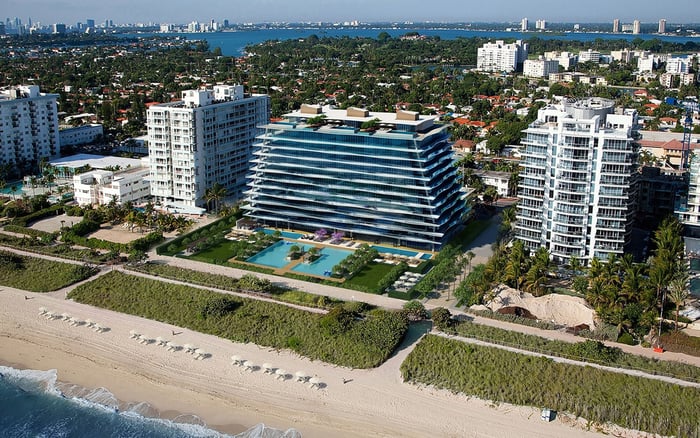
A disciplined review of a Surfside condominium separates structural reserves from luxury operations, reconciles the SIRS with the adopted budget, and traces assessments or association debt to the unit, closing, and eventual resale.

In Surfside, a full-service condominium is both a residence and a long-duration capital structure. Valet service, concierge staffing, pools, spas, landscaping, security, and common-area care define the daily experience, but they do not answer the essential structural question: Is the building collecting enough, on the right schedule, to complete the work prescribed for its major components?
This distinction matters whether a buyer is considering Ocean House Surfside or evaluating another oceanfront address. The headline monthly assessment is only the starting point. Its allocation among operations, structural reserves, other reserves, and debt service reveals far more about the tower’s financial posture.
The decisive number is not the assessment alone, but what each dollar is assigned to fund.
Florida’s structural integrity reserve study requirement applies to condominium and cooperative buildings with three or more habitable stories. The study generally must be repeated at least every 10 years. It evaluates major structural components, estimates their remaining useful lives and repair or replacement costs, and prescribes the annual contributions required to fund that work.
Reserves for mandatory SIRS components must be fully funded. Owners cannot waive or reduce them by vote, and the money cannot be diverted to ordinary operating expenses. Reserve planning may use component funding, which tracks eligible assets separately, or pooled funding across eligible components. Either approach should be clearly reflected in the budget and consistent with the study.
The core file should include the latest SIRS, current reserve balances, the adopted budget, the contribution schedule, engineering reports, special-assessment resolutions, and all borrowing documents. Florida extended a key compliance deadline from December 31, 2024, to December 31, 2025, but the change did not remove the underlying inspection and reserve duties. Because statutory requirements continue to evolve, current Florida counsel should confirm the association’s obligations.
For a residence at Arte Surfside or elsewhere in the market, the practical test is reconciliation. Compare the annual reserve contribution in the adopted budget with the SIRS prescription and the timing of major work. A material gap suggests that regular assessments may rise, a special assessment may follow, or the association may borrow.
Regular monthly or quarterly assessments are the most predictable mechanism. They build reserves gradually, make recurring ownership costs easier to model, and reduce reliance on abrupt owner charges. In a well-organized file, the reserve portion should be identifiable separately from payroll, insurance, amenities, utilities, and routine maintenance.
A special assessment addresses an immediate shortfall through a mandatory owner charge. It may be payable as a lump sum or over a short payment schedule, often within 30 to 90 days. Post-Surfside pressures from deferred maintenance and rising insurance and construction costs have produced special assessments exceeding $100,000 per unit in some Florida condominiums. That statewide context makes the resolution, payment calendar, project purpose, and repair status essential reading.
A line of credit gives an association access to funds as needed, while a loan can spread project costs over a longer period. Both may soften the immediate burden on owners, but neither makes the cost disappear. Principal, interest, and fees ultimately flow through current or future assessments. For each facility, identify the principal balance, interest rate, maturity, repayment source, required owner approvals, and any pledge of future assessments.
Recent statutory clarification permits an owner-controlled association to use a special assessment, line of credit, or loan for SIRS reserve funding when approved by a majority of the association’s total voting interests. If one of these methods appears in the plan, confirm that the reserve study and contribution schedule align with the financing decision.
A buyer examining Fendi Château Residences Surfside should review two connected ledgers. The first belongs to the association: reserves, contracts, assessments, borrowings, and scheduled capital work. The second belongs to the unit: paid and unpaid assessment installments, recurring debt-service charges, and the contractual allocation of responsibility at closing.
Do not assume that the seller’s payment of one installment resolves the full obligation. The purchase contract and closing materials should establish who pays the remaining installments and whether any continuing assessment travels with ownership. Counsel should also verify that the estoppel, association records, board resolutions, and financing documents tell the same story.
This is where investment analysis becomes concrete. A lower monthly charge can coexist with weak reserve contributions, while a higher charge may include disciplined structural funding. Conversely, a loan may reduce today’s special assessment but increase long-term carrying costs through interest and debt service. The correct comparison is total exposure over the intended holding period, not a single month’s invoice.
Special assessments receive close lender scrutiny, including their purpose, payment terms, effect on association stability, and the status of related repairs. Unresolved safety work, deferred maintenance, weak reserves, or major pending assessments can impair project mortgage eligibility. Even a cash buyer should care because the next purchaser may require financing.
For buyers comparing The Surf Club Four Seasons Surfside with other coastal options, this financing lens belongs alongside architecture, service, and privacy. A clear reserve plan can support confidence in future marketability. An unresolved funding gap can narrow the buyer pool and complicate resale, regardless of the residence’s quality.
Qualifying owners facing assessments arising from building recertification requirements may have access to Miami-Dade County’s Condominium Special Assessment Program. Availability should not substitute for a review of the building’s finances, but it may be relevant when evaluating collection risk across the ownership base.
A refined review compresses the documents into a single decision schedule. Show the SIRS-prescribed annual contribution, the amount actually budgeted, current structural reserve balances, expected project timing, approved special assessments, outstanding credit or loan obligations, and the seller’s unpaid share. Then separate those figures from full-service operating costs.
This edition of MILLION Buyer's Guides favors questions that produce documents rather than assurances. Has the board formally adopted the funding plan? Do the engineering reports and financial schedules address the same work? Are assessment proceeds restricted to their stated purpose? Does the borrowing pledge future assessments? Are repayment costs already embedded in the budget, or are they likely to appear later?
The objective is not to eliminate every future expense. It is to determine whether the tower has matched known structural obligations with a credible, properly approved funding path-and whether the purchase agreement assigns unit-level liabilities with precision.
For discreet guidance on Surfside opportunities and condominium due diligence, connect with MILLION.
If branded residences are on your mind — as a home or as an allocation — we would be glad to share what we are seeing, privately.
Begin a quiet conversationA SIRS evaluates major structural components, their remaining useful lives, expected repair or replacement costs, and the annual contributions needed to fund that work.
The requirement applies to condominium and cooperative buildings with three or more habitable stories, and the study generally must be repeated at least every 10 years.
No. Required reserves for mandatory structural components must be fully funded and cannot be waived or reduced by an owner vote.
No. SIRS funds must be budgeted for and spent on covered structural components rather than ordinary operating expenses.
Funding may come through regular assessments, special assessments, a line of credit, or an association loan, subject to applicable approvals and requirements.
Review the principal balance, interest rate, maturity, repayment source, owner approvals, and any pledge of future assessments.
The comparison shows whether annual contributions match the study’s prescription and project timing. A material gap may signal higher assessments, borrowing, or a future special assessment.
No. A loan or credit line spreads costs over time, but repayment ultimately flows through present or future owner assessments.
Weak reserves, deferred maintenance, unresolved safety repairs, or major pending assessments can impair mortgage eligibility and narrow the future buyer pool.
Confirm paid and unpaid assessment installments, recurring debt-service charges, and who is responsible for remaining obligations under the purchase contract.