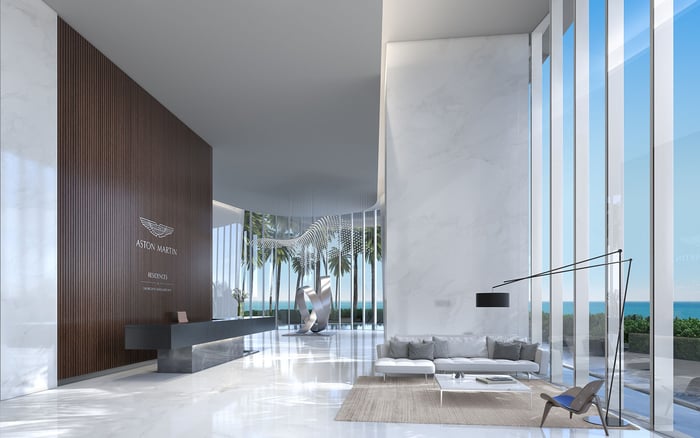
A branded name does not displace Florida condominium law. Sophisticated buyers should align substitution rights, inspection protocols, warranty dates, and defect procedures before closing on a Surfside residence.

A branded residence is sold through a carefully composed promise: architecture, interiors, service and identity presented as a coherent whole. Yet the enforceable version of that promise resides in the executed documents. Regardless of the name above the entrance, a Surfside condominium remains governed by Florida's Condominium Act, including its statutory warranties.
That distinction matters when evaluating residences associated with Arte Surfside, Fendi Château Residences Surfside or another luxury address. Marketing may establish the aesthetic thesis, but the purchase agreement, declaration, specifications and incorporated exhibits determine what the purchaser is entitled to receive.
The decisive luxury document is not the rendering, but the contract that defines it.
This is particularly important in Branded Residences, where a signature finish or appliance may carry both practical and perceived value. The buyer's file should connect every material representation to controlling language rather than treat brochures and renderings as self-executing commitments.
The file should place the purchase agreement alongside the declaration, specifications, plans, renderings and disclosure language. Read together, these materials reveal which details are fixed, which remain conceptual and which the developer may alter. This integrated review is the proper foundation for Pre-Construction and New-construction decisions alike.
For context, purchasers may compare the documentary treatment of nearby offerings such as The Delmore Surfside with that of established properties such as The Surf Club Four Seasons Surfside. The point is not to assume identical terms, but to recognize that every project requires its own document-level analysis.
A disciplined index should identify the controlling version of every exhibit, along with amendments, written approvals and correspondence concerning selected finishes. This is the standard expected in serious Buyer's Guides: preserve the complete chain from representation to final delivery.
Substitution provisions deserve more than a search for the phrase “equal or better.” The buyer should ask who determines equivalence; whether the comparison concerns cost, appearance, performance or availability; and whether notice or consent is required. A clause granting the developer broad discretion may leave considerable distance between the visual promise and the contractual delivery standard.
Signature elements warrant particular attention. Flooring, kitchens, fixtures, appliances, equipment and smart-home systems can shape both daily experience and resale perception. A negotiated schedule of non-substitutable products offers greater certainty than a general equivalency standard. If absolute protection is unavailable, the agreement can still address objective performance, design consistency, notice and remedies for a material change.
Brand-related representations require the same scrutiny. A name, design vocabulary or service concept should not be assumed to guarantee every item depicted in marketing. Renderings and brand standards are most useful when the executed documents expressly incorporate them. Design & Architecture expectations become legally meaningful through precise drafting and clearly identified exhibits.
Punch-list rights are principally contractual. The agreement should define substantial completion, inspection access, acceptable workmanship, correction periods and the treatment of unresolved items at closing. Without those mechanics, a right to inspect may provide less protection than its reassuring language suggests.
The inspection should be documented with dated photographs, room-by-room notes and references to the applicable plan or specification. The buyer should distinguish cosmetic corrections from conditions that may implicate water intrusion, structure, electrical work, plumbing, mechanical systems or code compliance. A governmental inspection does not necessarily establish whether the work satisfies the contract, plans, specifications or accepted construction standards.
Closing documents also demand scrutiny. Punch-list acceptance should not inadvertently release unknown or latent conditions that could not reasonably appear during a walk-through. Open items should be acknowledged in writing, assigned correction deadlines and tracked through completion records.
Florida law deems a developer to grant unit purchasers implied warranties of fitness and merchantability for the unit and specified condominium property. The statutory warranty for each unit runs for three years beginning with completion of the building containing it. Other condominium improvements are generally covered for three years from completion.
Roofs, structural components and shared mechanical, electrical and plumbing elements follow a distinct period. Coverage runs from completion until three years afterward or one year after owner turnover, whichever is later, subject to a five-year maximum. Personal property transferred with a unit receives the manufacturer's warranty, or a one-year developer warranty if no manufacturer's warranty exists. Other property conveyed with the unit generally carries a one-year implied developer warranty.
Contractors, subcontractors and suppliers also provide implied warranties. Structural and specified building-system work carries three-year warranties, while other improvements and materials carry one-year warranties.
The controlling date may not be the purchaser's closing. For condominium warranty purposes, completion is tied to a certificate of occupancy or equivalent governmental authorization. The file should therefore record that document, the relevant completion events and the owner-turnover date. Contractual correction periods, statutory warranties, limitation periods and the statute of repose operate on separate clocks. Each requires an independent calendar reviewed by current Florida counsel.
Florida's construction-defect framework can encompass deficiencies arising from design, specifications, planning, supervision, construction, observation, defective materials, code violations and failures to meet contractual or accepted trade standards. A condition may support a claim even when the work passed inspection.
Responsibility also turns on where the condition lies. An individual owner ordinarily pursues defects affecting the unit or limited common elements. The condominium association commonly addresses roofs, structural components, common elements and shared systems. Early classification helps preserve evidence and direct notice to the appropriate parties.
Before a construction-defect lawsuit or arbitration, Chapter 558 generally requires at least 60 days' written notice to the responsible contractor, subcontractor, supplier or design professional. The process allows inspection and an opportunity to repair, pay, settle or otherwise respond. It does not replace careful deadline analysis, and warranty expiration does not necessarily determine when a claim must be filed.
The final file should contain the certificate of occupancy, turnover date, final specifications, approved substitutions, inspection report, punch list, correction records, contractor warranties and registered manufacturer warranties. It should also retain executed amendments and written communications clarifying an agreed product or correction.
Local overlays should be verified for the project rather than inferred from requirements elsewhere in South Florida. Surfside buyers should have counsel confirm the applicable ordinance, project documents and current filing rules. The result is more than an orderly archive. It is a working record of what was promised, what was delivered, which protections apply and when action is required.
For discreet guidance on evaluating a luxury residence and assembling the right advisory team, consult MILLION.
If branded residences are on your mind — as a home or as an allocation — we would be glad to share what we are seeing, privately.
Begin a quiet conversationNo. A branded Surfside condominium remains subject to Florida's Condominium Act and its applicable statutory warranties.
Review the purchase agreement, declaration, specifications, renderings and disclosure language together, including all incorporated exhibits and amendments.
Not always. Buyers should examine who determines equivalence and whether cost, appearance, performance, notice or purchaser consent controls.
Value-sensitive flooring, kitchens, fixtures, appliances and smart-home systems may warrant a negotiated schedule of protected products.
It should address substantial completion, inspection access, workmanship standards, correction deadlines and unresolved items at closing.
The unit warranty runs for three years beginning with completion of the building containing the unit.
No. Completion is tied to a certificate of occupancy or equivalent governmental authorization rather than necessarily to the individual closing.
Chapter 558 generally requires at least 60 days' written notice to the responsible construction or design party before filing.
The condominium association commonly pursues claims involving roofs, structures, common elements and shared building systems.
Retain the certificate of occupancy, turnover date, final specifications, approved substitutions, inspection materials, punch-list records and applicable warranties.