A buyer-focused look at why ocean-facing terraces at The Berkeley Palm Beach should be evaluated as living spaces with lifecycle maintenance, not incidental balconies.
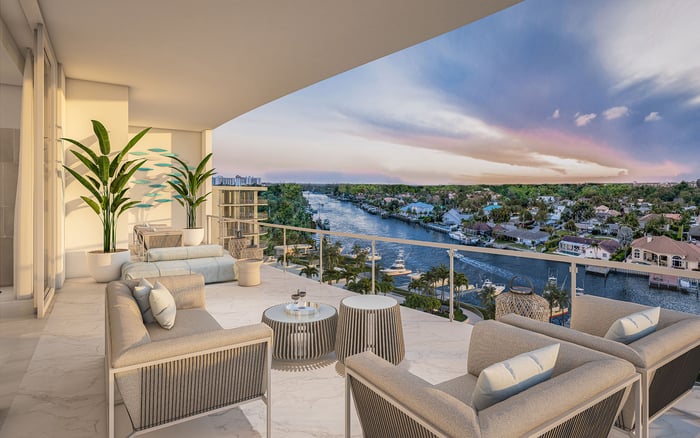
At The Berkeley Palm Beach, the terrace is not a decorative appendage. It is one of the residence’s defining rooms: the place where Palm Beach living moves from interior refinement to Atlantic exposure. For buyers, that distinction matters. A terrace can frame the view, extend entertaining space, and create the feel of a private outdoor salon, but it also sits on the front line of salt-laden wind, storm spray, UV, humidity, and high wind loads.
That is why terrace decisions in this segment are as much about stewardship as style. Oceanfront beauty has a maintenance profile. The more direct the exposure, the more carefully buyers, owners, boards, and managers should consider materials, waterproofing, inspections, reserve planning, and the details that keep outdoor spaces elegant over time.
Palm Beach’s barrier-island setting gives ocean-facing residences a different environmental character than more protected urban or intracoastal locations. The Atlantic is close, airflow is less interrupted, and salt aerosols can settle on railings, glass, hardware, stone, furniture, lighting, and planting systems. Those deposits are not merely cosmetic. Salt residue can hold moisture against surfaces, accelerating corrosion, staining, coating deterioration, or early fatigue in refined terrace components.
This is the core distinction between an ocean-facing terrace and a more sheltered waterfront terrace inland or along a protected waterway. A terrace in the urban core may still contend with rain, sun, and humidity, but distance, neighboring buildings, and inland airflow can soften the marine load. At the ocean’s edge, exposure is persistent. It affects how often surfaces need attention and how forgiving the assembly must be.
Luxury buyers naturally look first at the finish palette: stone underfoot, glass guards, metal railings, concealed hardware, integrated lighting, planters, furniture, and outdoor kitchens. At The Berkeley Palm Beach, the more useful question is not simply whether those elements look refined on day one. It is whether they can tolerate salt, UV, humidity, wind, storm spray, and repeated wet-dry cycles without becoming fragile, difficult to service, or costly to restore.
Corrosion resistance should be a guiding principle. Durable coatings, protected fasteners, serviceable details, and assemblies that allow access for inspection are not background technicalities. They are part of the luxury experience. A terrace with concealed fasteners and bespoke hardware may look cleaner, but every hidden connection still has to perform in a marine setting. Grout lines, slab edges, lighting penetrations, irrigation, planters, and furniture anchors are all potential maintenance points if not carefully selected and observed.
For buyers comparing coastal buildings beyond Palm Beach, projects such as 57 Ocean Miami Beach and Rosewood Residences Hillsboro Beach reinforce the broader point: the closer the lifestyle sits to the ocean, the more terrace detailing becomes part of the ownership conversation.
The most important terrace decisions are often the least visible. Waterproofing membranes, slab-edge conditions, drainage paths, planter interfaces, and thresholds shape how well the outdoor room handles storm exposure and day-to-day moisture. In South Florida, irrigation, rain, spray, and humidity can combine with intense sun and wind. That cycle can stress membranes and adjoining details over time.
A refined terrace should drain cleanly, avoid trapping moisture where salt can concentrate, and make future inspections feasible. This does not mean every buyer must become an engineer. It means terrace review should be part of due diligence. Ask how railings are maintained, how exterior glass is serviced, how planters and irrigation are isolated, how lighting is accessed, and how terrace surfaces are cleaned without damaging coatings or stone.
South Florida’s hurricane-prone conditions make wind resistance central to terrace planning. Railing integrity, glazing performance, uplift considerations, and the security of furniture or movable elements are not seasonal afterthoughts. They influence how outdoor living spaces are designed, furnished, and managed.
Frameless glass guards, outdoor kitchens, bespoke railings, integrated lighting, and planted areas can heighten the resort-like atmosphere, but they add complexity in a marine and high-wind environment. The best luxury detailing is not delicate. It is durable, legible to maintain, and designed so beauty does not depend on ignoring exposure.
The most sophisticated Palm Beach buyers are not deterred by upkeep. They simply price it into the ownership experience. At The Berkeley Palm Beach, terrace care should be understood as a lifecycle issue rather than a minor owner chore. Ocean-facing elements are likely to need more frequent inspection and intervention than comparable sheltered components. That affects maintenance schedules, board conversations, reserve budgeting, and long-term value protection.
This is especially relevant for buyers who divide time between residences. A second-home owner may enjoy the terrace most intensely during a season, while salt, humidity, and UV continue working year-round. The question becomes: who is watching the exterior room when the owner is not there, and how quickly can small issues be addressed before they become visible deterioration?
For West Palm Beach buyers considering a spectrum of settings, Alba West Palm Beach offers a useful contrast in how water orientation, exposure, and urban context can shape terrace expectations. Similarly, Palm Beach Residences keeps the conversation anchored in the lifestyle premium that makes outdoor space such a decisive part of the purchase.
A graceful terrace should be evaluated through three lenses: exposure, assembly, and management. Exposure asks how directly the space faces salt air, storm spray, UV, and wind. Assembly asks what the terrace is made of and whether the vulnerable details can be inspected, cleaned, repaired, or replaced. Management asks whether the building culture treats outdoor areas as serious assets, with routines and budgeting to match.
The lesson is simple: oceanfront terraces should not be judged like ordinary balconies. They are architectural, social, and financial spaces at once. The better they are designed and maintained, the more confidently they support the lifestyle buyers came to Palm Beach to experience.
Why do ocean-facing terraces require more planning? They receive direct exposure to salt-laden winds, storm spray, UV, humidity, and high wind loads, which can affect materials and maintenance needs.
Is salt air mainly a cosmetic issue? No. Salt residue can hold moisture on surfaces and may accelerate corrosion, staining, or coating deterioration if not managed.
Which terrace components are most exposed? Railings, glass, hardware, slab edges, waterproofing membranes, decking, lighting, furniture, and landscape elements all deserve attention.
Why is Palm Beach exposure different from an inland terrace? Its barrier-island setting can increase direct contact with Atlantic winds and salt air compared with more sheltered locations.
Should buyers avoid refined terrace finishes near the ocean? Not necessarily. The key is selecting durable, corrosion-resistant, serviceable details suited to a marine environment.
Why does waterproofing matter so much? Irrigation, storms, and wet-dry cycles can interact with membranes and slab-edge conditions, making hidden detailing critical.
How should outdoor kitchens be viewed on oceanfront terraces? They can add lifestyle value, but they also introduce hardware, utilities, and surfaces that need careful marine-grade planning.
Do oceanfront terraces affect association budgeting? They can. More exposed components may require closer inspection, earlier intervention, and thoughtful reserve planning.
What should second-home buyers consider? They should confirm how terrace surfaces, furnishings, plants, and exterior components are monitored when they are away.
What is the main takeaway for The Berkeley Palm Beach buyers? Treat the terrace as a core living space whose beauty depends on smart materials, maintenance discipline, and lifecycle care.
If you'd like a private walkthrough and a curated shortlist, connect with MILLION.
If branded residences are on your mind — as a home or as an allocation — we would be glad to share what we are seeing, privately.
Begin a quiet conversation