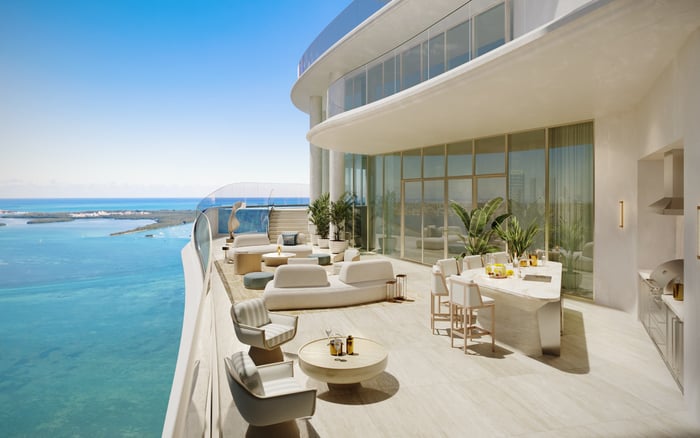
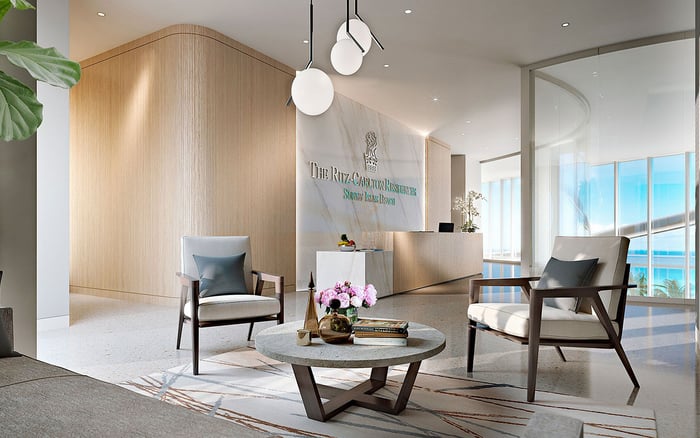
A buyer-oriented look at St. Regis® Residences Sunny Isles through the practical lens of extended guest stays, privacy, access, governance and second-home readiness.

At the highest end of South Florida real estate, the guest suite is no longer an afterthought. For many owners, the real test of a residence begins when family, business partners or close friends arrive not for a weekend, but for several weeks. The question is especially relevant at St. Regis® Residences Sunny Isles, where the conversation naturally moves beyond architecture to how a private home supports a longer rhythm of arrival, privacy and daily life.
St. Regis® Residences Sunny Isles sits squarely within that extended-stay discussion. That makes the issue important, but it does not allow buyers to assume the details. At this tier of the market, brand expectation must be separated from residence-specific operating documents. A name may suggest refinement; the governing materials, house rules and management practices define what actually happens when guests arrive, receive access, use amenities and stay long enough to become part of the building’s daily pattern.
For a South Florida buyer, this is not a minor distinction. The best second-home residences are not merely beautiful when empty. They remain composed when occupied by multiple generations, visiting staff, children on school breaks, or friends who expect privacy without constant owner intervention. The goal is not spectacle. It is control.
When guests arrive for weeks, the first buyer question is simple: who is recognized, who is authorized and who is responsible? That answer should be confirmed in writing before purchase, not improvised after closing. Owners should understand whether guests need advance registration, how building access is handled, what identification may be required, whether owner approval must be renewed and how permissions end when the stay is over.
This is where a residence begins to feel either effortless or complicated. A multi-week guest may need regular elevator access, package handling, parking instructions, amenity privileges and contact protocols for routine questions. None of these items should be assumed at St. Regis® Residences Sunny Isles or at any comparable project. They belong in the buyer’s due diligence file, ideally reviewed with counsel, the sales team and building management where appropriate.
The point is not to reduce hospitality to paperwork. It is to protect the owner’s privacy. A clear guest protocol prevents uncomfortable lobby conversations, uncertain access requests and misunderstandings about who may use what. In a luxury tower, discretion depends on systems that are understood before they are needed.
South Florida’s ultra-prime buyers often talk about finishes, views and wellness programming. For extended guest stays, the more revealing topic is privacy. How does the residence support an owner who is not physically present every day? How are temporary occupants treated by the building? What information is visible to staff, neighbors or other residents? How easily can access be changed when plans shift?
These questions matter across Sunny Isles, where branded and design-led towers compete for buyers who already understand the difference between a hotel visit and private ownership. A buyer comparing Bentley Residences Sunny Isles, The Ritz-Carlton Residences® Sunny Isles and St. Regis® Residences Sunny Isles should look beyond surface-level prestige. The deeper comparison is governance: how clearly each residence defines owner control, guest use and building conduct.
Privacy also has a spatial dimension, though exact layouts and operating procedures must be reviewed project by project. Buyers expecting long visits should consider separation between primary and guest sleeping areas, elevator arrival sequence, service access, storage, laundry routines and the ability to host without making the residence feel overrun. These are not abstract lifestyle preferences. They are the difference between a residence that photographs well and one that lives well for a full season.
Sunny Isles sits within a luxury corridor where ownership is often international, seasonal and family-centered. That creates a natural emphasis on homes that can absorb shifting occupancy. A residence may be quiet for weeks, then suddenly host relatives, friends, children, caregivers or business guests. The owner’s life does not pause for those arrivals. The home must flex without losing its poise.
That is why the extended-stay lens is useful for the broader Sunny Isles buyer as well as for someone focused on St. Regis® Residences Sunny Isles specifically. It brings practical issues to the surface. Does the owner want a lock-and-leave pattern? Will guests arrive when the owner is abroad? Is the residence expected to function as a family base during holidays? Could it be used for long-term rentals, if permitted, or is the owner’s intent strictly personal use? These questions should be separated, because personal guests and rental occupants may be treated very differently under association rules and applicable restrictions.
In the oceanfront and near-ocean luxury market, the language of ease can be seductive. Yet ease is never just a view. It is the sum of access, service boundaries, maintenance readiness, guest expectations and confidence that the building’s rules match the owner’s actual lifestyle.
For St. Regis® Residences Sunny Isles, the appropriate due diligence posture is disciplined and specific. Buyers should ask for the documents that govern guest occupancy, amenity access, parking, pets, deliveries, service providers, insurance responsibilities, move-in logistics and any restrictions on rental or non-owner use. If a stay lasts several weeks, those details may matter more than the lobby design.
A useful buyer checklist begins with five questions. First, what is the formal process for registering guests? Second, how are access credentials issued and revoked? Third, what amenities may guests use without the owner present? Fourth, what costs, deposits or approvals may be triggered by extended occupancy? Fifth, how does the residence handle outside vendors, housekeeping support, deliveries and maintenance appointments when the owner is away?
No buyer should assume that a branded residence and a hotel operate the same way. A private residential tower may deliver a polished arrival experience, but it is still governed by residential rules. That distinction is essential for owners who want guests to feel welcomed without blurring the line between hospitality and property control.
The St. Regis® name carries strong associations with service and ceremony, but the ownership decision should remain grounded in residential function. This is also true across the broader South Florida branded landscape. In Brickell, buyers considering St. Regis® Residences Brickell may ask similar questions through a more urban lens. In Fort Lauderdale, St. Regis® Residences Bahia Mar Fort Lauderdale invites another version of the same inquiry, shaped by a different setting and ownership pattern.
The common thread is not whether a project sounds luxurious. It is whether the residence’s operating framework matches the owner’s real use case. A couple who visits three times a year and occasionally hosts adult children has different needs from a family expecting rotating guests for the winter season. A buyer planning strictly private use has different considerations from one evaluating permissible rental pathways. A new-construction purchase may offer the chance to study documents early, ask questions before final commitment and align expectations before the first guest arrives.
For the ultra-premium audience, the most valuable question is often the least glamorous: what happens on day twelve? The initial arrival may be smooth. The harder test is continuity. Are guests still clear on access? Are deliveries managed properly? Is the owner insulated from unnecessary calls? Do amenities remain orderly? Is privacy preserved as routines settle in?
When guests arrive for weeks, the residence should feel neither hotel-like nor unmanaged. It should feel quietly competent. The guest understands how to enter. Staff understand the authorization. The owner understands the limits. The building understands the distinction between welcome and overreach.
That standard is particularly relevant to St. Regis® Residences Sunny Isles because the buyer audience is likely to expect both refinement and privacy. The editorial question is not whether guests can be hosted beautifully. It is how carefully an owner prepares the residence to do so within the project’s actual rules. The answer belongs in documents, planning conversations and a realistic assessment of household rhythm.
For buyers, the extended-stay scenario is one of the clearest ways to evaluate a luxury residence. It reveals whether the property is simply impressive, or whether it can support the layered, international, family-driven life that defines the top end of South Florida ownership.
Is St. Regis® Residences Sunny Isles the focus of this extended-stay discussion? Yes. The article focuses on St. Regis® Residences Sunny Isles and the buyer question of how a residence functions when guests arrive for weeks.
Should buyers assume guest procedures are the same as hotel procedures? No. A private residence may have its own association rules, access policies and owner responsibilities that should be reviewed before purchase.
What is the first issue to confirm for multi-week guests? Buyers should confirm how guests are registered, authorized and removed from access once the stay ends.
Can guests use amenities when the owner is not present? That should not be assumed. Amenity access should be verified through the residence’s governing documents or management guidance.
Why does privacy matter so much for extended stays? Longer visits create repeated interactions with access, deliveries, staff and neighbors, so privacy depends on clear rules and disciplined permissions.
Is this mainly a concern for seasonal owners? It is especially relevant for seasonal and second-home owners, but any buyer who hosts family or friends for weeks should review the same issues.
Should long-term rentals be treated the same as personal guests? No. Rental use and personal guest use may be governed differently, so buyers should separate those questions during due diligence.
Does new-construction change the due diligence process? New-construction can give buyers time to review documents and ask operational questions early, but the final rules still need careful confirmation.
How should buyers compare Sunny Isles branded residences? They should compare governance, access control, privacy standards and real household use, not only architecture or brand identity.
What is the best way to prepare for extended guest stays? Build a written owner plan around registration, access, amenities, deliveries, service providers and the end of each guest’s authorization.
When you're ready to tour or underwrite the options, connect with MILLION.
If branded residences are on your mind — as a home or as an allocation — we would be glad to share what we are seeing, privately.
Begin a quiet conversation