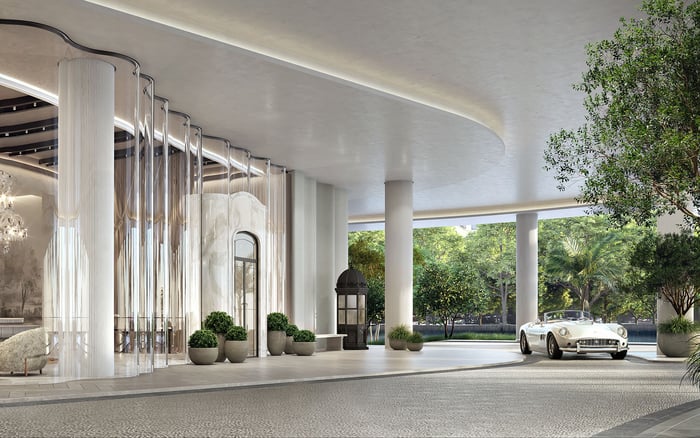
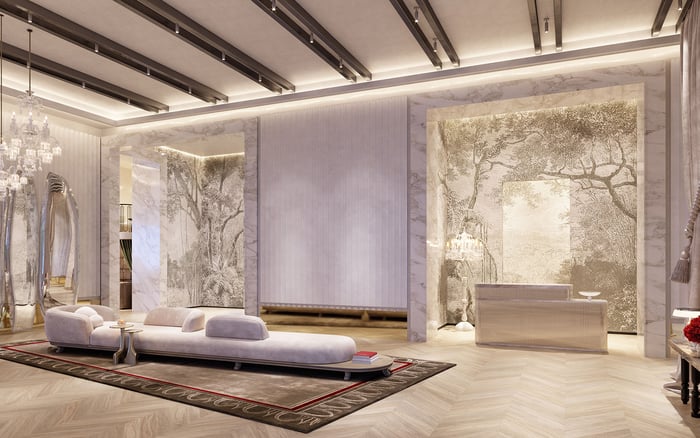
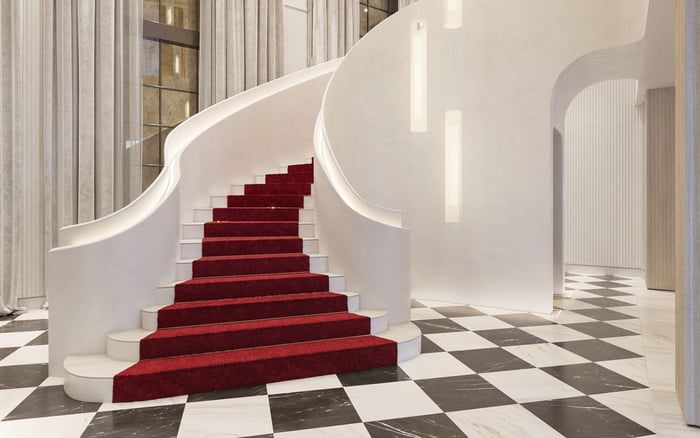
The Residences at 1428 Brickell reflects a quieter definition of luxury in Brickell, one centered on time, privacy, reliability, technology, and the orchestration of daily life.
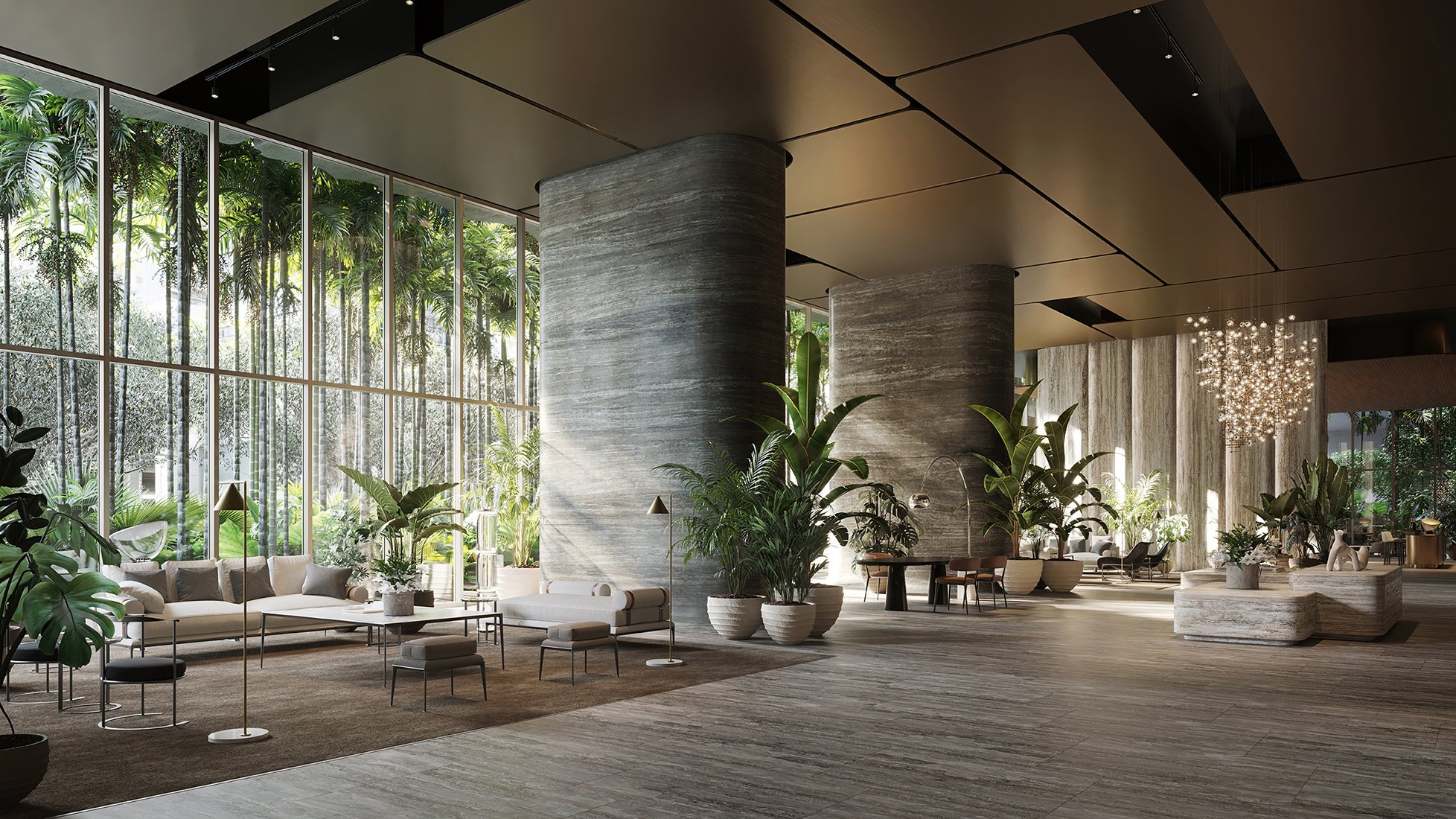
Brickell has always rewarded confidence. Its skyline is vertical, its pace is unapologetic, and its daily rhythm is shaped by finance, restaurants, offices, hotels, and high-end residential towers compressed into one of Miami’s most intensely urban districts. In that setting, luxury is no longer measured only by what can be seen from across the bay. It is measured by how smoothly a residence absorbs the complexity of the day.
That is where The Residences at 1428 Brickell becomes an instructive case study. The project is positioned less as spectacle for its own sake and more as a curated, service-rich urban residence. Its relevance is not simply that it belongs to Brickell’s luxury tower conversation, but that it sharpens a newer question for buyers: how much effort should a home remove from daily life?
Low-friction luxury is the language of that question. It is not anti-glamour. It does not dismiss views, finishes, or architectural presence. Instead, it suggests that the most valuable residential product in a dense urban environment is one that feels coherent, private, efficient, and reliably managed. For high-net-worth buyers with complex schedules, those attributes can matter as much as visual drama.
Brickell’s density is part of its appeal, but it is also why residential design must work harder. A buyer choosing this district is not seeking a remote retreat. They are choosing proximity, velocity, and access. The best residences in this context do not merely sit above the city. They create a protected, intelligible way to live within it.
The Residences at 1428 Brickell fits this conversation because its appeal is framed around time efficiency, operational reliability, privacy, and design coherence. Those ideas are more subtle than an amenity checklist, yet they are often more meaningful in practice. A building can offer many spaces and still feel complicated. A more refined building makes the transition between home, work, wellness, arrival, entertaining, and quiet feel almost invisible.
This is the distinction between high-amenity luxury and low-friction luxury. The first can be counted. The second must be experienced. It depends on how architecture, services, technology, location, and resident expectations are orchestrated into a living system. In Brickell, where the external environment is busy by design, that orchestration becomes a premium feature.
The most compelling reading of The Residences at 1428 Brickell is as a home-first proposition. That phrase matters. It suggests that the residence is not simply a status asset or a place to hold fine materials. It is intended to function as an intelligent base for a highly managed life.
For some buyers, the ideal urban condominium is not defined by constant stimulation. It is defined by a reduction in cognitive load. Can arrivals feel composed? Can privacy be preserved? Can service feel anticipatory without becoming performative? Can technology support convenience without making the home feel overcomplicated? These are the questions that shape the low-friction brief.
The project’s technology-forward positioning is especially relevant here. In luxury real estate, technology is most convincing when it disappears into reliability. It should simplify controls, reduce repetitive decisions, support security and comfort, and allow the resident to move through the home with less administrative drag. In that sense, the best technology is not a gadget story. It is an ease story.
The same applies to design and architecture. The strongest urban residences do not treat design as decoration alone. They use proportion, circulation, material consistency, privacy gradients, and spatial logic to make daily life feel calmer. When those elements are aligned with service, the residence begins to act less like a passive container and more like a discreet operating system.
For buyers evaluating Brickell, the useful comparison is not simply which tower has the most dramatic rendering or the longest amenity roster. It is how each project defines the daily experience of ownership. That is particularly important in a district where luxury towers increasingly compete on integrated lifestyle systems rather than isolated features.
A buyer comparing 1428 Brickell with Baccarat Residences Brickell, Cipriani Residences Brickell, or 2200 Brickell is not only comparing names. They are comparing philosophies of living. Some buyers may respond to hospitality associations; others may prioritize neighborhood scale, brand language, privacy, or the way a building manages the thresholds between public city life and private domestic life.
The most disciplined buyer will ask practical questions. Does the building reduce or add decisions? Does the service model feel intuitive? Does the residence plan support both entertaining and retreat? Does the location make everyday movement easier? Does the overall experience feel composed rather than over-programmed?
These questions are not less luxurious because they are practical. They are more luxurious because they recognize time as a scarce asset. In Brickell, where many residents operate across demanding professional, social, and family calendars, the value of a well-run home is not abstract. It is felt every morning, every arrival, every private dinner, and every quiet hour between obligations.
Low-friction luxury is ultimately about orchestration. A tower can have impressive elements, but the resident judges the whole. The lobby experience, private arrival sequence, residence layout, technology layer, service culture, privacy posture, and sense of design continuity must reinforce one another. When they do, the building feels effortless. When they do not, even expensive details can feel noisy.
This is why The Residences at 1428 Brickell occupies a meaningful place in the current Brickell dialogue. Its narrative aligns with a broader shift away from luxury as visible accumulation and toward luxury as seamless day-to-day living. The buyer it speaks to is not necessarily seeking understatement for its own sake. They are seeking control, calm, and precision in a city district defined by motion.
That buyer may still care deeply about views, materials, and architectural identity. But those attributes are no longer enough on their own. The next layer of discernment asks whether the residence can manage the resident’s life with grace. In a mature luxury market, the difference between impressive and indispensable is often operational.
For Brickell, this evolution is significant. The district does not need to prove that it can attract luxury towers. It has already done that. The more interesting question is which buildings can make vertical city living feel less effortful, more private, and more intelligently composed. The Residences at 1428 Brickell belongs in that conversation because it frames luxury not as excess, but as relief.
What does low-friction luxury mean in Brickell? It means a residence designed to reduce daily complexity through service, privacy, technology, spatial clarity, and operational reliability.
Why is The Residences at 1428 Brickell relevant to this idea? The Residences at 1428 Brickell is positioned around curated, service-rich urban living rather than spectacle alone.
Is low-friction luxury the same as having many amenities? No. It depends less on the number of amenities and more on how spaces, services, and systems are orchestrated.
Why does this matter specifically in Brickell? Brickell is dense, active, and highly urban, so a residence that simplifies daily life can carry meaningful value.
Who is the likely buyer for this type of residence? It is especially relevant to high-net-worth buyers with complex schedules who value convenience, privacy, and reliability.
Does low-friction luxury still include design quality? Yes. Design coherence is central because it helps the home feel calmer, more legible, and easier to live in.
How should buyers compare Brickell luxury towers? They should look beyond finishes and ask how each building supports daily routines, privacy, service, and ease of movement.
Is technology important to the 1428 Brickell narrative? Yes. The project is presented as technology-forward, with technology understood as a tool for convenience and efficiency.
Does this approach reduce the importance of views? Not entirely. Views remain desirable, but the broader value proposition also includes time efficiency, privacy, and reliability.
What is the larger takeaway for Brickell luxury buyers? The strongest residences increasingly compete on how well they make urban living feel seamless, private, and composed.
For a confidential assessment and a building-by-building shortlist, connect with MILLION.
If branded residences are on your mind — as a home or as an allocation — we would be glad to share what we are seeing, privately.
Begin a quiet conversation