Oceana Bal Harbour is most compelling when viewed not as a seasonal beach perch, but as a serviced oceanfront residence calibrated for long stays, daily rituals, privacy, art, terraces, and practical living.
Oceana Bal Harbour is best understood as a beachfront address with a residential temperament. Its appeal is immediate during the most social months, when Bal Harbour’s oceanfront setting, polished services, and proximity to the sand align with the seasonal calendar. The more revealing question is what remains when that calendar quiets. At Oceana Bal Harbour, the answer is a measured combination of privacy, proportion, art, open-air space, and functional interiors that make the property useful well beyond peak season.
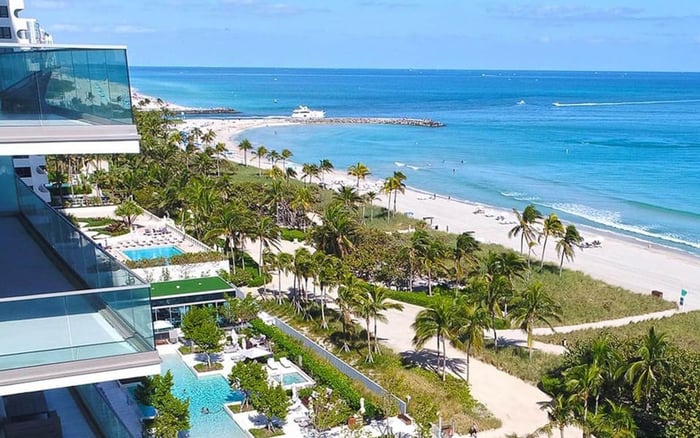
The building occupies a prime oceanfront site associated with the former Bal Harbour Beach Club, giving it both legacy and scale. Its depth from Collins Avenue toward the beach supports setbacks, landscaping, and amenity zones that are more than decorative. They create a buffer between the private residence, the shared environment, and the public rhythm of the oceanfront. For a buyer considering meaningful time in residence, that buffer is central.
In the buyer shorthand used here, this is a Bal-harbour, Oceanfront, Beach-access, Terrace, and Waterview conversation, but the labels only tell part of the story. The address works because those attributes are absorbed into daily living rather than held apart as occasional luxuries.
Seasonal usefulness often depends on whether a building can feel composed when the social intensity recedes. Oceana Bal Harbour benefits from a site plan that lets the property breathe. The depth of the parcel allows the arrival, landscaping, podium, and beach approach to operate as parts of a larger residential sequence. That matters in off-peak months because the home is not reduced to the apartment itself. The lobby, grounds, amenities, terraces, and beachfront access continue to shape the day.
This is where Oceana differs from a purely vacation-minded beach building. It is positioned around private residences with resort-style services, curated shared spaces, and direct engagement with the sand and water. The property does not need peak-season energy to justify itself. Its core value is that the living experience remains clear on an ordinary Tuesday morning, in a quieter shoulder-season week, or during an extended stay.
Buyers comparing Bal Harbour and nearby Surfside may also look at addresses such as Rivage Bal Harbour or Arte Surfside, but Oceana’s particular story is rooted in how its site, art, and terraces translate oceanfront living into a more continuous residential routine.
The building program is described as two glass residential towers rising above a podium, with an architectural emphasis on daylight and water views. Floor-to-ceiling glass, open-plan interiors, and large private terraces are not merely aesthetic gestures. They determine how the home performs when residents spend longer periods there.
Many residences are oriented toward Atlantic Ocean views, while some also capture Intracoastal Waterway and skyline outlooks. That variety of exposure gives the day a sense of movement. Morning light, shifting water color, and the contrast between ocean and city become part of the residence’s rhythm. For a buyer planning to occupy the home beyond holidays, that is more meaningful than a postcard view alone.
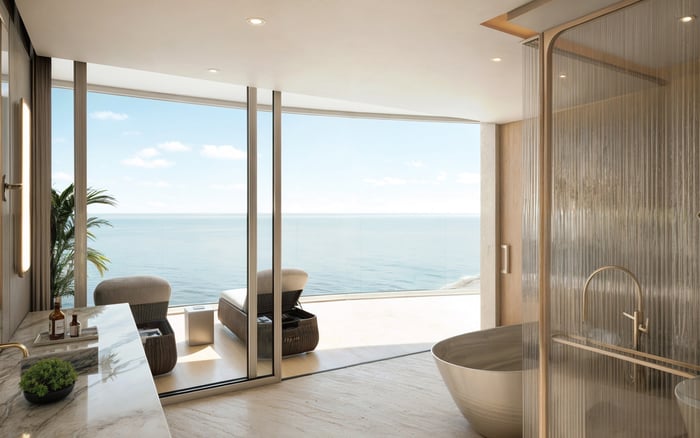
The deep terrace is perhaps the most important feature in the year-round equation. In South Florida’s milder shoulder seasons, a generous terrace extends the living room outdoors without requiring the formality of a full amenity visit. Coffee, reading, informal dining, and quiet evening air can happen privately. The terrace turns oceanfront ownership into an everyday habit.
Oceana Bal Harbour is associated with a museum-grade art program, including works by Jeff Koons in public areas. In many luxury buildings, art is used to mark arrival. Here, the stronger proposition is that art becomes part of the repeated residential experience. The lobby, grounds, and shared areas are not simply spaces to pass through. They help define the identity of living there.
This matters beyond peak season because the building’s atmosphere does not depend solely on crowds, events, or social programming. A carefully composed art environment gives the common areas permanence. Residents encounter the collection in daily circulation, when meeting guests, when returning from the beach, or when moving between amenities and home. The experience is quieter than a resort scene, and arguably more durable.
That design-led point places Oceana within a wider South Florida conversation in which architecture, art, and branded environments have become central to residential value. A buyer looking across the oceanfront and Miami Beach spectrum might also study The Surf Club Four Seasons Surfside or 57 Ocean Miami Beach, not as identical alternatives, but as part of the same broader question: which buildings remain compelling when the beach day is not the entire plan?
The interiors at Oceana Bal Harbour are described through a contemporary and minimalist lens, with clean lines, neutral palettes, and high-end materials. That restraint is important. For longer stays, a residence benefits from visual calm, flexible furnishing possibilities, and finishes that do not overwhelm daily life.
Kitchens are described with integrated or panelized appliances and practical storage, which speaks directly to extended occupancy. A seasonal pied-à-terre can survive on occasional entertaining. A useful residence needs the kitchen to support ordinary meals, groceries, preparation, and storage without compromising the elegance of the main living space.
Bathrooms reinforce the same long-stay profile, with large-format stone, walk-in showers, and soaking tubs. These are familiar luxury cues, but their value is practical as well as sensorial. They give the residence a private spa quality without requiring every wellness ritual to be outsourced to the amenity floor.
Functional details also matter. Full-size laundry, generous closets, and flexible rooms or service quarters in larger units are the features that determine whether a home works for a week or for a season. They make room for clothing, household routines, guests, support staff, and shifting uses over time.
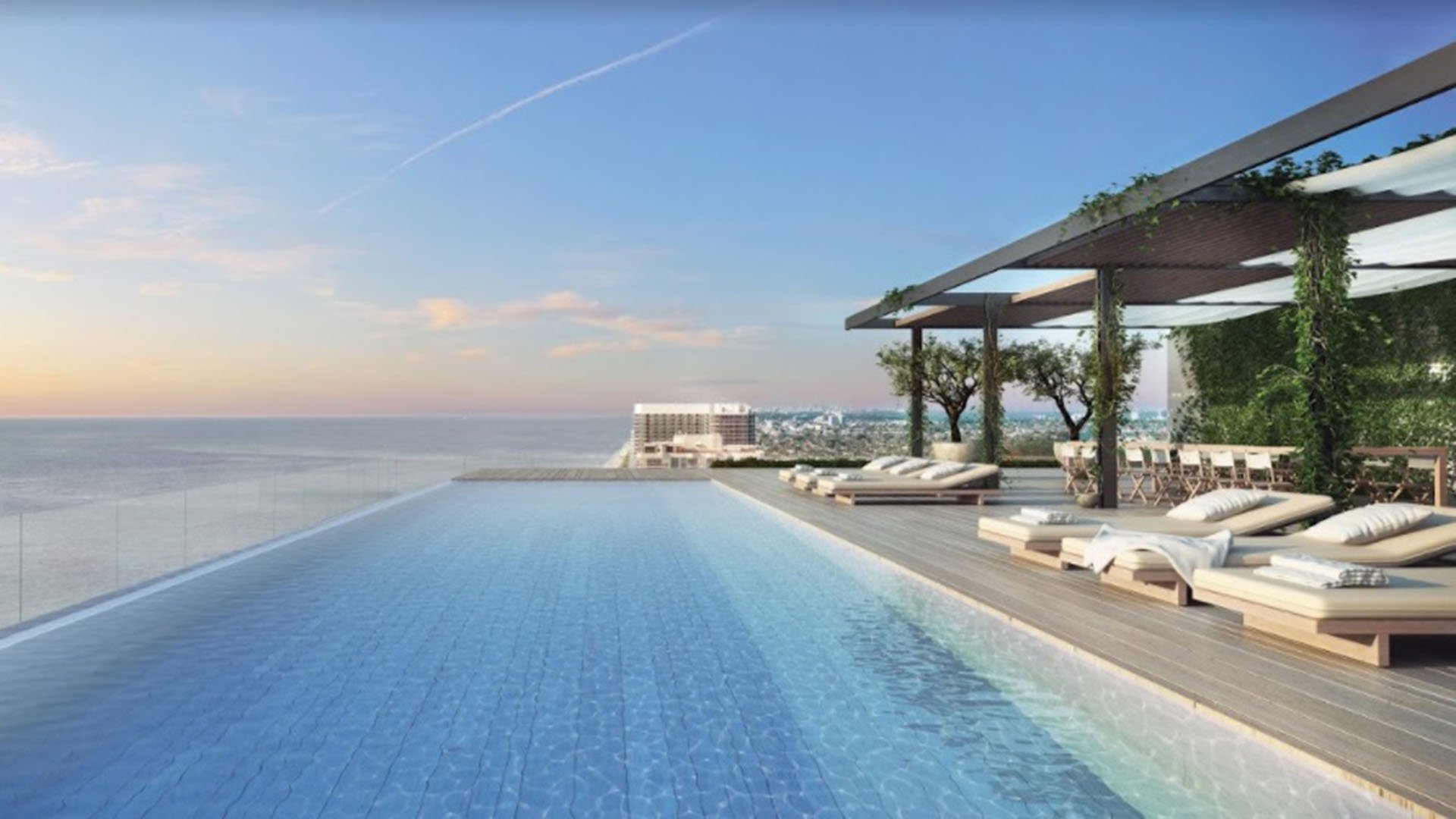
The property’s broader usefulness comes from the relationship between private residences, resort-style services, curated common spaces, and beachfront access. The amenity and building systems reduce the gap between peak-season and off-season usability. In practice, residents can use the property as a serviced year-round residence rather than treating it as a beautiful but narrow beach resort.
This is a subtle distinction, but it is central to the ultra-premium buyer. A residence that works only when the calendar is full may feel exciting for a short time and inefficient the rest of the year. A residence that supports privacy, routine, dining at home, outdoor living, beach access, artful circulation, and easy services can remain relevant through quieter months.
Oceana Bal Harbour’s advantage is not one isolated amenity. It is the layering of useful components: the oceanfront site, the depth of the property, the glass towers, the private terraces, the art program, and the practical interiors. Together, they create a building that is less about escape and more about continuity.
What makes Oceana Bal Harbour useful beyond peak season? Its appeal comes from the combination of private residences, resort-style services, curated shared spaces, beachfront access, and practical interiors designed for longer stays.
Is Oceana Bal Harbour directly connected to the beach lifestyle? Yes. The property is positioned as a luxury beachfront condominium address in Bal Harbour, with oceanfront living central to its identity.
Why does the site depth matter? The depth from Collins Avenue toward the beach supports larger setbacks, landscaping, and amenity zones that make the property feel more complete than a tower alone.
How are the buildings organized? The program is described as two glass residential towers above a podium, designed to maximize daylight and water views.
Do the residences emphasize outdoor living? Yes. Floor-to-ceiling glass, open plans, and large private terraces extend living space outdoors and make the oceanfront setting part of daily life.
Are the views primarily ocean-facing? Many residences are oriented toward Atlantic Ocean views, while some also capture Intracoastal Waterway and skyline outlooks.
What role does art play at Oceana Bal Harbour? The property is associated with a museum-grade art program, including works by Jeff Koons in public areas, making art part of the everyday residential experience.
Are the interiors suited to extended occupancy? Yes. Contemporary minimalist design, practical kitchens, refined bathrooms, full-size laundry, generous closets, and flexible rooms support longer stays.
Is Oceana Bal Harbour more like a resort or a residence? Its value is that it behaves more like a serviced year-round residence than a purely seasonal beach resort.
Who should consider this address? It suits buyers who want Bal Harbour privacy, beachfront access, design-led common spaces, and a home that remains useful outside the busiest months.
To compare the best-fit options with clarity, connect with MILLION.
If branded residences are on your mind — as a home or as an allocation — we would be glad to share what we are seeing, privately.
Begin a quiet conversation