Kempinski Residences Miami Design District pairs an ambitious wellness program with important ownership questions. Buyers should distinguish recreational water amenities from domestic-water treatment, establish maintenance responsibilities, and review fixture warranties separately from developer coverage.
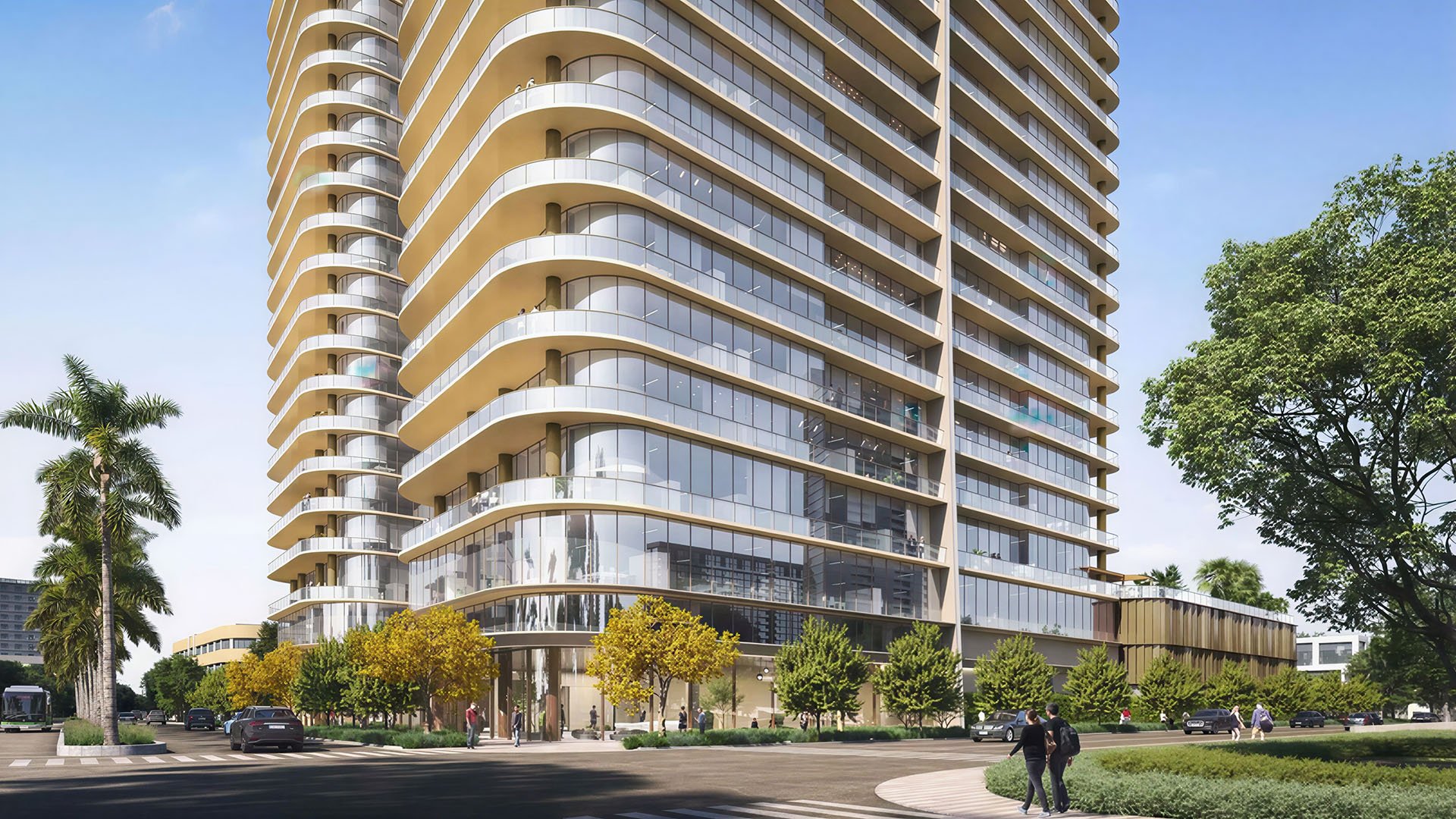
At Kempinski Residences Miami Design District, the ownership proposition extends beyond architecture and hospitality. The planned two-tower condominium at 3801 and 3883 Biscayne Boulevard is Kempinski’s first standalone residential project in the United States. For buyers considering a carefully managed Miami residence, quieter questions deserve equal attention: what reaches the tap, who maintains any treatment equipment, and where fixture coverage begins and ends.
Those questions should remain distinct. Water-quality testing evaluates specified conditions. Filtration treats water through particular equipment. Warranties address defined obligations and exclusions. A sophisticated amenity program does not, by itself, answer any of them.
The objective is not to assume a deficiency. It is to establish a written operating framework before ownership, with clear responsibilities for testing, servicing, replacement, and claims.
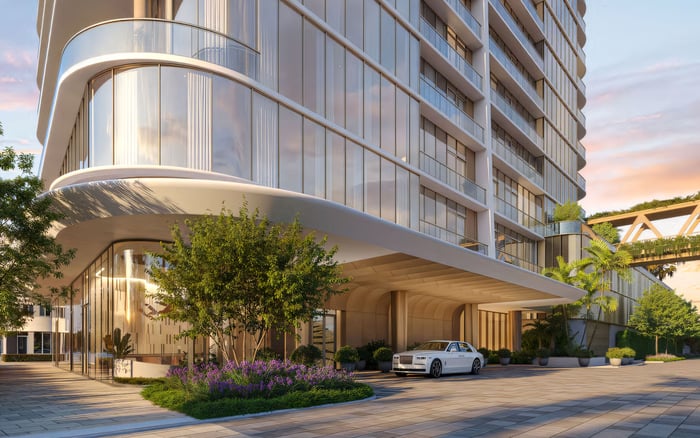
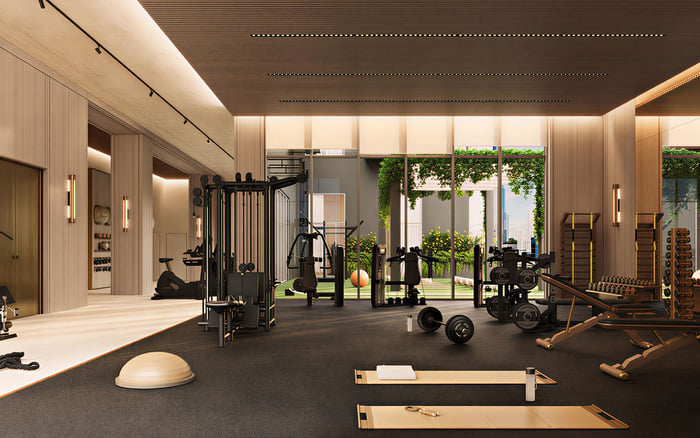
Arquitectonica is the project architect, and the residential presentation emphasizes corner residences, extensive glazing, and expansive terraces. An elevated third-floor amenity bridge is planned between the towers, with wellness offerings that include a lap pool, cold plunge, spa, recovery zones, and infrared and steam saunas.
Advertised residential appointments include private water closets, Kohler smart toilets, and Kallista fixtures. These names identify elements of the proposed specification-not the applicable warranty terms. They do not establish electronics coverage, approved-service requirements, cleaning restrictions, or responsibility for removal and reinstallation costs.
Buyers should request the final equipment schedule and corresponding warranty documents rather than treat a brand name as a service commitment. Where a specification remains subject to final selection, ask how the delivered model and its coverage will be documented at handover.
The advertised water amenities include a resort-style pool, an 85-foot continuous-swim lap pool, a beach-entry pool, and two jacuzzis. These features belong to the recreational and wellness program. They do not confirm enhanced treatment of water supplied to residential kitchens or bathrooms.
The publicly described amenities establish neither a building-wide drinking-water purification system nor domestic-water filtration and softening specifications. The absence of a public specification does not establish that equipment is absent. Equally, wellness language should not be read as confirmation that it exists.
For buyers also considering The Well Bay Harbor Islands, the same discipline applies: evaluate lifestyle offerings separately from the written domestic-water specification. This is a diligence principle, not a statement that the developments share equipment or operating policies.
The publicly disclosed project details do not establish an adopted domestic-water sampling frequency, lead or PFAS testing protocols, or a designated testing laboratory. Buyers should therefore seek the actual water-management policy, if available, rather than infer a schedule from the development’s scale.
A useful written request would address the following:
Which domestic-water locations would be sampled, and for which parameters?
Who commissions testing, selects the laboratory, and receives the results?
What routine schedule or event-based testing policy is proposed?
How would owners receive findings and notice of corrective action?
These are questions to resolve, not descriptions of an adopted Kempinski program. Technical procedures may appear in management policies or separate operating manuals rather than in the condominium disclosure package.
Testing and treatment should be reviewed together without being conflated. A filtration description does not establish the scope of testing; a test result does not identify who maintains the equipment. Request each commitment separately.
Before allocating responsibility, establish whether any treatment equipment serves the building, an individual residence, or a particular fixture. The equipment schedule should identify what is being delivered. The governing documents and applicable operating arrangements should clarify who services it.
For any confirmed system, request a written allocation covering inspections, cartridge or media replacement, service access, recurring charges, and eventual replacement. If an owner proposes an additional in-unit filter, ask which approvals and installation conditions would apply. Hospitality branding is not a basis for assuming any of these obligations.
The distinction becomes especially important when a failure occurs. Responsibility for routine upkeep does not automatically extend to a defect, casualty repair, or resulting damage. A common pipe and a private fixture can raise different questions; the cause of a loss matters alongside the equipment’s location.
Buyers should ask counsel to identify the relevant provisions rather than accept a broad assurance that management handles everything. Convenience is most valuable when its contractual boundaries are clear.
Florida’s condominium framework includes developer implied warranties for units, improvements, and key building systems for defined periods. These protections can benefit initial purchasers and successors within the applicable timeframes. They should not be treated as an unlimited warranty for every fixture or filtration component.
Manufacturer product warranties are a separate category. For the advertised smart toilets and fixtures, obtain the applicable product documents and establish the covered components, exclusions, claim procedure, and service arrangements. Do not assume exact coverage periods or conditions before reviewing those documents.
Casualty-damage repair allocations form a third category. Florida’s applicable framework addresses association responsibility for covered original installations or like-kind-and-quality replacements, while identifying in-unit water heaters and water filters among the exclusions from that specified responsibility. This does not, by itself, determine ordinary maintenance duties, defect coverage, or liability for a leak.
A buyer comparing Kempinski with St. Regis® Residences Brickell should apply the same document-based review to each property. Shared expectations of branded living do not establish identical maintenance or warranty arrangements.
Begin with the brochure and developer-furnished condominium disclosure package, then obtain the declaration, maintenance allocations, equipment schedules, developer warranty materials, and manufacturer warranties. Request any available water-management policies separately. Do not assume the statutory disclosure package contains every technical protocol.
The review should distinguish confirmed specifications from unresolved operating details. For each confirmed system, record the responsible party, payment obligation, service contact, and governing provision. For unresolved items, seek written clarification before relying on an anticipated service level.
The ownership standard worth pursuing is straightforward: a residence whose daily operation is as clear as its design. At Kempinski, that means assessing the wellness offering on its own merits while independently documenting domestic-water testing, any filtration duties, and fixture-warranty boundaries.
For a discreet conversation about South Florida ownership priorities, connect with MILLION.
If branded residences are on your mind — as a home or as an allocation — we would be glad to share what we are seeing, privately.
Begin a quiet conversationThe planned two-tower condominium is located at 3801 and 3883 Biscayne Boulevard, Miami, FL 33137.
The publicly described project amenities do not confirm a building-wide drinking-water purification system. Buyers should request the domestic-water equipment specifications.
No. Recreational and wellness water amenities do not establish how water supplied to residential kitchens and bathrooms is treated.
The publicly disclosed details do not establish a sampling frequency, lead or PFAS testing protocols, or a designated testing laboratory.
Kempinski-specific responsibility must be established through the governing documents and applicable operating arrangements. Buyers should separately confirm servicing, cartridge replacement, and payment obligations for any installed equipment.
The advertised appointments include Kohler smart toilets and Kallista fixtures. Their identification does not establish the applicable warranty coverage.
No. Developer implied warranties and manufacturer product warranties are distinct, and neither provides blanket coverage for every fixture or filtration component.
Florida condominium statutory implied warranties can benefit successors within the applicable timeframes. Counsel should assess the relevant provisions and timing for the purchase.
No. The exclusion of in-unit water heaters and water filters from specified association damage-repair responsibility does not by itself determine routine maintenance, defect coverage, or leak liability.
Request the condominium disclosure package, declaration, maintenance allocations, equipment schedules, and developer and manufacturer warranties. Ask separately for any available water-management policies or operating manuals.