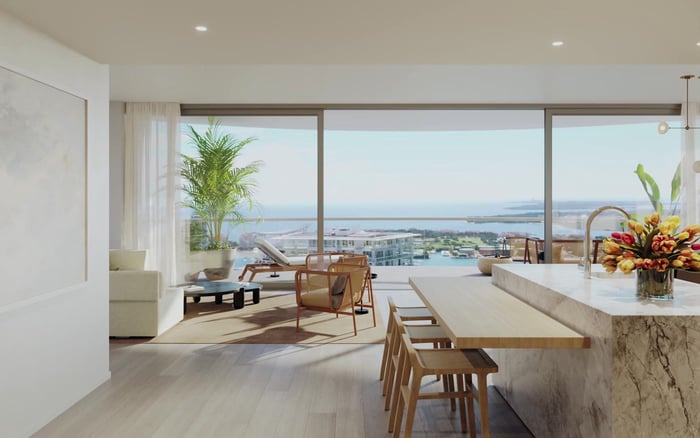
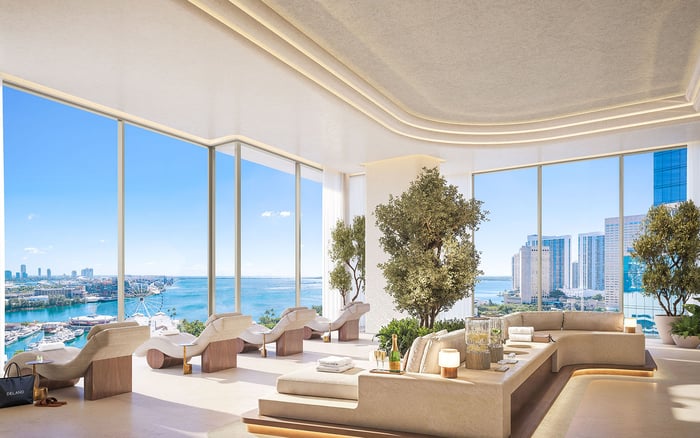
A buyer-focused look at how Five Park Miami Beach suggests a new level of operational planning, where hospitality service, privacy, deliveries, and public-facing presence must be resolved behind the scenes.
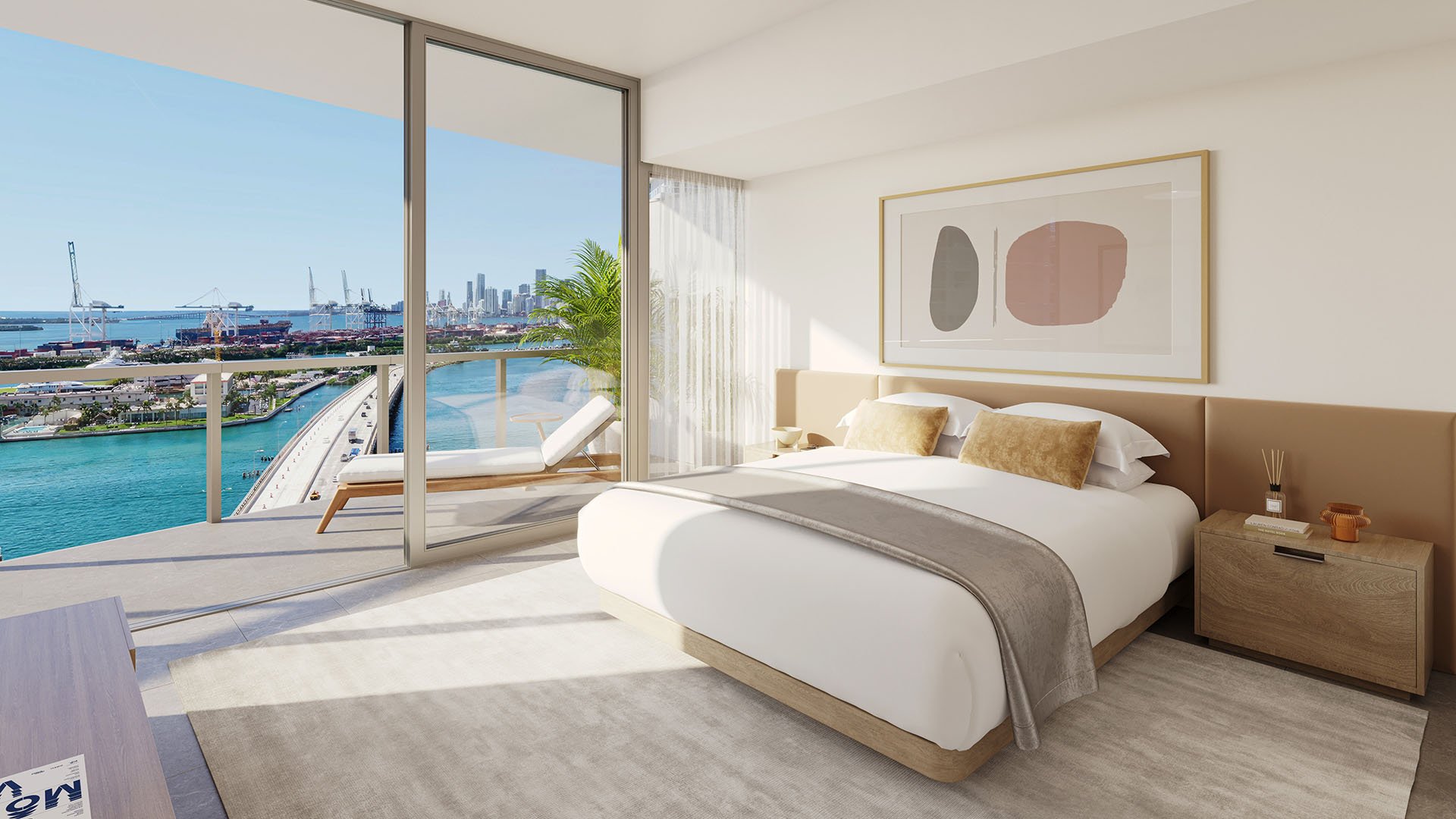
At the southern entrance to Miami Beach, Five Park Miami Beach carries a responsibility that extends beyond skyline presence. Set near the MacArthur Causeway, Alton Road, and Fifth Street, it reads as a threshold between mainland Miami and the island. That position gives the tower unusual visibility, but it also raises the operational standard. A building here must feel serene to residents while absorbing public movement, traffic rhythms, visitor arrivals, deliveries, staff activity, and the daily choreography of luxury service.
That is why the most compelling design conversation around Five Park Miami Beach is not only about views, finishes, or amenities. It is about the disciplined infrastructure behind them. In the newest generation of ultra-luxury residential towers, hospitality is no longer an amenity layered over architecture. It is part of the product itself. Concierge attention, valet coordination, housekeeping support, amenity staffing, maintenance access, and controlled deliveries all require space, sequencing, and discretion.
The visible story of a residential tower is usually front-of-house: lobby volume, arrival sequence, landscape, material palette, and amenity drama. The private story is back-of-house: how people and goods move without disturbing the resident experience. For a buyer, that hidden layer can determine whether a building feels effortless at full occupancy or strained during ordinary daily use.
Five Park is positioned as a gateway landmark between mainland Miami and Miami Beach. That makes it different from many beachfront towers whose luxury is defined by retreat. Here, the project must balance display and control. It is not simply a private vertical enclave; it is part of a highly visible urban edge, with nearby public-realm activity and the Canopy Park context contributing to the sense that the tower belongs to a broader civic setting.
This is where staff logistics become architectural, even when exact drawings are not public. The building’s location implies a need for carefully separated flows: residents arriving home, guests being greeted, staff reporting for shifts, service providers entering and exiting, packages and supplies moving through the property, and amenity teams operating without making the building feel busy. None of that should be theatrical to the owner. The theater belongs to the arrival, the lobby, the views, and the hospitality gestures. The operational machine should remain quiet.
South Beach has a long history of glamorous residential buildings, and the South of Fifth market is especially attuned to privacy, staff discretion, and controlled arrival. In that context, Apogee South Beach remains a useful point of comparison for the value buyers place on calm, spacious arrival experiences, while Continuum on South Beach shows how a large luxury setting can depend on layered operations as much as architecture. Five Park enters that conversation from a more gateway-oriented position, where the public edge is more pronounced.
In ultra-prime residential design, back-of-house is not a secondary concern. It is the amenity that protects every other amenity. A polished spa, pool deck, private dining room, club space, or resident lounge depends on staffing, cleaning, replenishment, maintenance, and security protocols that do not interrupt the atmosphere residents are paying for.
The most successful buildings make this work feel invisible. Deliveries appear controlled rather than improvised. Staff movement feels present when needed and absent when not. Service requests are handled without cluttering public areas. Maintenance can occur without turning corridors, elevators, or amenity thresholds into work zones. Even if exact service-elevator diagrams, loading plans, staff circulation drawings, and operational manuals are not part of the public record, the service promise of a tower like Five Park implies a serious operational framework.
For buyers, this matters because hospitality-style living has a physical footprint. It needs holding areas, coordination points, secure transitions, and routes that preserve privacy. It also needs hierarchy. A resident returning from dinner, an amenity attendant resetting a terrace, and a vendor completing a scheduled delivery should not compete for the same experience. Where that hierarchy is well resolved, the building feels composed.
The southern entrance to Miami Beach is a place of movement. Cars enter the island, pedestrians move through nearby public spaces, and the area functions as a transition between city and resort life. Five Park’s appeal is partly tied to that energy. Yet luxury residential value depends on the opposite sensation once a resident crosses the threshold: control, privacy, and calm.
That tension is central to the tower’s back-of-house logic. The more public the setting, the more disciplined the private systems must be. Service access, deliveries, building operations, and resident-facing hospitality need to be coordinated so the tower does not feel exposed to its own location. The point is not isolation, but filtration. A strong building at this level allows residents to enjoy connectivity without absorbing its friction.
This is also where buyer language becomes precise. Miami Beach visibility is not the same as beachfront seclusion. SoFi adjacency is not the same as being buried inside a private enclave. New-construction expectations are higher because today’s luxury audience understands that convenience must be engineered. A Top Project at this level is judged by how naturally it handles complexity, not merely by how photogenic its public rooms appear.
Across South Florida, the buildings with the strongest long-term appeal tend to treat service as a design discipline. In Miami Beach, The Perigon Miami Beach reflects the market’s appetite for refined residential environments where privacy and arrival matter deeply. In Brickell, towers such as The Residences at 1428 Brickell speak to another version of the same idea: urban luxury requires careful choreography because density magnifies every operational weakness.
Five Park’s setting intensifies that principle. The tower is not competing only on amenity count or finish quality. It is being evaluated as an operating environment. Can the building keep its hospitality promise on a busy winter weekend? Can deliveries remain discreet? Can staff support a robust amenity program without crowding the resident experience? Can the address feel calm even though it occupies one of the most visible entry points to Miami Beach?
Those are not speculative design fantasies. They are practical buyer questions. The most sophisticated purchasers understand that the best service buildings are designed around time: the time it takes to arrive, to be greeted, to receive a package, to host guests, to access amenities, to request assistance, and to move through the property without friction.
A private tour of any ultra-luxury tower should include questions beyond the kitchen, terrace, and primary suite. Buyers should ask how deliveries are coordinated, how valet and concierge teams communicate, how amenity spaces are staffed, how maintenance access is handled, and how privacy is preserved during peak periods. The goal is not to uncover operational secrets. It is to understand whether the building has been conceived as a complete residential ecosystem.
At Five Park, the back-of-house conversation is especially relevant because of the tower’s gateway role. A building can be visually iconic and still feel operationally ordinary. The inverse is also true: a building that handles service with discipline can feel more luxurious than its marketing language ever suggests. The best version of Five Park is not simply a tower at the entrance to Miami Beach. It is a controlled interior world that filters the city before it reaches the resident.
For the ultra-premium buyer, that is the quiet test. The most important spaces may be the ones never photographed, because they protect the ones that are.
Is Five Park Miami Beach a beachfront tower? It is described as a luxury residential tower at the southern entrance to Miami Beach, near major gateway roads rather than as a conventional beachfront-only address.
Why is back-of-house design important at Five Park? The tower’s service promise implies staff workflows, deliveries, maintenance access, security coordination, and privacy systems behind the public experience.
Are exact staff routes or service layouts publicly detailed? Detailed operational manuals, loading plans, staff-circulation drawings, and service-elevator diagrams are not part of the public information used here.
What makes Five Park’s location operationally complex? Its position near the MacArthur Causeway, Alton Road, and Fifth Street places it at a highly visible point of movement into Miami Beach.
How does Canopy Park affect the conversation? The nearby public-realm context reinforces that Five Park is not an isolated enclave, so privacy and public adjacency must be carefully balanced.
What services does a tower like this typically need to support? The service concept implies concierge functions, valet coordination, housekeeping support, amenity staffing, maintenance access, and controlled deliveries.
Why should buyers care about staff logistics? Smooth staff logistics help preserve calm resident arrivals, discreet service, clean amenity operations, and a stronger sense of privacy.
Is back-of-house planning visible during a tour? Usually not directly, but buyers can infer its quality by asking how deliveries, staffing, maintenance, and peak-time arrivals are managed.
How does Five Park compare with more secluded luxury towers? Five Park’s gateway position gives it a more public-facing role, which makes operational separation and discretion especially important.
What is the main buyer takeaway? At this level, luxury is not only what residents see, but how gracefully the building handles everything they should not have to notice.
For a confidential assessment and a building-by-building shortlist, connect with MILLION.
If branded residences are on your mind — as a home or as an allocation — we would be glad to share what we are seeing, privately.
Begin a quiet conversation