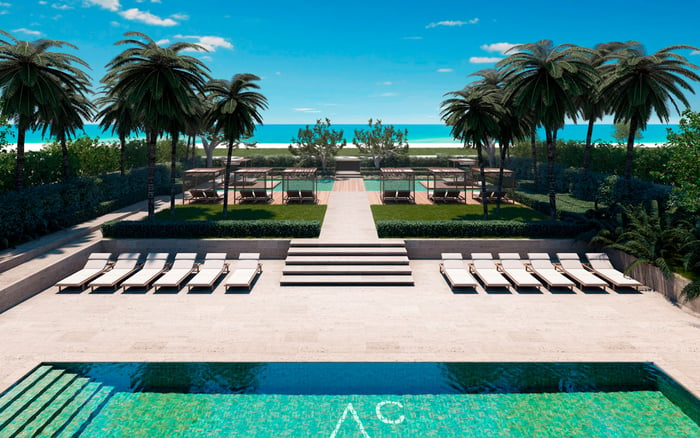
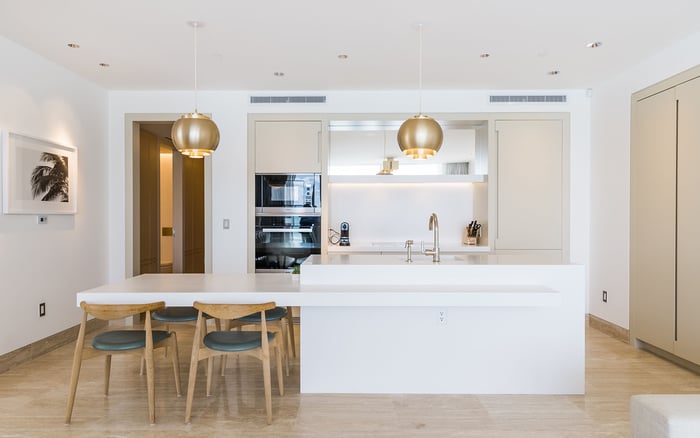
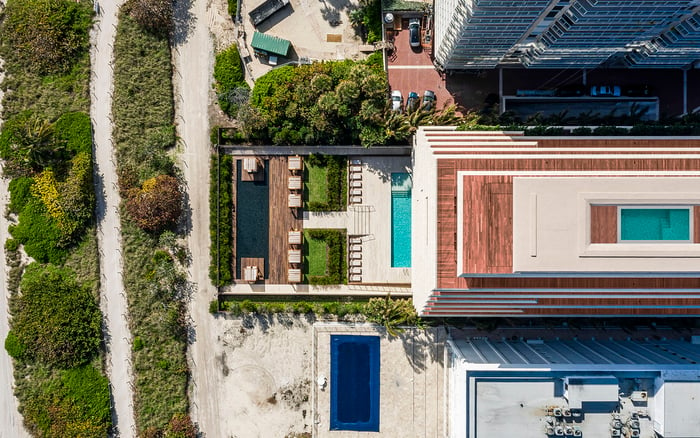
Surfside’s most compelling ownership proposition is moving beyond spectacle. Eighty Seven Park and The Surf Club Four Seasons show how architecture, service, setting and daily family use can converge in an ultra-prime coastal residence.
In Surfside, the most consequential luxury may no longer be the feature that photographs best. For families considering a primary home or frequently used coastal residence, the more incisive question is whether architecture, service and setting can support real life with uncommon grace.
That perspective brings Eighty Seven Park Surfside and The Surf Club Four Seasons Surfside into focus. Both offer ultra-prime oceanfront living, yet their relevance extends beyond visual distinction. They embody an ownership model shaped by regular family use, including children, extended family and the evolving rhythms of hybrid work.
“Family-ready luxury” is best understood as an interpretive lens rather than a formal property designation. It describes a residence chosen not simply as an asset or occasional retreat, but as a setting expected to perform across weekdays, holidays, work sessions and multigenerational stays.
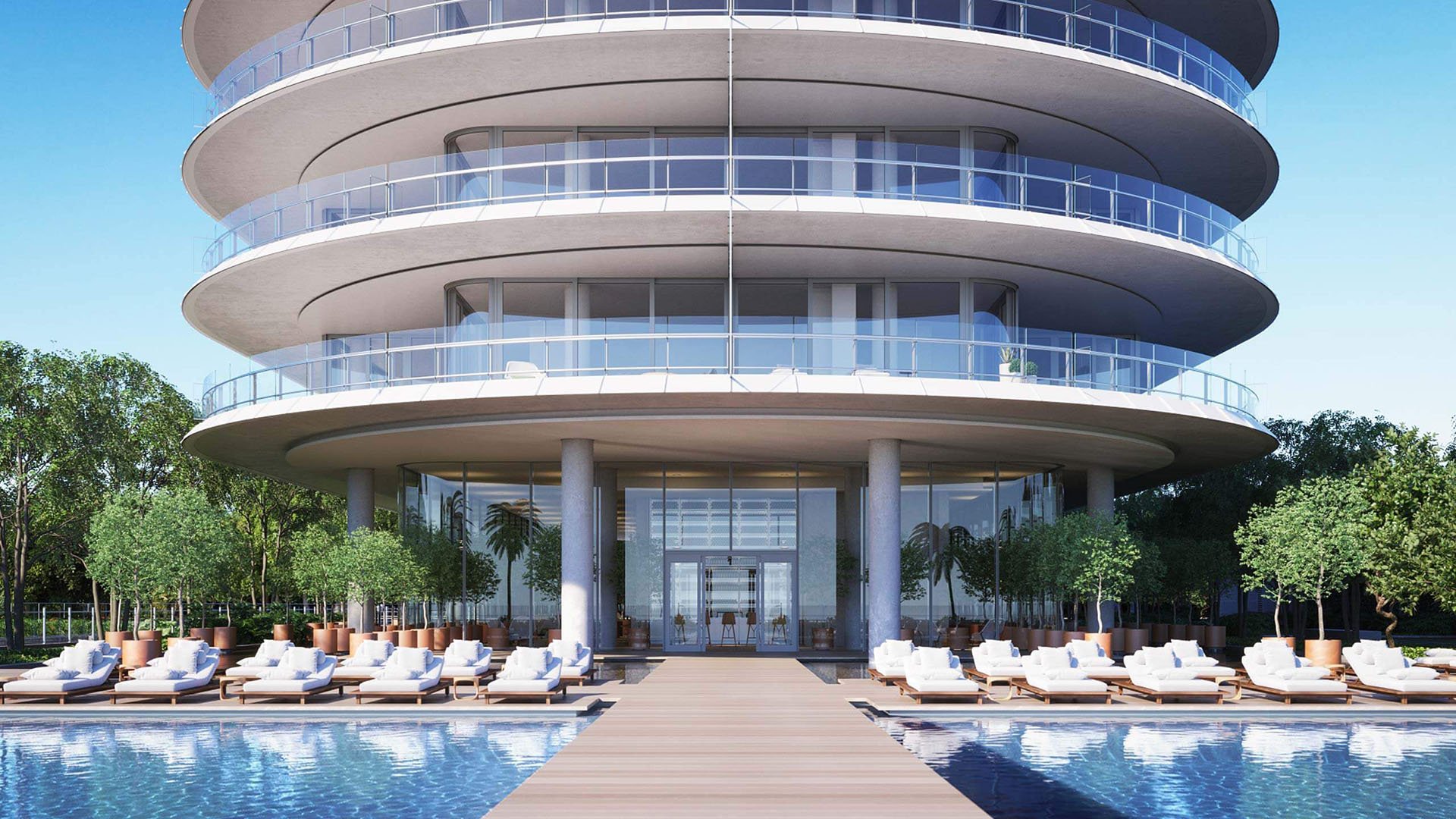
Designed by Renzo Piano, Eighty Seven Park is distinguished by its glass, elliptical form beside the Atlantic Ocean. Its architectural identity is immediately legible, but its appeal to families lies in the relationship among that design, residential services and the coastal setting.
This is design and architecture considered through an ownership lens. A family intending to use a residence intensively must assess more than its silhouette: how the home feels throughout the day, how naturally different generations can share it and whether the broader residential experience reduces friction without overwhelming private life.
The building’s oceanfront position is therefore more than a view-driven attribute. It shapes the cadence of ownership, connecting the residence to its immediate environment and giving the coastal setting a recurring role in family life. The result is a more substantive expression of luxury-one in which architecture supports use rather than standing apart from it.
The Surf Club Four Seasons presents another path to family-ready ownership. Its defining proposition combines branded hospitality services with a luxury residential setting on Collins Avenue. For affluent households, that service culture can matter most when the residence is occupied regularly and by more than one generation.
Branded residences are often discussed in terms of identity, but families may assess them more practically. Service can help a home accommodate changing arrival patterns, extended stays and the overlapping expectations of adults and children. Its value lies not in service as theater, but in its ability to make ownership feel composed.
This distinction is particularly important for households balancing South Florida with other homes or business obligations. Hybrid work has changed how time is distributed, making a coastal residence capable of serving as both a retreat and an everyday base. In that context, hospitality and ownership become complementary rather than separate ideas.
Surfside’s ownership proposition is not confined to a lobby, floor plan or ocean exposure. Neighborhood context belongs in the same conversation as architecture and services because families experience a home through repeated movement between private space and its surroundings.
That broader local spectrum includes established addresses such as Fendi Château Residences Surfside and Ocean House Surfside, as well as The Delmore Surfside. Together, they reinforce the variety within the area’s luxury residential landscape without making every ownership proposition interchangeable.
For a buyer, the neighborhood question is personal. One family may prioritize a hospitality-led environment; another may place architectural authorship or a particular sense of privacy first. The more useful comparison begins with patterns of use, then considers which setting can sustain them elegantly.
A family-ready residence must accommodate intensity without feeling institutional. Children may use the home differently from their parents, while grandparents or other relatives may arrive for longer periods. The right property should support togetherness while preserving the discretion expected at the ultra-premium level.
Buyers should begin by mapping occupancy. Consider who will use the residence, how often stays may overlap and whether work will take place alongside leisure. This exercise reveals whether the appeal of the services, architecture and location will endure beyond the initial impression.
Multigenerational living adds another layer, inviting closer attention to privacy, ease and the home’s capacity to adapt as family circumstances evolve. These are not secondary lifestyle questions. They influence whether a residence can remain relevant over a long holding period.
Long-term resilience also belongs within contemporary luxury ownership. For high-net-worth families, resilience can be understood broadly as the capacity of a residence-and the ownership experience surrounding it-to retain its usefulness as routines, work patterns and family structures change. The strongest choice is not necessarily the loudest. It is the property whose defining qualities continue to matter.
Eighty Seven Park and The Surf Club do not express luxury in identical ways. The former places Renzo Piano’s architecture and its Atlantic setting at the center of the experience. The latter frames ownership through the integration of a prestigious residential environment with branded hospitality services.
What unites them is more significant than any checklist comparison. Each supports the idea that an exceptional Surfside residence should be prepared for actual family life. Beauty remains essential, but it is joined by service, adaptability, neighborhood context and the capacity to support repeated use.
For buyers, this marks a shift from collecting an impressive address to choosing an enduring domestic platform. The residence becomes a place where family life can expand, work can coexist with the coast and luxury is measured by how effortlessly the entire arrangement performs.
What does family-ready luxury mean in Surfside? It describes an interpretive ownership model centered on regular family use, rather than a formal designation offered by a development.
Who designed Eighty Seven Park? Architect Renzo Piano designed Eighty Seven Park.
What defines the architecture of Eighty Seven Park? A glass, elliptical form beside the Atlantic Ocean defines its architecture.
Why is Eighty Seven Park relevant to family buyers? It brings together architecture, residential services and a coastal setting in a proposition suited to intensive family use.
What distinguishes The Surf Club Four Seasons? It combines branded hospitality services with luxury residential ownership on Collins Avenue.
Why does branded service matter for families? Service can make overlapping stays and changing household routines feel more composed, particularly in a frequently occupied residence.
How does multigenerational living affect a purchase? It heightens the importance of privacy, adaptability and a residence’s ability to serve children, adults and extended family together.
How has hybrid work changed buyer priorities? Hybrid work encourages families to consider whether a luxury residence can function as both a coastal retreat and a regular base.
Why should buyers consider the neighborhood context? The ownership experience extends beyond the building, making the surrounding area part of how a family uses and values the home.
What does long-term resilience mean in this context? It means considering whether the residence can remain useful and compelling as family structures, routines and work patterns evolve.
When you're ready to tour or underwrite the options, connect with MILLION.
If branded residences are on your mind — as a home or as an allocation — we would be glad to share what we are seeing, privately.
Begin a quiet conversation