A buyer-focused framework for evaluating private elevator privacy, service circulation, valet operations and everyday arrival quality in Brickell residences.
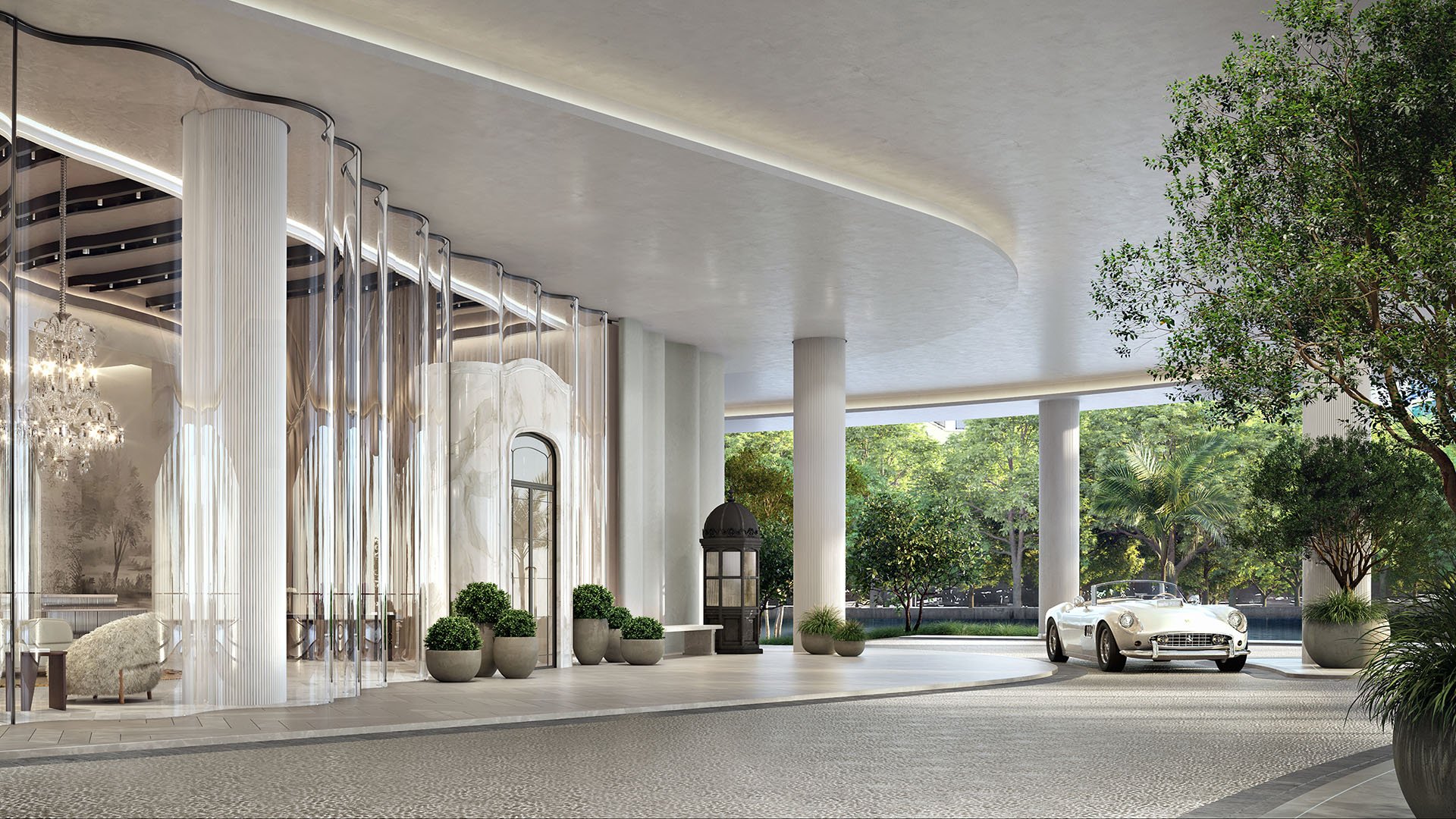
In Brickell, the experience of a residence begins well before its front door. It starts at the curb, continues through the porte cochere or parking entrance and culminates at the elevator threshold. For buyers comparing luxury towers in 2026, private elevator access and valet flow should be assessed as operating systems, not brochure amenities.
This is particularly important in new construction, where buyers may be reviewing renderings, plans and written disclosures rather than observing a fully functioning arrival sequence. It also matters across branded residences, where service expectations may be high, yet practical performance still depends on staffing, circulation and management policies.
The central question is simple: Does the building make daily movement feel calm, secure and intuitive? A polished lobby cannot compensate for vehicle queues, awkward guest handoffs or elevators that mix incompatible traffic during busy periods.
The phrase can describe several arrangements. A dedicated elevator cab may open directly into one residence, while another design may use a shared cab that opens into a private foyer controlled by access credentials. Some layouts may provide restricted floor access without a truly exclusive cab or vestibule.
Ask the sales team to trace the route on the current architectural plans. Identify every door between the elevator and residence, who can authorize access, whether the foyer belongs to the unit or condominium, and how visitors are admitted. Clarify whether residents can temporarily disable direct entry and what happens during a power interruption, alarm or maintenance event.
For high floors, buyers should also examine elevator zoning and transfer requirements. The relevant concern is not an assumed travel time, but the number of stops, access points and operational dependencies between the entrance and the home.
When comparing Baccarat Residences Brickell with Cipriani Residences Brickell, apply the same written checklist to each. A consistent approach makes distinctions in privacy, access control and service routing easier to recognize.
A private arrival should be considered alongside the building’s service network. Household staff, contractors, delivery personnel, pet care providers and emergency responders may follow different routes. Buyers should understand which elevators serve these users, where credentials are issued and whether service traffic can reach the residence without crossing principal amenity or arrival areas.
Request a clear explanation of move-in procedures, oversized delivery handling and contractor access. A service elevator may appear adequate on a plan yet become constrained if it also supports housekeeping, refuse removal and building operations. Ask where packages wait, how refrigerated or high-value deliveries are handled and whether residents must be present for direct-to-residence service.
At The Residences at 1428 Brickell, as with any project under consideration, buyers should verify these points against the latest project documents rather than infer them from the residence layout alone.
Valet quality depends on more than courtesy at the podium. Study vehicle entry, queuing space, key transfer, passenger shelter, luggage staging, parking circulation and retrieval. Then consider how the sequence changes when several residents arrive at once, a rideshare vehicle is waiting and a delivery truck requires access.
Ask where residents request a car and whether the process can begin from the residence. Determine how guests are identified, where they wait and whether their vehicles follow the same route as resident cars. If the household uses drivers, larger vehicles, child seats or frequently carries substantial luggage, walk through those scenarios explicitly.
A useful review separates presentation from capacity. Materials may depict an uncluttered entrance, but buyers need to understand the operating plan during dinner hours, events, storms and shift changes. Discuss staffing assumptions, overnight coverage and procedures for times when the principal drive is temporarily obstructed.
Include St. Regis® Residences Brickell in a comparison only after applying the same questions about arrival, guest processing and vehicle retrieval. The objective is not to select by name, but to compare systems on equal terms.
For completed buildings, visit more than once and do not limit the inspection to a quiet appointment window. Observe the entrance from the street, note where vehicles pause and follow the route from curb to residence. Listen for announcements near private foyers, inspect sightlines when elevator doors open and ask to see the service path where permitted.
For pre-completion purchases, request the latest plans for the lobby, parking levels, loading area and elevator cores. Put operational representations in writing, and have the governing documents, purchase agreement and exhibits reviewed by appropriate legal and technical advisers. Marketing language should never substitute for controlling documents.
This is the practical core of MILLION Buyer’s Guides: examining how architecture, staffing and rules work together. Privacy is not merely separation; it is controlled access without friction. Valet service is not merely parking; it is the reliable choreography of residents, guests, vehicles and belongings.
The best arrangement depends on household habits. A primary resident who commutes daily may prioritize rapid retrieval and predictable elevator access. A second-home owner may focus more on secure guest authorization, remote arrival coordination and procedures during long absences. Families may value covered loading and uncomplicated movement of strollers, groceries and luggage.
Create several realistic scenarios and ask the building team to narrate each one. Include an early airport departure, a catered dinner, a visiting driver, a large delivery and a maintenance appointment. The answers should identify routes, responsible staff and access controls without relying on improvisation.
Before committing, request a final written matrix covering elevator type, foyer ownership, credential rules, backup operation, service circulation, the valet request process, guest protocol and any vehicle limitations. That single document can focus further diligence and reveal where follow-up is needed.
Does private elevator access always mean a dedicated elevator cab? No. It may mean a shared cab with controlled access to a private foyer, so verify the exact configuration.
Who owns and maintains a private elevator foyer? Ownership and maintenance responsibilities can vary. Review the condominium documents and unit boundaries with counsel.
Can guests enter directly into the residence? Access depends on the credential and visitor system. Ask how residents authorize, restrict and revoke guest entry.
What should I check about elevator backup operation? Ask what happens during power loss, fire service, maintenance and equipment downtime, including the alternate route.
Why does the service elevator matter to buyers? It shapes how staff, deliveries, contractors and building operations reach the home without disrupting the main arrival.
How should I assess valet performance before buying? Observe the entrance at different times and request a step-by-step explanation of arrival, storage and retrieval.
Should I ask about vehicle size restrictions? Yes. Confirm current limits for height, length, weight, charging, accessories and any mechanical parking equipment.
What valet questions matter for household drivers? Clarify staging, waiting areas, key custody, overnight procedures and how drivers coordinate with the front desk.
Can elevator or valet procedures change after closing? Operating policies and staffing may change, subject to governing documents and management decisions. Review the applicable authority.
What is the most useful final diligence step? Obtain written answers, compare them with current plans and governing documents, and seek legal or technical advice where appropriate.
If you'd like a private walkthrough and a curated shortlist, connect with MILLION.
If branded residences are on your mind — as a home or as an allocation — we would be glad to share what we are seeing, privately.
Begin a quiet conversation