A buyer-oriented editorial on the South Florida neighborhoods where Michelin-starred dining most meaningfully shapes luxury residential appeal, from Brickell and Miami Beach to Coconut Grove, Coral Gables, Surfside, and Palm Beach.
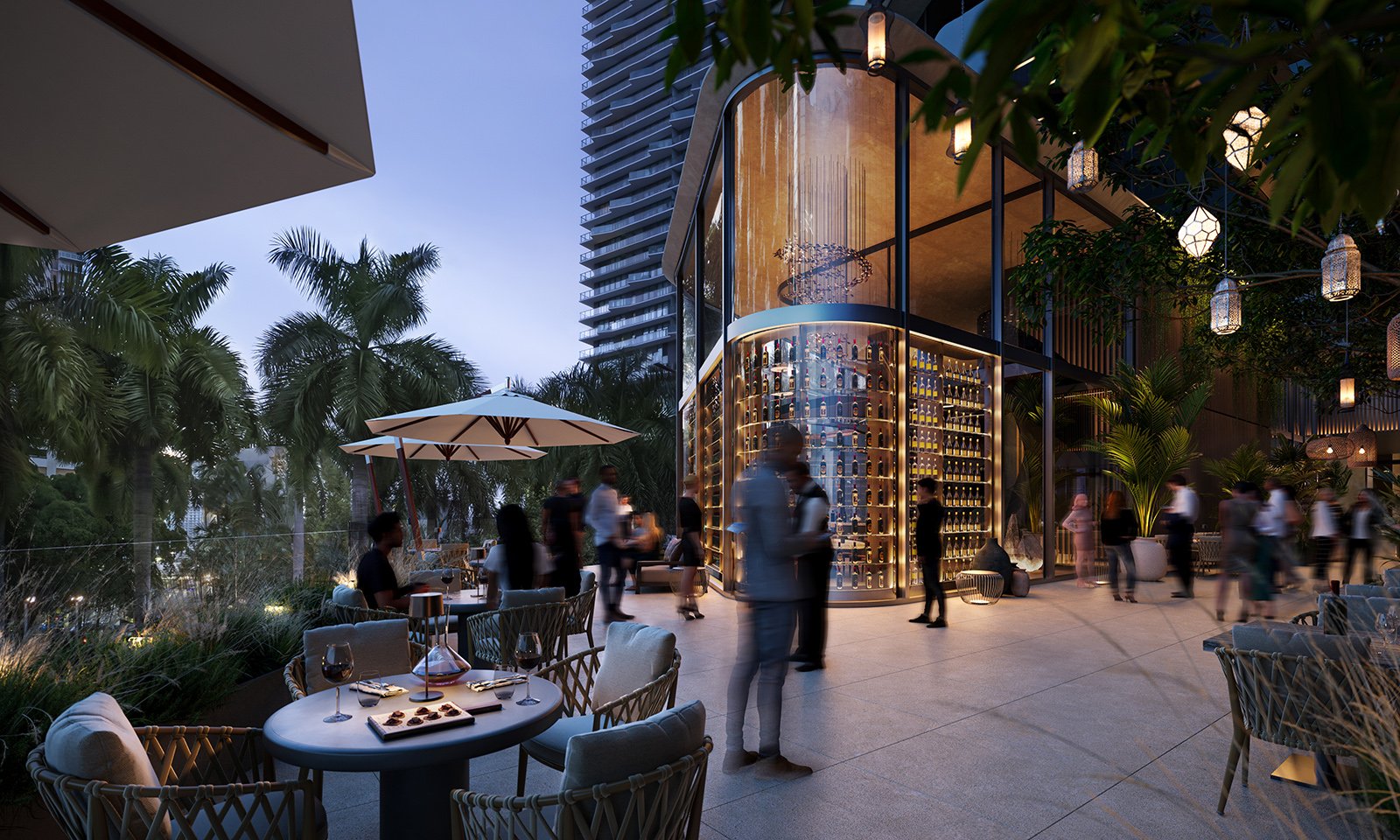
In South Florida's upper tier, luxury is increasingly defined as much by proximity to experience as by square footage, waterfront orientation, or concierge depth. Among the clearest signals is the concentration of Michelin-starred dining and adjacent culinary culture. For discerning buyers, these amenities are more than a convenience for entertaining. They signal a district with mature demand, international relevance, polished hospitality, and the kind of daily rhythm that supports long-term value.
Within the MILLION Luxury universe, the neighborhoods that rise to the top are those where fine dining is woven into a broader ecosystem of private clubs, cultural programming, design-forward retail, and highly serviced residences. In practical terms, buyers tend to gravitate toward places where a reservation-worthy dinner requires little logistical effort and where an elevated social life can unfold within a short drive, or ideally, on foot.
South Florida does not distribute Michelin-level amenities evenly. The strongest concentrations are centered in a select group of districts that pair dense luxury development with sustained culinary investment.
1. Brickell and greater urban core - the power-dining address
Brickell has become the clearest expression of Miami's modern luxury city lifestyle. Its appeal rests on density, business gravity, and a dining culture built for both weekday entertaining and late-evening social circulation. For buyers seeking a residence embedded in an active urban setting, Brickell's concentration of polished restaurants, cocktail destinations, private dining rooms, and hotel-driven hospitality remains unusually compelling.
That positioning helps explain the resonance of projects such as 888 Brickell by Dolce & Gabbana, The Residences at 1428 Brickell, and ORA by Casa Tua Brickell, each of which appeals to buyers seeking immediate access to refined dining and a highly serviced urban lifestyle. In Brickell, Michelin-starred proximity reads as part of a broader luxury infrastructure rather than an isolated perk.
2. Miami Beach - the grand stage for hospitality-led luxury
Miami Beach remains one of the region's most visible concentrations of elite hospitality. Here, Michelin-starred amenities are amplified by oceanfront hotels, design destinations, and a social calendar that draws an international clientele. The experience is less about a single dining corridor and more about a layered network of high-touch venues extending from South Beach into quieter, more residential pockets.
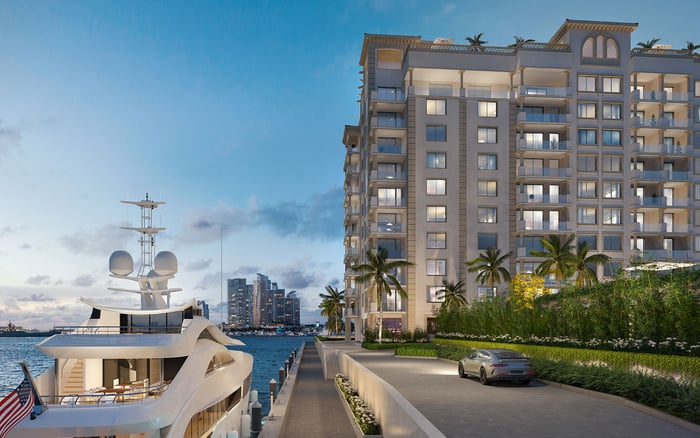
This is especially relevant for buyers considering residences like The Perigon Miami Beach. In this setting, the value proposition is as emotional as it is practical: one can live in a residentially protected environment while remaining minutes from some of South Florida's most coveted tables.
3. Coconut Grove - low-key sophistication with serious culinary depth
Coconut Grove offers a more discreet interpretation of luxury. The neighborhood's appeal lies in canopy streets, bayfront calm, and a village-like street pattern that softens the intensity found in denser urban districts. Yet its dining scene has matured in a way that places it firmly in the conversation for buyers who prioritize Michelin-level access without the overt theatricality of Miami Beach or Brickell.
For residents at Four Seasons Residences Coconut Grove or The Well Coconut Grove, the attraction is continuity. Morning wellness, afternoon meetings, and evening dining can all happen within a compact, elegant geography. That integrated lifestyle is precisely why Coconut Grove continues to appeal to both primary residents and buyers transitioning from colder urban markets.
4. Coral Gables - heritage prestige with polished dining culture
Coral Gables occupies a distinctive position because its luxury identity is anchored in legacy. It offers architectural gravitas, established residential streets, and a cultivated commercial core that supports elevated dining without sacrificing composure. Michelin-starred amenities here feel less performative and more embedded in a traditional notion of affluent living.
That context benefits projects such as Ponce Park Coral Gables, where the draw is not merely new-construction polish but access to a neighborhood long associated with refined entertaining. For buyers who value stability, walkable elegance, and an address that reads timeless rather than trendy, Coral Gables is one of South Florida's most persuasive choices.
5. Surfside and Bal Harbour vicinity - compact, discreet, and exceptionally curated
Surfside and neighboring Bal Harbour offer a different form of concentration. Rather than broad dining sprawl, the area delivers a tightly edited luxury environment where high-end hospitality, designer retail, and oceanfront residences sit in unusually close proximity. The result is a neighborhood profile that feels intimate yet highly finished.
Residences such as The Delmore Surfside and Rivage Bal Harbour align with buyers who want Michelin-adjacent living in a setting defined by privacy and restraint. In this pocket, the concentration of amenities matters precisely because the neighborhood remains compact enough to feel exclusive.
A high concentration of Michelin-starred amenities usually signals more than culinary prestige. It often suggests a neighborhood with durable discretionary spending, sustained visitor demand, polished service culture, and strong landlord confidence in the area's long-term relevance. In luxury real estate terms, that combination can support both resale appeal and day-to-day livability.
It also helps separate neighborhoods that are merely expensive from those that are fully formed. A waterfront tower may be architecturally impressive, but if the surrounding district lacks genuine dining depth, the owner's lifestyle becomes more dependent on cars, planning, and private staffing. By contrast, neighborhoods with meaningful restaurant density tend to offer a more seamless kind of luxury, one in which spontaneity is part of the appeal.
This is especially important in Brickell, Miami Beach, Coconut Grove, and Coral Gables, where dining can anchor everything from client entertainment to family celebrations and informal neighborhood social life. In these markets, culinary excellence becomes part of the residential product, even when it sits beyond the building's front door.
Not every high-value luxury neighborhood competes on restaurant density alone. Palm Beach and West Palm Beach, for example, increasingly appeal to buyers who want polished dining access within a more measured social tempo. Their advantage is not necessarily saturation, but a refined balance between residential tranquility and cultural convenience.
Similarly, select waterfront enclaves in Aventura or Bay Harbor-adjacent areas may not carry the same concentration as Brickell or Miami Beach, yet they still benefit from proximity to a broader dining orbit. For some buyers, especially those prioritizing family use or a second-home cadence, that slight remove is a feature rather than a compromise.
At the highest price points, buyers rarely frame the conversation around restaurants alone. They talk about convenience, social fluency, guest experience, and whether a neighborhood feels complete. Michelin-starred amenities become shorthand for all of those things. They indicate that a district can support a sophisticated lifestyle with minimal friction.
That is why the strongest neighborhoods for this theme are not simply beautiful. They are operationally elegant. A buyer can host with confidence, dine exceptionally close to home, and rely on a surrounding ecosystem that reflects the same standards expected inside a premier residence. In South Florida, that is increasingly a defining line between a compelling address and a truly world-class one.
Which South Florida neighborhood is most associated with Michelin-starred dining access? Brickell is among the strongest candidates because it combines dense luxury living with a particularly active fine-dining scene.
Is Miami Beach still a top choice for buyers who prioritize elite dining? Yes. Miami Beach pairs oceanfront living with one of the region's deepest hospitality ecosystems.
Why does Coconut Grove appeal to culinary-minded luxury buyers? It offers a more discreet setting while still delivering polished dining and an easy day-to-evening lifestyle.
Does Coral Gables compete with newer luxury districts? Absolutely. Coral Gables offers heritage prestige and refined dining in a setting that feels established and timeless.
Are Surfside and Bal Harbour more private than Brickell or South Beach? Generally, yes. They tend to deliver a quieter, more curated luxury experience with strong hospitality access nearby.
Do Michelin-starred amenities influence resale perception? They often do, because they signal neighborhood maturity, service quality, and broader lifestyle appeal.
Is restaurant concentration as important as waterfront location? For many buyers, both matter. Waterfront views create emotional value, while dining access shapes everyday use.
Which neighborhoods best suit full-time residents rather than occasional owners? Brickell, Coconut Grove, and Coral Gables often stand out because they support a highly functional daily routine.
Can Palm Beach still appeal without the same urban dining density? Yes. Palm Beach attracts buyers who prefer quieter prestige with refined access rather than constant activity.
What should buyers prioritize when comparing these neighborhoods? Focus on how well dining, services, privacy, walkability, and residential character align with your preferred rhythm.
When you're ready to tour or underwrite the options, connect with MILLION Luxury.
If branded residences are on your mind — as a home or as an allocation — we would be glad to share what we are seeing, privately.
Begin a quiet conversation