A practical luxury-buyer framework for young families evaluating Miami Design District living, with emphasis on school logistics, daily rhythm, building rules, noise, amenities, and long-term fit.

Miami Design District has a particular seduction: polished storefronts, architectural retail, galleries, dining, and an urban cadence that feels curated rather than chaotic. For a young family, however, desirability is not the central question. The question is whether the neighborhood performs when a toddler wakes early, a school run slips behind schedule, a nanny needs predictable access, or grandparents arrive with car seats and luggage.
The most disciplined buyers do not begin with finishes. They begin with a week in the life. Before committing to a luxury residence near the Design District, rehearse the ordinary moments that will define ownership: breakfast logistics, stroller routes, elevator wait times, parking access, after-school pickups, dinner delivery, bedtime noise, and weekend errands. A home can photograph beautifully and still fail a family if its daily choreography is too fragile.
For buyers drawn specifically to the district, Kempinski Residences Miami Design District belongs in the conversation, but it should be evaluated with the same rigor as any other serious family residence. The brand, architecture, and address matter. So does whether the residence makes Monday morning easier.
For young families, school access is not a line item. It is a quality-of-life engine. The most useful pressure test is not a map search from the sales gallery. It is a live rehearsal during the exact departure and return windows your household will use.
Drive the route in the morning with children in the car, then repeat it in the afternoon. Note where traffic stacks, whether turns feel stressful, where rideshare congestion appears, and how much margin is needed for a calm arrival. If private education is part of the plan, account for application uncertainty. A perfect residence becomes less perfect if the final school match changes the commute pattern.
Families should also test the backup plan. Who handles pickup when one parent is traveling? Can a caregiver park easily? Is there a protected handoff zone? Can a grandparent manage the route without feeling overexposed to traffic? The right luxury residence should support more than the ideal schedule. It should support the imperfect one.
The Design District can feel different by hour. A couple evaluating restaurants and retail may encounter the neighborhood at its most flattering. A family should test it at stroller hour, homework hour, and bedtime hour.
Visit early in the morning, late afternoon, and after dinner. Walk with a stroller, not just as adults. Notice curb cuts, shade, crosswalk comfort, delivery activity, sidewalk pinch points, and how often you need to lift, detour, or pause. If you have a dog, include that routine as well. If you expect a nanny or caregiver to walk the neighborhood daily, ask for that person’s reaction before you sign.
It is also wise to compare the Design District rhythm with adjacent or nearby alternatives. A buyer considering Miami Design Residences Midtown Miami may value proximity to the same cultural orbit while testing whether the surrounding daily pattern feels more practical for the household.
In a luxury building, amenities are often presented as lifestyle theater. For parents, they should be assessed as infrastructure. A pool is not merely a pool. It is a weekend pressure valve, a post-nap reset, and a place where supervision, shade, restroom access, and elevator proximity matter.
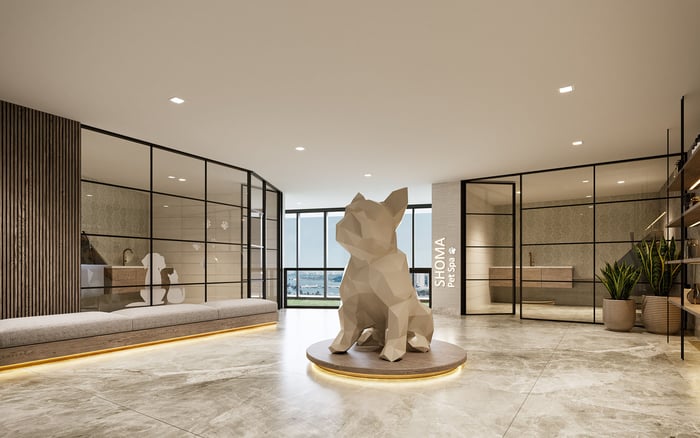
Ask how the building manages children in amenity areas, guest access, birthday gatherings, pool rules, deliveries, service elevators, package volume, and staff continuity. Review pet rules even if you do not currently own a pet, because family needs change. Study storage, bicycle rooms, stroller parking, and whether the residence has enough hidden utility space for real life.
A building may be exceptionally elegant and still feel too delicate for young children. That does not make it inferior. It simply means the buyer profile is different. Families should look for warmth beneath the polish: staff who understand school schedules, rules that are clear rather than fussy, and common spaces that feel gracious without feeling fragile.
Young children convert sound into family stress. Before buying, visit the residence or a comparable line during the hours when your household sleeps. Listen for traffic, nightlife, service activity, mechanical hum, elevator noise, hallway acoustics, and neighboring outdoor spaces.
Inside the unit, imagine bedtime with one child asleep and another awake. Are bedrooms separated enough? Can guests stay without disrupting routines? Is the primary suite too far from a nursery, or just far enough for privacy? Are terraces safe, usable, and positioned in a way that suits your comfort level?
Privacy also deserves attention. In an urban luxury setting, visual exposure can matter as much as sound. Study sightlines from neighboring buildings, amenity decks, and public areas. A residence that feels open during a daytime showing may feel more exposed once evening lights are on.
The Design District may be the emotional favorite, but family buyers should benchmark it against other high-service Miami neighborhoods before deciding. This is not about chasing a better address. It is about identifying the strongest life pattern.
If one parent works in Brickell, a residence such as 2200 Brickell may offer a different commute equation. If waterfront scale and bayfront orientation are priorities, Aria Reserve Miami can help frame the Edgewater comparison. If the family places a premium on village-like routines and greener daily texture, The Well Coconut Grove introduces another version of luxury family living.
Wynwood proximity may add creative energy and convenience for some households, while others may decide they want more separation between home life and entertainment districts. The point is not to dilute the Design District decision. It is to make it stronger by proving the neighborhood wins against real alternatives.
For families, building governance matters as much as design. Review condominium documents, budgets, reserve posture, insurance obligations, leasing restrictions, renovation rules, move-in policies, window treatment requirements, and any rules affecting caregivers, domestic staff, guests, pets, and minors in amenity areas.
New-construction buyers should be especially precise about delivery expectations, punch-list procedures, closing costs, warranties, developer obligations, and what is included versus upgraded. If you are comparing newer Miami options, Miami Tropic Residences may be part of a broader exercise in understanding how different projects handle lifestyle programming, ownership structure, and practical day-to-day management.
Do not let a dramatic lobby distract from operational questions. Who receives deliveries? How are contractors managed? How quickly does management respond? How does the building handle storms, elevator outages, water intrusion concerns, and emergency communication? Families need elegance, but they also need competence.
A young family’s needs can change quickly. Another child, a school change, a parent’s new office, or an aging relative can alter the perfect floor plan. That is why exit logic belongs at the beginning of the purchase process.
Favor layouts with broad appeal: usable bedrooms, sensible storage, natural light, privacy, and flexible spaces that can become an office, nursery, or homework room. Be cautious with highly personalized design choices if resale could occur within a shorter horizon. Ask whether the residence will appeal not only to your family today, but also to future buyers seeking the same blend of service, access, and calm.
The best Design District purchase is not the one that wins the showing. It is the one that still feels intelligent after a difficult Tuesday, a rainy pickup, a noisy evening, and a weekend full of errands.
Is Miami Design District practical for young families? It can be, if the specific residence, building rules, school routes, and daily walking pattern support the household’s real routine.
What should families test before making an offer? Test school runs, stroller walks, parking, elevator timing, delivery access, bedtime noise, and weekend traffic at the hours you will actually use them.
Should school choice come before residence choice? For many families, yes. A preferred school commute can materially change which building or micro-location feels livable.
How important are amenities for families? Very important, but only if they function well for children, caregivers, guests, storage needs, and everyday scheduling.
What noise issues should buyers check? Listen for traffic, service activity, hallway sound, amenity noise, mechanical systems, and nearby evening activity.
Is a larger unit always better for a family? Not always. A smart layout with storage, bedroom separation, and flexible space can outperform a larger but awkward plan.
Should buyers compare other Miami neighborhoods? Yes. Comparing Brickell, Edgewater, Coconut Grove, and nearby areas can clarify whether the Design District truly fits your daily life.
What documents deserve close review? Review condominium rules, budgets, insurance obligations, leasing limits, renovation policies, and amenity regulations before closing.
How should families think about resale? Choose layouts and buildings with broad appeal, operational strength, and flexibility for changing family needs.
What is the simplest final test? Ask whether the residence makes an ordinary weekday calmer, not just whether it feels impressive during a private showing.
To compare the best-fit options with clarity, connect with MILLION.
If branded residences are on your mind — as a home or as an allocation — we would be glad to share what we are seeing, privately.
Begin a quiet conversation