A buyer-focused guide to evaluating Bay Harbor Islands through a wellness lens, from light, privacy, and walkability to building scale, service, and long-term livability.

For wellness-focused buyers, Bay Harbor Islands should be evaluated less as a pin on the map and more as a daily operating system. The essential question is not whether a residence has a spa room, a pool, or a handsome lobby. It is whether the island supports how an owner sleeps, moves, hosts, recovers, works, walks, and returns home at the end of the day.
That distinction matters. A wellness buyer is often seeking a quieter form of luxury: morning light without glare, privacy without isolation, water views without visual exposure, convenience without urban agitation, and service without theatricality. Bay Harbor Islands can be compelling for this profile because it sits within a refined residential context near some of South Florida’s most desirable coastal enclaves, while retaining a lower-key rhythm than more overtly resort-driven addresses.
The pressure test begins with self-knowledge. Before touring residences, define the non-negotiables. Do you need a calm primary bedroom facing away from traffic patterns? Is a generous terrace more important than a dramatic amenity deck? Will you walk daily, train indoors, swim, use a cold plunge, meditate, entertain family, or work from home? Wellness is not an aesthetic. It is the degree to which a home reduces friction.
A polished afternoon showing can conceal the real rhythm of a neighborhood. Wellness buyers should visit Bay Harbor Islands at several times of day: early morning, school-run hours, late afternoon, evening, and a quiet weekend window. The mood of the streets, the cadence of arrivals, and the way sound moves between buildings can all shift significantly.
Walk the blocks around any building under consideration. Notice shade, sidewalk comfort, crosswalk behavior, lighting, and how often you feel interrupted by vehicles, construction activity, service access, or delivery circulation. A residence that feels serene from the lobby may feel less restorative if the daily walk is harsh or the immediate surroundings lack the softness you require.
A Bay Harbor search should also include a practical test of access. Drive the routes you expect to use most often, then repeat them when you would actually use them. If your life depends on quick school access, medical appointments, airport runs, marina access, beach clubs, dining, or the mainland, do not rely on a theoretical map. Wellness includes predictability.
Many buyers over-index on amenity count. The better question is whether the building’s scale, staffing, circulation, and rules support your preferred level of calm. Boutique buildings can feel intimate and civilized, but they require close attention to operational depth. Larger buildings may offer more expansive programming, but they can also introduce more movement, more shared spaces, and more variability in daily privacy.
At The Well Bay Harbor Islands, the name naturally attracts buyers thinking about wellness as a residential category. Still, the disciplined buyer should look beyond branding and ask how the experience functions in practice: appointment protocols, peak amenity hours, elevator privacy, acoustic separation, package handling, guest access, dog movement, and whether wellness spaces feel restorative when the building is active.
At Onda Bay Harbor, the waterfront context may be part of the appeal for owners who associate wellbeing with openness and horizon. The pressure test is to study the view plane, balcony usability, orientation, privacy from neighboring buildings, and the experience of returning home by car, by foot, or from the water.
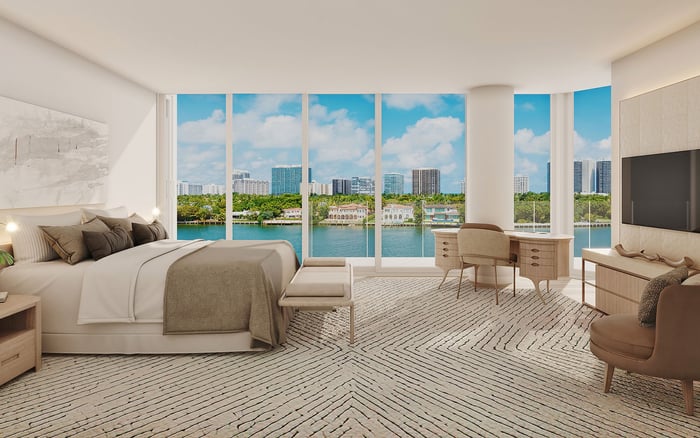
Wellness begins in the body, and the body responds to subtle conditions. Natural light can lift a residence, but uncontrolled glare can make a room difficult to inhabit. A terrace can be beautiful, but if it is too exposed or too noisy, it becomes decorative rather than therapeutic. A primary suite can look flawless, yet fail if sound travels from elevators, service areas, mechanical systems, corridors, or adjacent residences.
During tours, pause in silence. Stand in the primary bedroom, the bathroom, the kitchen, and the main seating area. Listen for vibration, footsteps, traffic, doors, air conditioning, and exterior equipment. Ask to understand window specifications, ceiling assemblies, mechanical locations, and where refuse, loading, staff access, and parking movement sit in relation to the residence.
Privacy deserves the same scrutiny. In Bay Harbor Islands, where boutique residential scale can be part of the charm, the relationship between neighboring buildings is crucial. Study sightlines from terraces, bedrooms, showers, and living rooms. Visit at night if possible, when interior lighting changes the privacy equation.
A wellness residence should make healthy behavior easier. The plan should allow for decompression near the entry, quiet sleep zones, proper storage, graceful movement, and a kitchen that supports daily nourishment rather than only entertaining. If a buyer trains at home, there must be a logical place for equipment that does not turn a beautiful room into a compromise.
For buyers considering La Maré Bay Harbor Islands, the evaluation should include how indoor and outdoor living connect. Does the terrace support morning coffee, stretching, reading, or quiet dining, or is it primarily a view platform? Is there enough wall space for art and enough storage for real life? Does the residence feel calm when more than one person is living, working, or recovering in it?
At Alana Bay Harbor Islands, buyers should bring the same questions to scale, service, and residence flow. Smaller-feeling buildings can appeal to owners who do not want the energy of a large tower, but intimacy only becomes wellness when privacy, maintenance, amenity access, and staffing are aligned.
Bay Harbor Islands should not be approached as a consolation address between better-known names. Its value for a wellness-focused owner is specific: residential calm, proximity to coastal amenities, and an island atmosphere that can feel more discreet than louder luxury districts. The right buyer may prefer that understatement.
Still, a serious purchase should include comparison. Bal Harbour may deliver a different level of retail proximity and established prestige. Surfside may offer a distinct beachside rhythm. Miami Beach may provide cultural energy and more varied building typologies. Sunny Isles, Coconut Grove, Brickell, and Fisher Island each answer different versions of the wellness question.
The comparison is not about which place is universally better. It is about which place best protects your nervous system. If you are energized by restaurants, clubs, and constant motion, Bay Harbor may feel too quiet. If you are seeking a composed home base near the beach, dining, schools, family, and the broader Miami network, it may fit beautifully.
The most revealing diligence often sounds ordinary. How many residences share an elevator bank? Where do guests wait? How are deliveries managed? How is the pool used on weekends? Are there rules around short-term guests? Where do staff park? How often are common areas cleaned? What is the pet culture? How does the building manage repairs, water intrusion concerns, hurricane preparation, and access after storms?
For Bay Harbor Towers, as with any luxury building in the area, buyers should pair aesthetic impressions with operational inquiry. Wellness is compromised when the building is beautiful but disorganized. It is enhanced when service feels invisible, systems are well understood, and residents share a compatible expectation of privacy and care.
Also review the financial and governance culture. A serene lobby cannot offset poor reserves, unclear maintenance expectations, or a board culture misaligned with your lifestyle. The healthiest purchase is not always the flashiest one. It is the one with the fewest hidden irritants.
After the tours, drives, walks, and documents, return to one question: can you recover here? Can you sleep deeply, host gracefully, walk comfortably, train consistently, eat well, and feel protected from unnecessary noise? Does the building make your life feel lighter, or does it simply look impressive?
Bay Harbor Islands rewards buyers who slow down and evaluate the invisible qualities of luxury. The strongest residence is not merely the one with the best finishes or the most fashionable wellness language. It is the one where the architecture, operations, neighborhood, and daily rhythm quietly conspire in favor of health.
What should wellness-focused buyers evaluate first in Bay Harbor Islands? Start with daily rhythm: sleep quality, walking comfort, privacy, sound, light, and access to the places you use most often.
Are wellness amenities enough to justify a purchase? No. Amenities matter, but the residence, building operations, and neighborhood experience must support wellness every day.
How many times should I visit before buying? Visit at different hours, including morning, evening, weekday, and weekend windows, to understand the true cadence of the area.
Is a boutique building better for wellness? It can be, if privacy, staffing, maintenance, storage, and amenity access are strong. Smaller scale alone is not enough.
What should I listen for during a showing? Listen for elevator movement, mechanical systems, traffic, doors, footsteps, loading areas, and sound from neighboring residences.
How important is terrace usability? Very important. A terrace should support real rituals such as reading, dining, stretching, or quiet conversation, not only views.
Should I compare Bay Harbor Islands with Surfside and Bal Harbour? Yes. Each nearby enclave has a different rhythm, and wellness depends on finding the environment that fits your lifestyle.
What building questions are most often overlooked? Ask about guest access, deliveries, pet movement, weekend amenity use, staffing depth, maintenance culture, and storm protocols.
Can Bay Harbor Islands work for a primary residence? Yes, for buyers who value discretion, convenience, residential calm, and proximity to broader Miami coastal amenities.
What is the best final test before signing? Ask whether the home will genuinely help you sleep, move, focus, recover, and live with less daily friction.
For a confidential assessment and a building-by-building shortlist, connect with MILLION.
If branded residences are on your mind — as a home or as an allocation — we would be glad to share what we are seeing, privately.
Begin a quiet conversation