A discreet buyer’s guide to using extended family visits as a real-life test before purchasing in Bay Harbor Islands, with emphasis on layout, privacy, routines, guest policies, and long-term emotional fit.
A family visit that lasts longer than a weekend changes the meaning of a home search. Two nights can flatter almost any residence. Five, seven, or ten nights begin to reveal the truth: where luggage lands, how mornings unfold, whether grandparents feel comfortable, how children occupy themselves, and whether the primary residents still feel at ease in their own sanctuary.
For buyers considering Bay Harbor Islands, this kind of visit should be treated as experiential due diligence. The goal is not to impress family with a beautiful setting. The goal is to understand whether a future home can absorb real family rhythms with discretion, comfort, and order. A Bay Harbor search becomes more precise when the buyer observes the home under gentle pressure rather than judging it only by finishes, views, or floor-plan diagrams.
The best approach is deliberate. Invite the relatives most likely to return. Maintain normal routines. Work a partial day from home. Cook or host at least one informal meal. Let guests come and go. Then ask a simple question at the end of each day: did the residence make life easier, or did it require constant choreography?
Luxury buyers often begin with bedroom count, but extended family visits reward a more nuanced question: can people be together without being on top of one another? A generous residence can still feel crowded if guest rooms sit too close to the primary suite, if bathrooms are shared awkwardly, or if the living area becomes the only place anyone can retreat.
During the visit, pay attention to sound, sightlines, and separation. Can early risers make coffee without waking late sleepers? Can a guest take a call privately? Can children watch a movie without turning the main room into a playroom? Does the primary bedroom still feel like private territory after the fourth night?
When comparing options such as Alana Bay Harbor Islands and Bay Harbor Towers, the relevant question is not which residence photographs best. It is which layout supports intimacy without surrendering calm.
The first hour of a family visit is revealing. Multiple bags, children, gifts, groceries, and parking questions quickly expose whether a residence has been selected for real use or only for visual appeal. Buyers should observe the arrival sequence as carefully as they would inspect a kitchen or terrace.
Does the entry allow guests to arrive gracefully? Is there a place for bags that does not compromise the foyer? Can a visitor understand where to go without being escorted through private zones? If family members arrive at different times, does each arrival feel seamless or disruptive?
For condominium buyers, this also means reviewing guest protocols, access procedures, delivery habits, and any rules that affect longer stays. The issue is not merely permission. It is tone. A residence should allow hosts to welcome family without turning every arrival into an operational exercise.
Extended visits reveal whether entertaining is performative or natural. A weekend dinner may be managed with reservations and catering. A longer stay involves breakfast dishes, snacks, leftovers, coffee preferences, and someone opening the refrigerator at midnight.
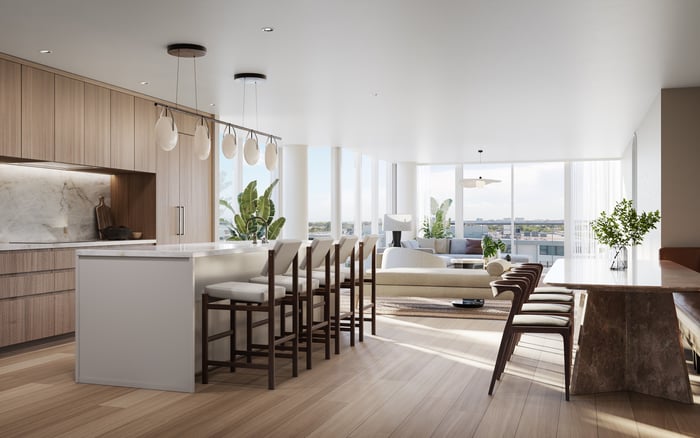
Buyers should ask how the kitchen behaves when several people use it casually. Is circulation easy? Can two people prepare food while others sit nearby? Is there enough informal seating for the way the family actually gathers? Does dining feel too formal for weekday use, or too small for the family’s natural cadence?
Residences such as La Maré Bay Harbor Islands and Onda Bay Harbor should be evaluated through this practical lens. The most elegant home is the one that can host breakfast in swimwear, a quiet lunch, and a celebratory dinner without changing personality.
A long family stay creates invisible labor. Towels multiply. Laundry becomes constant. Trash and deliveries increase. Someone needs to store inflatable toys, extra bedding, baby equipment, or medical items. Buyers often underweight service spaces because those areas are not glamorous, yet they determine whether hosting remains gracious.
During the visit, track what feels improvised. Are suitcases left open in living areas? Are wet towels draped over chairs? Is there a logical place for shoes, beach bags, strollers, or pet items? If a buyer employs household help, can staff work without interrupting family life? If not, can the owners manage the household without resentment?
This is where storage, laundry access, utility areas, and secondary circulation become luxury features. They protect the public rooms from clutter and the hosts from fatigue.
The most useful family visit includes ordinary days. Buyers should resist turning the stay into a curated itinerary. Instead, they should let the household find its natural rhythm. The questions are simple and consequential.
Who wakes first, and where do they go? Where does everyone sit after dinner? Can someone nap while others are active? Is there a comfortable place for reading, work, calls, and children’s downtime? Does the residence feel serene on day six, or does it begin to feel like a hotel suite under pressure?
If wellness, quiet, or a more restorative lifestyle is central to the purchase, a residence such as The Well Bay Harbor Islands may enter the conversation as part of a broader comparison. The buyer’s task is to determine whether the promise of daily life aligns with how the family actually lives.
A successful long visit is not necessarily one in which everyone wants unlimited access. In fact, one of the most sophisticated outcomes is clarity. Buyers should use the experience to define future boundaries before purchasing.
How often will family stay? Will visits cluster around holidays, school breaks, medical appointments, or seasonal escapes? Should the home be designed for grandparents, adult children, young children, or rotating guests? Is the buyer comfortable with family using the residence when the owners are away, or is the home intended only for hosted stays?
These answers affect everything: bedroom configuration, lockable storage, guest parking needs, pet tolerance, building rules, and the value of a flexible den. They also prevent emotional overbuying. A buyer may discover that a guest suite and convertible room are enough, or that only a larger residence will preserve harmony.
After the visit, buyers should not rely on general impressions. They should create a precise post-visit brief. Separate what was charming from what was functional. A beautiful dinner may conceal poor storage. A spectacular terrace may not compensate for a guest room that feels exposed. A lovely family memory may distract from the fact that the owners never had a quiet hour alone.
Useful categories include sleep quality, privacy, guest circulation, meal preparation, storage, building access, children’s comfort, elder comfort, work-from-home resilience, and emotional ease. Score each category honestly. Then compare residences against that framework rather than against a generic idea of luxury.
This process also helps during negotiation. Buyers who understand exactly why a residence works can move decisively. Buyers who discover unresolved friction can pause without regret. The point is not to find a perfect home for every possible relative. It is to choose a residence that supports the family life the buyer actually intends to live.
How long should an extended family visit last before buying? Long enough to include ordinary routines, not just leisure time. Several weekdays are often more revealing than a polished weekend.
Should buyers invite the whole family at once? Only if that reflects real future use. Otherwise, invite the relatives most likely to stay often or for the longest periods.
What is the most important layout issue to test? Privacy between the primary suite and guest areas is usually critical. A home should allow closeness without constant overlap.
Should condominium rules be reviewed before hosting family? Yes. Guest access, parking, deliveries, pets, and length-of-stay rules can affect how comfortably relatives can visit.
How should buyers evaluate children during the visit? Watch where they naturally play, rest, eat, and store belongings. The home should absorb their presence without losing order.
What should buyers ask older relatives after the stay? Ask whether the residence felt easy, private, safe, and comfortable. Their answers may reveal details the buyer missed.
Can a smaller residence work for frequent guests? Yes, if the plan is efficient and boundaries are clear. Poorly planned space often feels smaller than it is.
How important is a terrace during longer visits? A terrace can provide breathing room, especially when guests have different routines. Its value depends on how often it will be used.
Should pets be included in the trial visit? If pets are part of normal family visits, include them when rules allow. Their routines can reveal storage, cleaning, and access needs.
Does beach access matter for family stays? Beach access matters only if it supports the buyer’s real hosting pattern. It should be weighed against privacy, layout, and ease.
For a discreet conversation and a curated building-by-building shortlist, connect with MILLION.
If branded residences are on your mind — as a home or as an allocation — we would be glad to share what we are seeing, privately.
Begin a quiet conversation