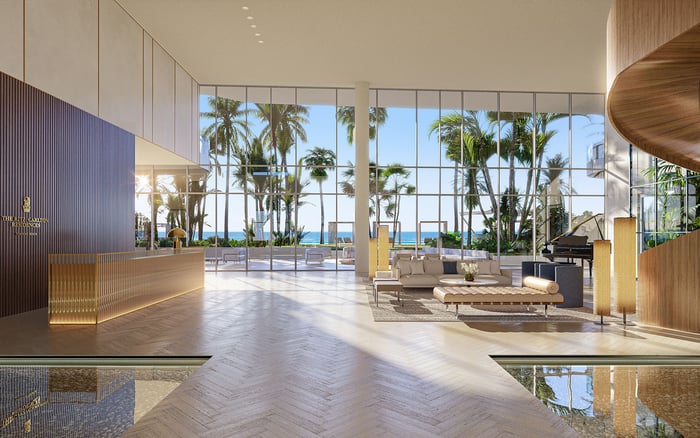
For collectors considering EDITION Edgewater, the central question is whether a specific residence can accommodate the collection’s display, conservation and installation needs. This buyer’s guide outlines the due-diligence questions to resolve through current plans, specifications, building documents and professional advice before purchase.

A collector evaluating EDITION Edgewater should begin with the exact residence rather than generalized imagery. The buyer’s team can map current and anticipated works against room dimensions, circulation paths, glazing and intended furniture placement.
Create an inventory that notes each work’s dimensions, weight, medium and sensitivity to light or environmental changes. Use that inventory to test the proposed layout and identify questions that require written clarification from the appropriate project representatives or advisers.
Request dimensioned plans and interior elevations for the residence under consideration. Review uninterrupted wall lengths, ceiling conditions, columns, doors, switches, controls, built-ins and other elements that could affect placement.
Ask what information is available about wall construction, reinforcement options, anchoring limitations and ceiling-mounted installations. Any proposed alteration should be checked against the applicable design, engineering and condominium requirements before the buyer relies on it.
Viewing distance also matters. Test how the collection will be experienced from entrances, seating areas and circulation routes, and consider whether future acquisitions could change those relationships.
Request glazing and solar-exposure information for the exact orientation, floor and stack. The collector’s lighting adviser can then evaluate window treatments, dimming, fixture placement, beam control and color characteristics in relation to the collection.
Do not assume that a rendering establishes actual light conditions. Confirm the relevant specifications in current project materials and determine which lighting changes may be permitted.
Ask how heating, ventilation and air-conditioning would serve the intended display areas. Questions should address zoning, monitoring, equipment locations and any available information about backup systems.
Map plumbing, wet walls, mechanical equipment and terrace thresholds near proposed art locations. Request details about available leak detection, shutoff arrangements and response procedures. If storage is part of the buyer’s plan, assess its environmental conditions, security and water exposure rather than treating the word “storage” as evidence of collection suitability.
Measure the path from the building entry or loading area to the final display location. Request current dimensions and restrictions for doors, corridors, turns, elevators and other relevant access points.
For large or heavy works, ask which approvals, engineering reviews, protective measures and insurance documents may be required. Installation feasibility should be confirmed before a buyer assumes that a work can reach the residence.
Collectors comparing Edgewater options may also review Aria Reserve Miami and Villa Miami. The useful comparison is not a simple amenity count; it is how each specific residence addresses display surfaces, sightlines, daylight, environmental control and artwork access.
A branded residential experience may be part of the appeal, but collection requirements remain specific to the owner and the art. Buyers should distinguish between general service expectations and commitments documented for the residence and building.
Request the current plans, specifications, finish information, modification procedures, condominium documents and purchase agreement relevant to the selected residence. Have qualified advisers identify which collection-related assumptions are documented, which remain subject to approval and which may require separate work.
The review should also address timing. Custom reinforcement, lighting coordination, shading and installation planning may depend on design deadlines, access rules or construction sequencing, so buyers should verify applicable dates directly in current documents.
A residence should be tested against more than today’s installation. Consider whether rooms can support rotation, acquisitions, changing furniture arrangements and works of different scales. Preserve flexibility where possible, but do not treat unapproved modifications as available solutions.
The strongest choice is the residence whose documented dimensions, systems, access and rules align most closely with the collector’s priorities. Final decisions should follow exact-unit due diligence and advice from the buyer’s legal, insurance, conservation, engineering and installation professionals as appropriate.
What should an art collector review first at EDITION Edgewater? Start with dimensioned plans for the exact residence and map the collection against walls, glazing, circulation and furniture placement.
Why are interior elevations important? They can show how doors, controls, built-ins and other interruptions affect usable display surfaces.
How should a buyer assess daylight? Request available glazing and solar-exposure information for the selected orientation, floor and stack, then review it with a qualified lighting or conservation adviser.
Should a buyer assume that walls can support heavy artwork? No. Wall construction, reinforcement, anchoring and any required approvals should be confirmed before purchase or installation.
What ceiling information may matter? Buyers can review ceiling conditions, lighting locations and other elements that could affect suspended works or adjustable fixtures.
How can a collector evaluate environmental control? Ask for current information about system zoning, monitoring and equipment locations, then assess the proposed display areas against the collection’s needs.
What water-related questions should be asked? Identify nearby plumbing, wet walls, mechanical equipment and terrace thresholds, and request details about available detection and response measures.
How should artwork delivery be evaluated? Check the complete route, including doors, corridors, turns and elevators, along with any applicable approval, protection and insurance requirements.
What documents should support the review? Examine the current plans, specifications, modification procedures, condominium documents and purchase agreement for the selected residence.
How should collectors compare EDITION Edgewater with other residences? Compare exact layouts and documented conditions rather than relying only on branding, imagery or amenity descriptions.
If you'd like a private walkthrough and a curated shortlist, connect with MILLION.
If branded residences are on your mind — as a home or as an allocation — we would be glad to share what we are seeing, privately.
Begin a quiet conversation