A buyer-focused look at how uncertain view corridors can alter the true cost, daily function, and resale logic of staff-ready luxury residences in South Florida.
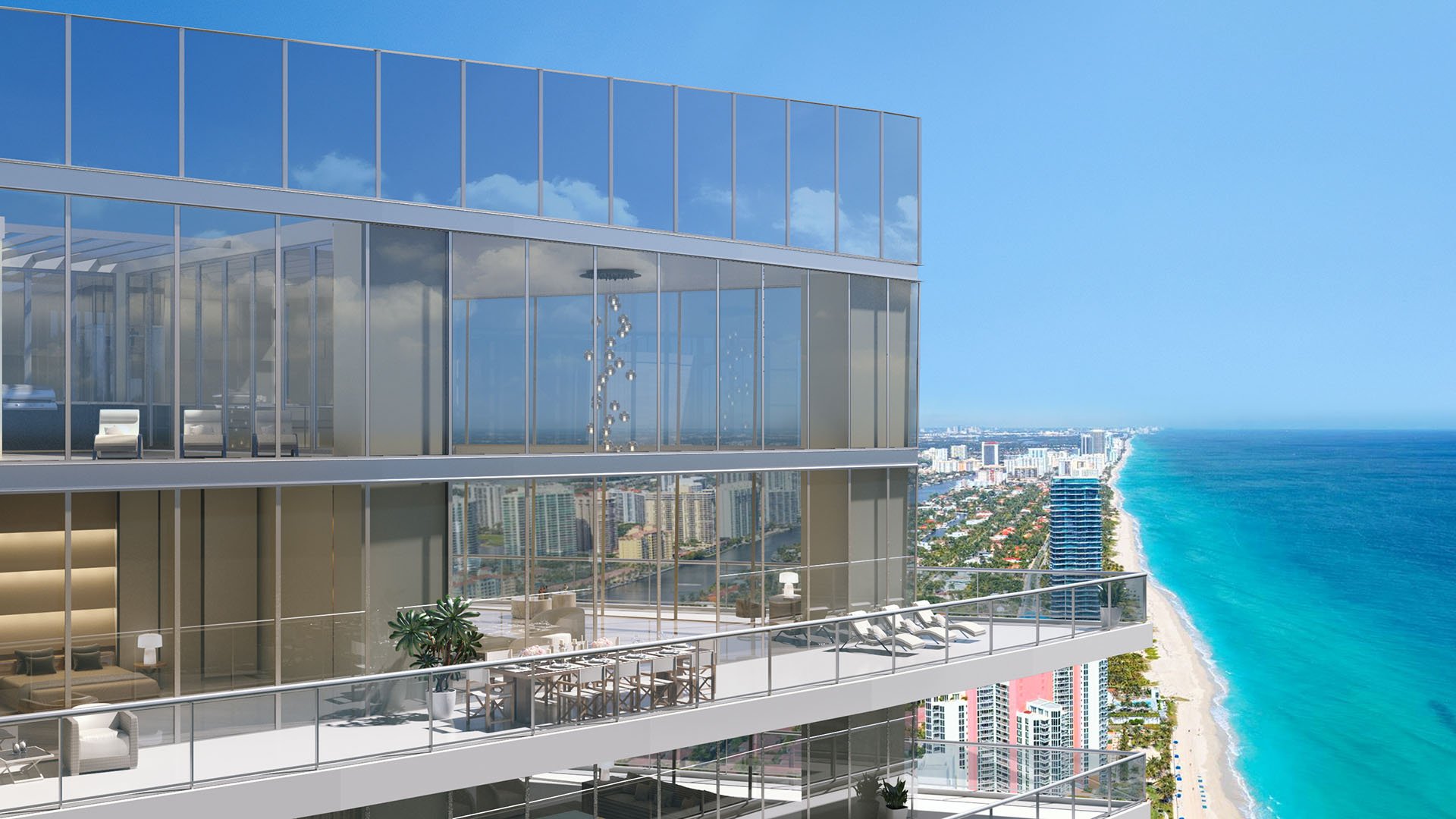
In South Florida, a residence is often priced not only for what it contains, but for what it sees. Broad water exposure, a clear skyline axis, a sunset terrace, or a long green outlook can shape both the emotional and financial logic of a purchase. Yet sophisticated buyers understand that a view is not a fixed amenity. It is a condition shaped by surrounding parcels, height, setbacks, redevelopment timing, and the geometry of the residence itself.
For a staff-ready residence, that uncertainty can become more expensive than it first appears. The question is not simply whether the living room might one day look different. It is whether the home’s daily operating plan still works if light, privacy, breeze, and orientation change. A waterview that feels secure because it exists today still deserves scrutiny for how durable it may be across a full ownership horizon.
That distinction is especially important in vertical neighborhoods such as Brickell, where buyers comparing residences like The Residences at 1428 Brickell with other high-rise options are often weighing not only finish level and service, but the resilience of outlook, exposure, and long-term desirability.
A staff-ready home is more than a larger home. It is a residence organized for discreet service, extended family support, household management, guest turnover, and daily logistics. It may include a live-in suite, a secondary entrance, service corridors, a catering or prep area, expanded laundry capacity, secure storage, a house manager workspace, or flexible rooms that allow staff and family life to coexist without friction.
When a view corridor changes, these rooms can be affected in subtle ways. A staff suite that once had calm natural light may become less private. A service terrace used for quiet breaks may become exposed to a neighboring tower. A family office or staff workroom may lose the daylight that made it viable as a full-day station. Even if the formal entertaining rooms remain impressive, the operational value of the plan may decline.
This is why view-corridor risk belongs in the real cost of ownership. A buyer may pay a premium for exposure, then later absorb a second cost through redesign, window treatments, lighting upgrades, room repurposing, or a more limited resale audience. The home may remain beautiful, but its usefulness may no longer match the original underwriting.
The clearest mistake is treating today’s open space as permanent simply because it feels generous from the terrace. In South Florida, the better question is what protects the corridor. Water, wide rights-of-way, established low-scale neighborhoods, parks, civic uses, or unusual parcel constraints may create more durable outlooks. By contrast, a view over underbuilt land, parking fields, aging structures, or assemblage-prone blocks calls for a more cautious valuation.
Higher floors can reduce some exposure, but height alone is not a guarantee. A tall residence may still rely on a narrow diagonal corridor across another site. A lower residence may have a stronger view if its sightline crosses water or a protected open edge. The analysis is geometric as much as emotional.
In Miami Beach, the appeal of a refined ocean or bay orientation can be deeply tied to how a home lives throughout the day. Buyers considering The Perigon Miami Beach may think carefully about the relationship between elevation, frontage, neighboring structures, and the residence’s primary rooms. In Surfside, a similar lens applies when comparing boutique-scale privacy and exposure at properties such as The Delmore Surfside.
View loss is often discussed as a resale issue, but for staffed households the immediate cost can be functional. A family may need to change how rooms are assigned. Staff may lose a separate area that felt independent. Guests may no longer be placed in a suite that has become too visible from a neighboring building. A principal bedroom may require heavier shading, changing the morning rhythm of the residence.
The result is a quiet mismatch between price and performance. The buyer still owns the square footage, but the best square footage may not perform as originally intended. In a staff-ready residence, efficiency and discretion are part of luxury. If privacy weakens, the owner may compensate through scheduling, protocols, technology, furnishings, or renovation. Those responses have cost, even when they are not reflected on a closing statement.
This is especially relevant for new-construction buyers purchasing from plans, models, or renderings. The most elegant floor plan should still be examined in relation to surrounding development potential. The terrace, the staff suite, the family room, the kitchen, and the service entry should all be evaluated as lived spaces, not isolated features.
A resilient view deserves a different valuation than a hopeful view. The premium for a protected corridor may be justified when the outlook is central to daily enjoyment, long-term liquidity, and the home’s identity. A speculative corridor should be priced with more restraint, even if it is spectacular at the moment of purchase.
That does not mean buyers should avoid residences with view-corridor risk. It means the risk should be converted into pricing language. The buyer can ask whether the premium is supported by durable attributes beyond the outlook: plan quality, service, building culture, arrival sequence, parking, privacy, ceiling height, materials, and neighborhood permanence. If the answer is yes, the residence may still be compelling. If the answer is no, the view may be carrying too much of the price.
In Sunny Isles, where vertical living and water orientation are central to the luxury conversation, buyers assessing Bentley Residences Sunny Isles may naturally weigh exposure and privacy alongside building experience. The same principle applies farther north in Broward and Palm Beach markets, where waterfront or skyline prospects can be equally central to value. Along the Flagler corridor, for instance, purchasers looking at Shorecrest Flagler Drive West Palm Beach may evaluate the residence through both its current outlook and its long-term livability.
The first question is simple: what must remain unchanged for this view to remain valuable? If the answer depends on several unrelated parcels staying exactly as they are, the premium should be tested. If the corridor crosses water, public open space, or a stable low-rise edge, the outlook may be more defensible.
The second question is operational: which rooms lose the most if the view changes? In a staff-ready home, the answer may not be the grand salon. It may be the staff bedroom, family breakfast area, service terrace, home office, or guest suite. These are the rooms that determine whether the home functions smoothly Monday through Friday, not only during a dinner party.
The third question is exit-oriented: who is the next buyer if the view changes? A residence with excellent service infrastructure and privacy may remain desirable even with a softened outlook. A residence whose main distinction is one fragile sightline may face a narrower audience.
What is view-corridor risk? It is the possibility that a current outlook could be altered by future construction, redevelopment, or changes on nearby parcels.
Why does it matter more in a staff-ready residence? Staff-ready homes depend on privacy, light, and efficient room assignments, so a changed outlook can affect daily operations as well as value.
Is a higher floor always safer? Not always. Higher floors may help, but the durability of the sightline depends on the land and structures between the residence and the view.
Can a waterview still carry risk? Yes. Waterview value depends on the angle, width, elevation, and what could change along the edges of the corridor.
Should buyers discount every residence with view risk? No. The right approach is to separate protected premiums from speculative premiums and price each accordingly.
What rooms should be reviewed first? Review principal rooms, staff quarters, guest suites, offices, service terraces, and any area where privacy or daylight supports daily use.
Does new construction require different diligence? Yes. Buyers should consider how the planned residence relates to nearby development potential, not only how it appears in presentation materials.
Can design reduce the impact of a future obstruction? It can. Flexible room programming, layered lighting, thoughtful shading, and privacy-conscious layouts can preserve livability.
Is view-corridor risk only a condo issue? No. Single-family homes can also face changing sightlines from neighboring redevelopment, landscaping changes, or adjacent structures.
How should a buyer compare two similar residences? Compare not just the current view, but the strength of the corridor, the plan’s adaptability, and the home’s appeal without the view.
For a tailored shortlist and next-step guidance, connect with MILLION.
If branded residences are on your mind — as a home or as an allocation — we would be glad to share what we are seeing, privately.
Begin a quiet conversation