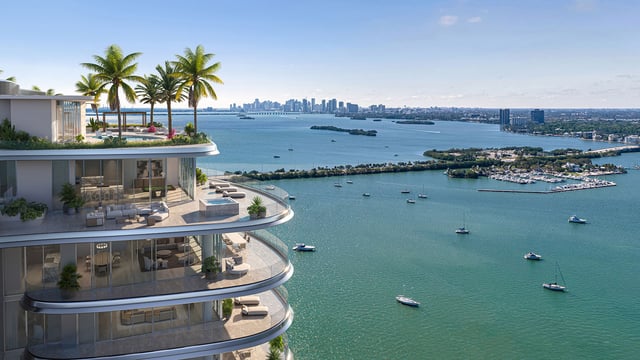
How to vet a luxury condo HOA: Board culture, litigation history, and rule enforcement

Quick Summary
- Start with lawsuits, board minutes, and governing documents before emotion leads
- Reserve studies, audits, and assessment history can reveal governance stress
- Uneven fines, vague approvals, and sparse minutes often signal weak oversight
- In Miami Beach, Brickell, Broward, and Palm Beach, buyers should review available records
The invisible amenity is governance
In South Florida’s upper tier, buyers often focus on views, service levels, wellness programming, marina access, and the elegance of arrival. Yet one of the most important luxury amenities is often the least visible: a disciplined homeowners association. A beautiful lobby can conceal a fractured board, thin reserves, inconsistent rule enforcement, or unresolved disputes that become expensive after closing.
For discerning buyers, the goal is not to find a building with no friction at all. In large communities, some disagreement is normal. The real question is whether the HOA operates like a well-run private institution: transparent, financially prepared, procedurally fair, and consistent in how it treats residents, vendors, and owners.
That matters whether you are evaluating an established oceanfront address in Miami Beach, a newer tower in Brickell, or a signature building in Broward or Palm Beach. Even at highly polished projects such as The Perigon Miami Beach or St. Regis® Residences Brickell, buyers should separate lifestyle branding from the mechanics of governance.
Start with litigation before you fall in love
A condo’s litigation history is one of the fastest ways to understand how a community functions under stress. Buyers can review public records in Miami-Dade, Broward, and Palm Beach to see whether an association has been involved in disputes with owners, contractors, insurers, or vendors.
A single case is not necessarily alarming. Complex luxury buildings involve complicated contracts and occasional disagreements. What deserves scrutiny is the pattern. Repeated disputes with contractors may suggest construction or maintenance friction. A series of owner conflicts may point to poor communication or uneven enforcement. Insurance disputes can indicate claims pressure, repair delays, or coverage tensions.
The nuance matters. A prudent board may litigate when necessary to protect the building. But buyers should ask why the dispute arose, whether it remains active, what the projected exposure may be, and whether legal costs have altered the budget or delayed maintenance.
Read the board minutes like a culture audit
Meeting minutes and bylaws do more than summarize decisions. They reveal the culture of the building. Strong minutes typically show attendance, motions, votes, and substantive discussion. Weak minutes tend to be sparse, vague, or so compressed that owners cannot tell what was debated or why a decision was made.
When reviewing minutes, look for recurring signs of concentrated power. Does one director dominate every vote? Does a developer still appear to hold outsized control in a newer condominium? Has transition genuinely shifted to unit owners? These details matter because governance during and after turnover can shape everything from vendor contracts to enforcement priorities.
Minutes also show how disagreement is handled. Healthy boards can record dissent without descending into dysfunction. If every controversial matter appears unresolved, repeatedly tabled, or discussed without a clear vote, that may signal avoidance rather than management. In communities positioned like 2200 Brickell or Andare Residences Fort Lauderdale, buyers should still ask how formal governance will function once daily operations mature beyond marketing and launch.
Financial strength tells you how the board really plans
Luxury associations are not judged by low monthly dues alone. They are judged by whether the board plans credibly for expensive realities: façade work, waterproofing, elevators, roof systems, mechanical equipment, amenity refreshes, and waterfront wear.
Buyers should request the current budget, audit, reserve information, and, where available, a reserve study and broader capital-planning documents. A current reserve study can help identify upcoming major repairs before they become emergency assessments. A history of special assessments over time is equally revealing. Repeated large assessments may indicate deferred maintenance, chronic underbudgeting, or a board that postponed difficult decisions.
For luxury buyers, reserve strength is not a background accounting detail. It is central to due diligence. A glamorous tower with weak reserves can become financially stressful very quickly, while a less flashy but disciplined building may prove far more resilient over time.
Delinquency also matters. If a meaningful share of owners is behind on assessments, the association can face budget strain, more aggressive collections, and selective enforcement pressure. Ask not only for the numbers, but also for the trend.
Rule enforcement should feel orderly, not personal
In premier buildings, rules shape daily life: renovations, service access, pet policies, short-term occupancy restrictions, valet operations, deliveries, architectural changes, and use of amenities. The question is whether those rules are enforced systematically or selectively.
Request enforcement records that show warnings, fines, and hearings. The purpose is not to inspect neighbors’ missteps. It is to determine whether the board follows its own procedures. Governing documents should clearly describe notice, hearing, and enforcement processes. If the rules are vague or the records are inconsistent, the board may be improvising.
Architectural review files are especially useful. Published design guidelines and approval records can show whether similar alterations were treated consistently. If one owner receives a quick approval and another faces an unexplained delay for a comparable request, buyers should assume discretion may be overly personal.
For lifestyle-driven projects such as Alba West Palm Beach, this matters more than many buyers expect. Design-forward buildings often rely on strict visual and operational standards. Those standards protect value only when they are transparent and evenly applied.
Management quality often explains enforcement quality
An excellent board can still underperform if management is unstable. Buyers should ask how long the management company has served the building, whether key on-site personnel turn over frequently, and who actually handles owner communication, vendor supervision, and compliance.
Management quality often influences whether a building feels orderly or inconsistent. This is especially important when owners describe the property as uneven rather than strict. In many cases, that inconsistency traces back to execution, not the written rules themselves.
Look for conflicts, insurance gaps, and communication habits
Two final areas often distinguish a refined HOA from a troubled one.
First, conflicts of interest. Buyers should request disclosures and compare board members’ business affiliations with association vendors. Luxury communities operate large contracts, and even the appearance of self-dealing can erode trust.
Second, insurance and communication. Review the master policy and any directors-and-officers coverage. Weak coverage can leave the board exposed and complicate governance at the precise moment disciplined leadership is most needed. Also ask how owners receive agendas, minutes, budgets, and rule changes. Buildings with organized owner portals or formal notice systems generally project a more accountable culture than communities where important information circulates informally.
Finally, pair paper diligence with the property itself. Independent inspections and maintenance logs for major amenities can confirm whether the building is preserving the standard promised in sales materials. In the luxury tier, neglected back-of-house conditions usually foreshadow broader governance weakness.
The sophisticated buyer’s HOA checklist
Before closing, ask for the declaration, bylaws, rules, recent board minutes, budget, audit, reserve information, reserve study if available, special assessment history, delinquency summary, enforcement records, insurance documents, architectural guidelines, and management details. Then compare what the HOA provides with public records and the building’s day-to-day condition.
The objective is simple: determine whether the building’s private government is as carefully run as its public-facing brand. In luxury real estate, elegant governance is not a detail. It is asset protection.
FAQs
-
Why should a luxury buyer review HOA litigation history? Litigation can reveal recurring disputes with owners, contractors, insurers, or vendors that may affect costs, governance, and future assessments.
-
Is one lawsuit enough to reject a condo purchase? Not necessarily. The more important issue is whether there is a pattern of disputes or a case that creates meaningful financial or operational exposure.
-
What do board minutes tell me that marketing materials cannot? Minutes can reveal attendance, voting patterns, dissent, transparency, and whether decisions are being made consistently or by a small inner circle.
-
Why does developer control matter in newer buildings? If control has not fully transitioned to owners, governance priorities and enforcement practices may still reflect a developer-driven agenda.
-
Which financial records matter most in HOA due diligence? Focus on the budget, audit, reserves, reserve study if available, delinquency trends, and any history of special assessments.
-
What is a red flag in rule enforcement? Vague procedures, missing hearing records, and evidence that similar violations or design requests are treated differently are all concerns.
-
How can I assess whether management is part of the problem? Ask about tenure, staffing stability, and who actually manages daily owner and vendor issues.
-
Why should I review architectural approval records? They show whether the board applies design standards consistently or makes arbitrary exceptions that can create frustration and value risk.
-
Does insurance review really relate to board quality? Yes. Weak master coverage or inadequate directors-and-officers protection can expose the association to distractions, disputes, and governance strain.
-
What is the simplest standard for judging an HOA? A strong HOA is transparent, financially prepared, procedurally fair, and consistent in the way it communicates and enforces its rules.
To compare the best-fit options with clarity, connect with MILLION Luxury.

Million Luxury
Million Luxury
Welcome to MILLION, an exclusive luxury real estate boutique nestled in the heart of South Florida’s most desirable locations. Specializing in high-end properties, we provide a sanctuary for discerning clients including top Fortune 500 executives, affluent families, celebrities, and professional athletes from across the globe. At MILLION, we understand the unique demands of our elite clientele and offer a seamless blend of confidentiality and personalized attention. Our commitment to privacy is unwavering; we ensure that every transaction and interaction is handled with the utmost discretion and according to stringent confidentiality protocols. Our concierge service embodies the pinnacle of white-glove care, offering tailored assistance that transcends traditional real estate support.