A buyer-oriented comparison of Casa Bella by B&B Italia Downtown Miami and Miami Tropic Residences, focused on brand identity, urban atmosphere, and what can realistically be said about daily walkability in Downtown Miami today.

For buyers drawn to new-construction luxury in Downtown Miami, the contrast between Casa Bella by B&B Italia Downtown Miami and Miami Tropic Residences is less about hard numbers and more about brand language, atmosphere, and the daily rhythm each project appears to promise.
Casa Bella is positioned for the Downtown market and presents itself as a design-first address shaped by contemporary Italian taste. Miami Tropic Residences, by contrast, is framed around tropical expression, lifestyle amenities, and a more resort-leaning mood. That distinction matters because in Miami's upper residential tier, buyers are often choosing not simply a home, but a texture of life.
What cannot yet be said with precision is equally important. Publicly disclosed information remains limited on pricing, timing, current availability, and building-specific walkability for both projects. The most defensible comparison, then, is contextual: if a buyer is weighing these two names, the better question is not which building has definitively stronger walkability, but which concept aligns more naturally with the Downtown experience and with the owner's preferred cadence of daily living.
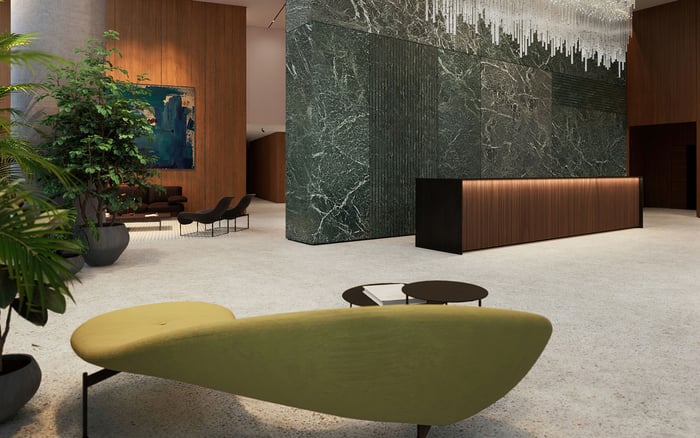
In branding terms, Casa Bella reads as the more design-conscious proposition. Its identity leans into B&B Italia's contemporary Italian aesthetic, suggesting a buyer who values interiors, visual restraint, and a more cosmopolitan expression of luxury. For some purchasers, especially those comparing Downtown addresses such as Waldorf Astoria Residences Downtown Miami and Aston Martin Residences Downtown Miami, that kind of brand-forward authorship is part of the appeal.
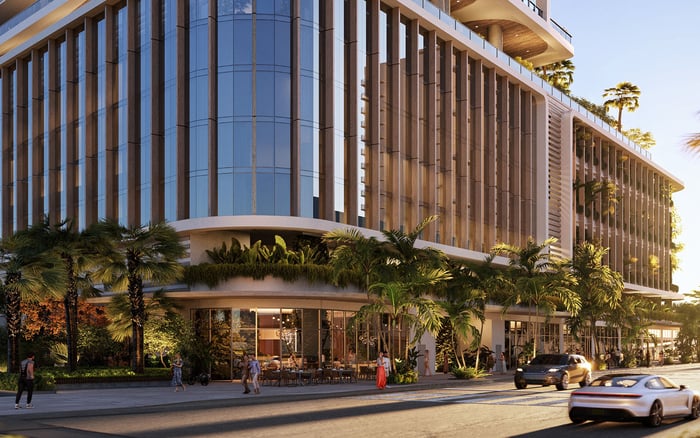
Miami Tropic Residences projects a different emotional register. The concept feels softer, greener, and more leisure-oriented, speaking to buyers who want Miami to feel relaxed even in an urban setting. Rather than foregrounding European design pedigree, the message is tropical ease and amenity-rich living. In practical terms, that can shape everything from how a purchaser imagines weekends at home to what kind of pied-a-terre or second-home identity feels most natural.
Neither approach is inherently superior. They answer different briefs. Casa Bella may resonate more with the collector, global-city buyer, or executive who wants an address that feels composed and editorial. Miami Tropic may appeal more to the owner seeking an everyday escape, with a less formal and more vacation-inflected sensibility.
On walkability, the clearest view is broader than building-specific detail. Downtown Miami generally benefits from a highly walkable urban framework, supported by density in retail, dining, services, and mixed-use street activity. That backdrop gives any properly downtown residential address a meaningful advantage over more car-dependent parts of the region.
The district's daily mobility story is not just about sidewalks. The free Metromover supports car-light living, while Metrorail and Tri-Rail connections add regional convenience from downtown nodes. For residents who divide their day between meetings, dining, fitness, and waterfront leisure, that infrastructure helps Downtown function as a genuine live-work-play environment.
Pedestrian life is further reinforced by recognizable corridors and edges: Brickell Avenue, Flagler Street, and the Miami River Walk all contribute to the sense that errands, coffee, dinner, and short recreational strolls can be folded into a single urban loop. Biscayne Bay and the Miami River also support the outdoor dimension of downtown living, which remains one of the neighborhood's more understated luxuries.
Still, no project-specific walkability metric has been publicly disclosed here for either Casa Bella or Miami Tropic Residences. Nor is the exact neighborhood placement within Downtown publicly pinned down in the supplied material. That means any claim that one building is closer to a particular station, restaurant corridor, market, or waterfront path would be premature.
If both projects are being considered within the Downtown orbit, then the broader neighborhood does much of the heavy lifting. Downtown has seen sustained residential growth, and with that growth has come more foot traffic and a more credible day-to-night street life. For affluent buyers, this matters because luxury today often means convenience paired with sophistication, not merely square footage.
A resident choosing between a design-led tower and a tropical-branded project is still buying into the same macro advantage: the ability to move through the city with relative ease. In that respect, Downtown stands apart from many otherwise prestigious enclaves where nearly every outing still defaults to the car. Buyers also comparing urban options such as Baccarat Residences Brickell or Mercedes-Benz Places Miami will recognize the same appeal: density, connectivity, and a more edited daily routine.
For full-time owners, that can mean fewer friction points during the week. For second-home buyers, it can mean arriving in Miami and stepping directly into a more spontaneous lifestyle, where dinner plans, waterfront walks, and short transit hops are part of the experience.
Casa Bella by B&B Italia Downtown Miami may be the more natural fit for buyers who place design hierarchy at the center of value. In this segment, branding is not surface decoration. It often serves as a proxy for curation, finish sensibility, and a certain confidence in the lived experience. A purchaser who wants a home to feel like a refined extension of a global aesthetic vocabulary may gravitate here.
Miami Tropic Residences may suit the buyer who wants luxury to feel lighter and more escapist. The tropical concept suggests a residence intended to soften the edge of urban life, not intensify it. That distinction can be especially relevant for buyers who entertain casually, use the residence seasonally, or want a mood that feels more resort than metropolitan salon.
For investors, the decision is less about naming a walkability winner and more about understanding how each narrative may position itself with future demand. For end users, the question is simpler: do you want your daily backdrop to feel more Italian and design-driven, or more lush and leisure-oriented?
At this stage, disciplined buyers should ask each project directly for floor plans, pricing, timeline updates, and any site-specific details related to nearby retail, transit access, and pedestrian convenience. That is where a polished conceptual comparison becomes a real acquisition decision.
Until more granular disclosures are available, the fairest conclusion is this: Downtown offers a favorable walkable context, but the sharper distinction between Casa Bella and Miami Tropic Residences lies in vibe. Casa Bella appears to bring the more editorial, design-forward identity. Miami Tropic appears to offer the more relaxed, resort-inspired one. In a market where atmosphere often drives the emotional side of a purchase, that may be the most useful comparison of all.
Is Casa Bella by B&B Italia Downtown Miami definitely more walkable than Miami Tropic Residences? No. Building-level walkability has not been publicly detailed enough to support a precise side-by-side conclusion.
Is Downtown generally a good place for car-light living? Yes. Downtown benefits from a broadly walkable layout and transit options that support reduced car dependence.
What is the main brand difference between the two projects? Casa Bella reads as design-forward and Italian in tone, while Miami Tropic leans tropical and resort-oriented.
Are pricing and move-in details fully public for both buildings? No. Public disclosure remains limited on pricing, timing, and current availability for both projects.
Does Casa Bella by B&B Italia Downtown Miami target a luxury buyer? Yes. It is positioned toward high-end, design-conscious purchasers in Downtown.
Does Miami Tropic Residences emphasize amenities and lifestyle? Yes. Its concept is framed around tropical design language and a resort-style living experience.
Can buyers verify proximity to shops or transit stops right now? Not with confidence from current public detail alone. Exact placement and site-specific access remain to be confirmed.
Why does Downtown matter in this comparison? Because the neighborhood's walkability, transit, and mixed-use energy shape daily life even before building details are compared.
Would a second-home buyer read these projects differently than a full-time resident? Often yes. Second-home buyers may prioritize mood and ease, while full-time residents may weigh routine convenience more heavily.
What should a serious buyer request next? Ask for updated floor plans, pricing, timeline information, and any confirmed details on walkability and nearby retail.
If you'd like a private walkthrough and a curated shortlist, connect with MILLION Luxury.
If branded residences are on your mind — as a home or as an allocation — we would be glad to share what we are seeing, privately.
Begin a quiet conversation