A discreet underwriting framework for South Florida buyers evaluating multi-car parking as part of a luxury residence, from daily usability to long-term exit value.
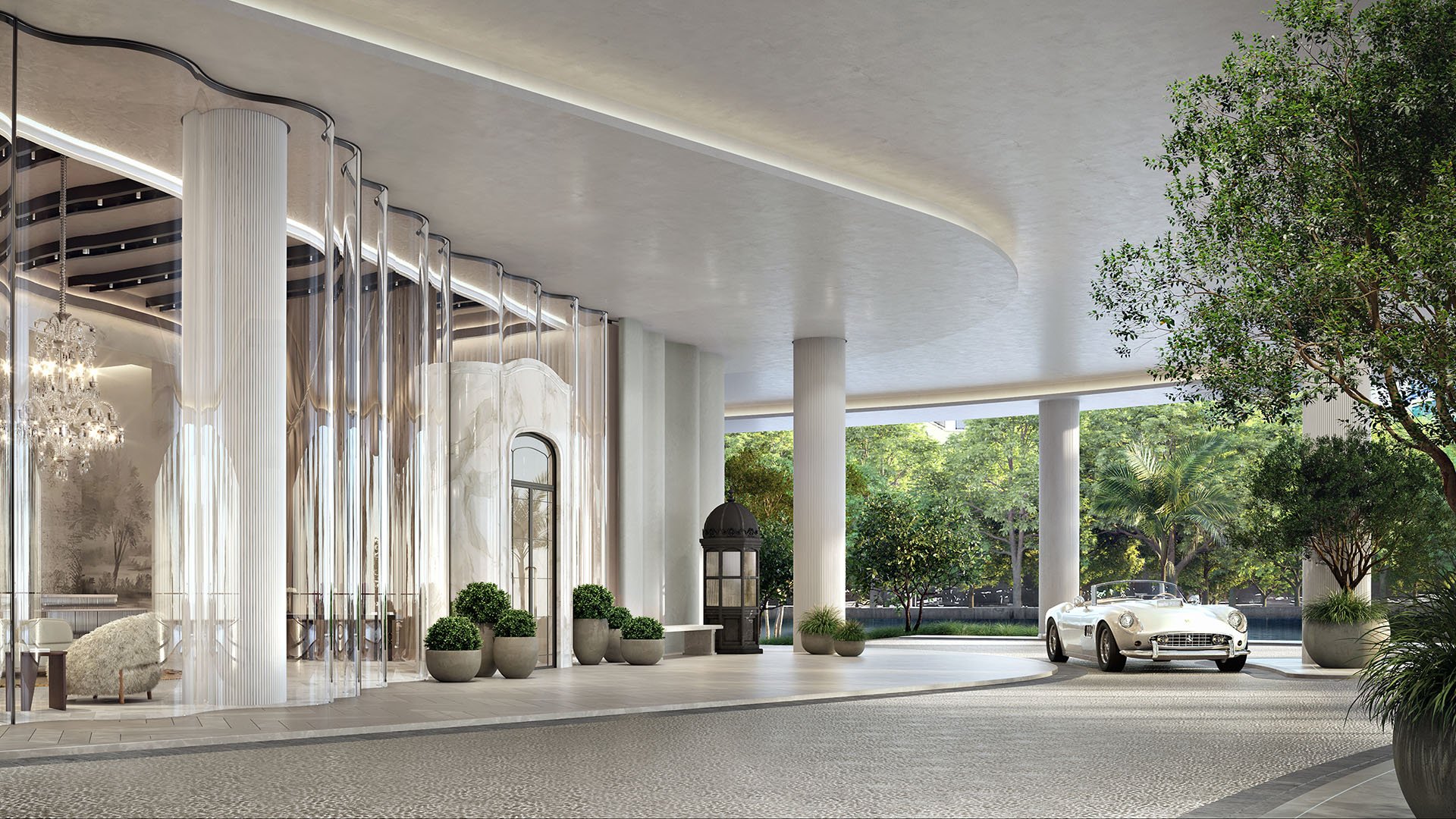
For a South Florida buyer, parking is not a minor line item. It is a daily-use asset that shapes privacy, convenience, security, staff logistics, guest flow, and eventual resale. At the upper end of the market, the garage, porte cochere, valet court, and assigned spaces can be as consequential as a view corridor or terrace depth.
Strong underwriting begins with a simple question: how does the household actually move? A primary residence in Brickell may require a different parking thesis than a waterfront home in Surfside, a pied-à-terre in Downtown, or a seasonal family base in Aventura. The number of spaces matters, but the quality, legal status, and operational reality of those spaces matter more.
In 2026, buyers should look beyond the listing description. A residence may read beautifully on paper yet feel compromised if parking access is slow, stacked, remote, exposed, or dependent on rules that do not match the owner’s lifestyle. For collectors, parents, hosts, executives, and multi-generational households, this is where discipline protects both enjoyment and capital.
Before comparing properties, establish a mobility profile. Count the core vehicles, but also include weekend cars, visiting family, private security, drivers, caregivers, tutors, house managers, and recurring guests. If the residence will be used seasonally, distinguish between cars stored year-round and those used only during peak months.
A multi-car household often has competing needs. One vehicle may require immediate elevator access. Another may need protected long-term storage. A third may be used by staff or a young adult and should not interfere with the primary owner’s daily rhythm. If the property depends heavily on valet, determine whether that service complements the household or becomes a bottleneck.
For investment-minded buyers, the goal is not simply to satisfy today’s car count. The aim is to preserve flexibility. A residence that can absorb changes in family structure, electrification, staffing, or guest patterns may retain broader appeal when it returns to market.
Even the most elegant parking description requires verification. Buyers should distinguish deeded spaces from assigned spaces, limited common elements, leased spaces, valet privileges, or informal availability. These categories can affect transferability, financing discussions, insurance expectations, and resale presentation.
Documentation should answer practical questions. Can the space be sold separately, or only with the residence? Is it appurtenant to the unit? Are extra spaces subject to association approval? Can a buyer combine spaces, install storage, or reserve spaces for long-term use? Are there restrictions on oversized vehicles, low-clearance sports cars, motorcycles, lifts, charging equipment, or commercial-style vehicles?
The underwriting file should include governing documents, amendments, parking plans, resale disclosures, and any written confirmation from the association or management. Verbal assurances are not enough for a high-value purchase. If parking is central to the decision, it should be treated with the same seriousness as square footage, title, and building financials.
Two excellent spaces can outperform four inconvenient ones. Buyers should assess width, turning radius, ramp angle, column placement, ceiling height, lighting, drainage, ventilation, elevator proximity, and security coverage. A collector car may require a different approach than a daily SUV. A family with strollers, luggage, pets, or sports equipment may value directness over volume.
Test the path from arrival to residence. How long does it take from the street to the parking space, then from the space to the private elevator, lobby, or service corridor? Is the route intuitive for guests? Does the owner need to hand over keys, wait in a queue, or navigate a tight ramp after dinner? These details shape the lived experience more than brochure language.
In dense urban settings, especially around Edgewater and Downtown, efficient ingress and egress can meaningfully affect the owner’s perception of the property. In lower-density enclaves, the focus may shift toward privacy, garage depth, and whether vehicles can be accessed discreetly without disrupting the home.
Valet can be a luxury amenity or a constraint. The difference lies in staffing, training, accountability, peak-period performance, and how the system treats owners with multiple vehicles. A buyer should understand whether valet is optional, required, complimentary, charged separately, or governed by specific house rules.
Ask how keys are stored, how vehicles are tracked, and whether there are protocols for high-value cars. Consider whether the building culture welcomes collector vehicles or treats parking primarily as a convenience service. Security matters as well: controlled access, surveillance, lighting, and personnel procedures all contribute to the risk profile.
Service culture is particularly important in buildings where residents frequently entertain. If guests, vendors, chefs, drivers, and staff all compete for limited arrival space, the most beautiful lobby can still feel operationally strained. A refined building is not only designed well; it functions quietly under pressure.
Electric vehicle readiness should be examined without assumptions. A space may be physically suitable but still require association approval, electrical capacity review, separate metering, contractor access, insurance documentation, or a specific installation protocol. Buyers should confirm what is permitted and what has already been implemented in the building.
The underwriting question is broader than whether a charger exists today. Can the residence’s parking arrangement adapt as the household changes? Are spaces located where charging could reasonably be added? Is the building organized enough to manage future demand? A premium buyer should avoid depending on a solution that is theoretical, contested, or administratively uncertain.
Adaptability also applies to vehicle size and usage. South Florida households may blend performance cars, SUVs, golf-club transport, beach gear, and airport runs. A space that works only for one narrow use case may lose practical value over time.
Parking should be valued within the broader residential thesis, not isolated as a simple add-on. In some properties, rare parking depth may support a premium because it improves daily usability and expands the buyer pool. In others, the headline space count may not translate into value if the configuration is awkward or the rights are weak.
A useful underwriting approach is to assign value to three layers: legal control, operational quality, and market relevance. Legal control asks what the owner truly holds. Operational quality asks whether the spaces function well. Market relevance asks whether future buyers in that submarket will care.
For example, a large family comparing Aventura with Surfside may place different emphasis on guest parking, garage security, and proximity to elevators. A buyer focused on Brickell may prioritize speed, valet efficiency, and predictable access. The right value conclusion depends on the residence, the building, and the intended lifestyle.
If parking is a deciding factor, address it early in the offer strategy. The contract and due diligence process should identify the spaces, rights, fees, restrictions, and transfer terms clearly. If additional spaces are being promised, the buyer should understand whether they are included, separately priced, leased, assigned by management, or subject to approval.
Walk the garage at different times if possible. A quiet midmorning tour may not reveal evening congestion, weekend guest demand, school-run patterns, or event-related pressure. Ask for the daily reality, then verify it through observation and documentation.
Finally, do not ignore exit language. When the time comes to sell, a clean parking story is easier to communicate. Multiple well-located, clearly transferable spaces can strengthen presentation. Ambiguity, by contrast, forces explanation, and explanation often weakens negotiation leverage.
How many parking spaces should a luxury buyer require? Start with the household’s actual mobility profile, then add flexibility for guests, staff, seasonal vehicles, and future needs.
Are deeded spaces better than assigned spaces? Deeded spaces typically provide clearer ownership control, while assigned or licensed spaces require closer review of rules and transferability.
Should parking influence the offer price? Yes, when the spaces are legally secure, easy to use, and relevant to future buyers in that specific submarket.
Is valet a substitute for owning multiple spaces? Sometimes, but only if the building’s valet operation is reliable, secure, well staffed, and aligned with the owner’s lifestyle.
What should collectors examine first? Clearance, ramp angles, space width, security, ventilation, access protocols, and whether the building accommodates high-value vehicles.
Can electric charging be assumed in a newer building? No. Buyers should confirm permissions, electrical capacity, installation procedures, metering, and association requirements before closing.
Do guest spaces count toward a parking strategy? They help, but they are not a substitute for controlled spaces if guests, staff, or family visit regularly.
Why does elevator proximity matter? It affects privacy, convenience, luggage movement, security, and the daily ease of using the residence.
Should parking be reviewed by counsel? Yes. Counsel should review documents describing ownership, assignment, fees, restrictions, and transfer rights.
What is the best parking profile for resale? Clear legal rights, practical access, strong security, and flexible usability usually create the most compelling resale narrative.
For a tailored shortlist and next-step guidance, connect with MILLION.
If branded residences are on your mind — as a home or as an allocation — we would be glad to share what we are seeing, privately.
Begin a quiet conversation