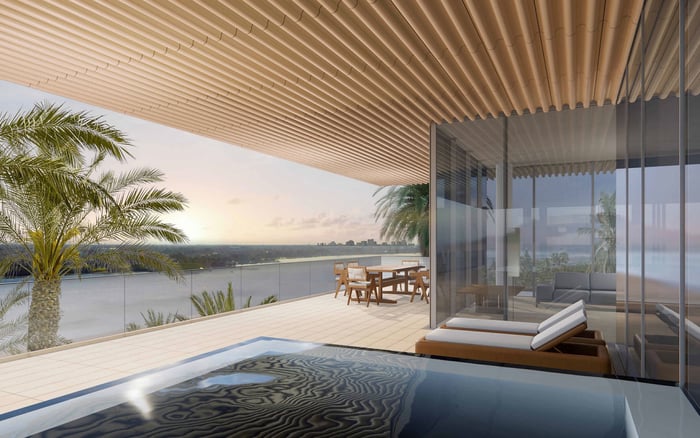
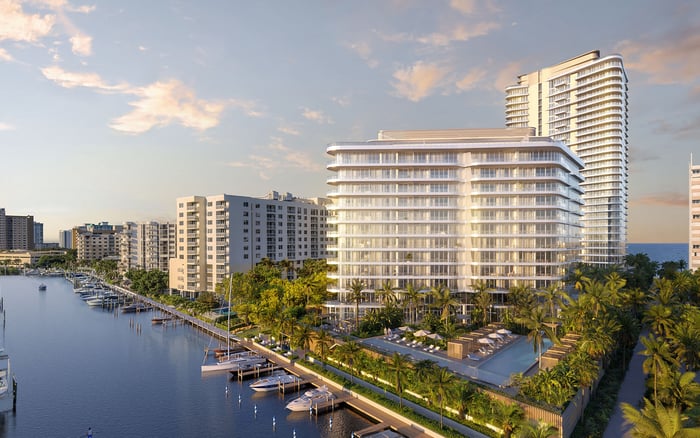
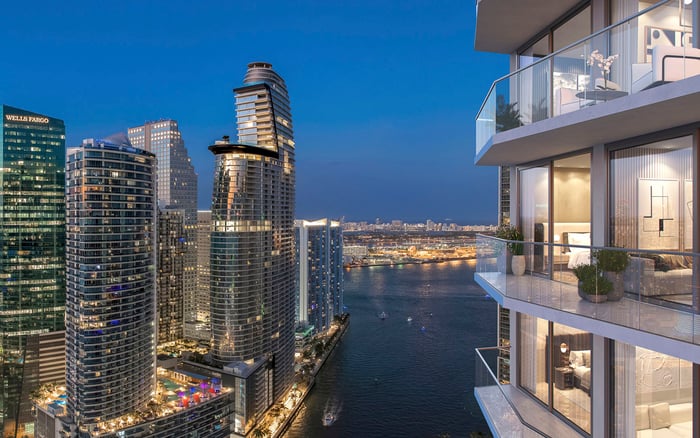
A discreet buyer framework for evaluating completed residences across South Florida, where certainty is found in the finished building, its operations, and its fit with a long-term lifestyle plan.
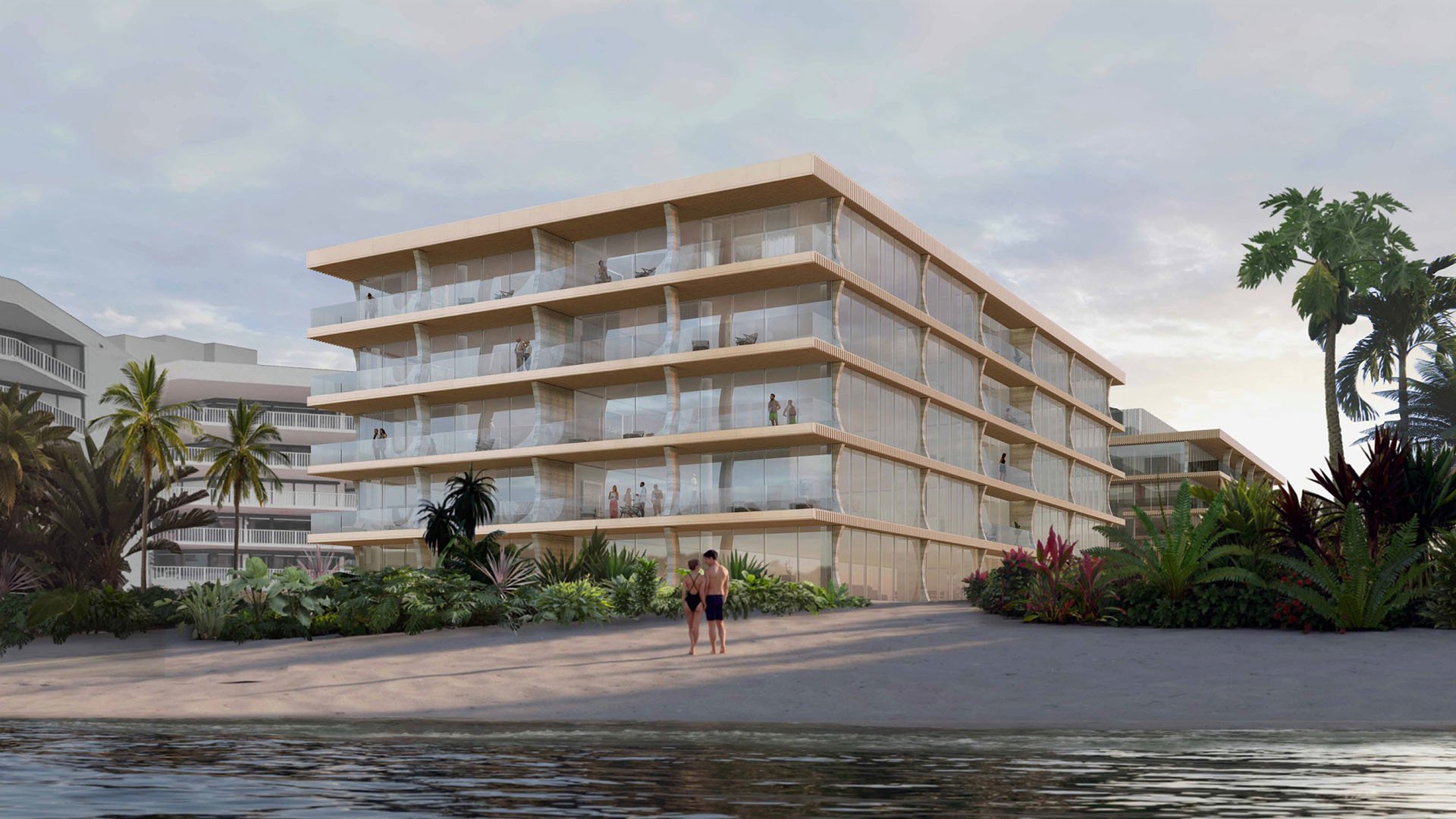
In South Florida, the most discerning residential decisions often begin with a simple question: what can be known today? A completed building answers with rare clarity. A buyer can stand in the actual residence, study the light at different hours, feel the elevator rhythm, listen for ambient noise, inspect the amenities, and understand how the property performs beyond renderings and promises.
That does not make every completed residence superior to every planned one. It makes the evaluation different. New construction may offer freshness, design continuity, and a contemporary amenity language, but a delivered building adds the comfort of evidence. For buyers comparing Miami, Fort Lauderdale, and Palm Beach, that evidence can separate an elegant idea from a confident acquisition.
Completed-building certainty is especially valuable when the purchase is not purely transactional. A primary residence, seasonal home, or family compound substitute must perform across moods, guests, weather, service expectations, and privacy needs. The finished property reveals those qualities immediately.
Miami asks buyers to be precise. The city contains distinct residential moods, from the vertical energy of Brickell to quieter waterfront enclaves, beachside addresses, and low-density neighborhoods with a more private cadence. A completed building lets a buyer test the difference between prestige on paper and pleasure in person.
The essential exercise is to separate the view from the total living experience. A dramatic skyline, bay, or oceanfront outlook can be extraordinary, but the buyer should also examine arrival sequence, garage access, elevator privacy, corridor condition, acoustics, staff culture, and the way amenities are maintained after the initial glow of opening. These details shape daily life more than brochure language ever can.
In Miami, completed-building certainty also serves as a hedge against ambiguity. The buyer can compare actual ceiling heights, finished materials, storage, terrace usability, window performance, and the relationship between interior rooms and outdoor exposures. If a residence is being considered for investment, these same traits influence how convincingly it may appeal to future buyers or tenants who are equally sensitive to quality and convenience.
Fort Lauderdale has a different luxury grammar. The city’s appeal is closely tied to water, boating culture, beach proximity, and a softer sense of arrival than the most urban parts of Miami. Completed-building certainty is therefore less about spectacle and more about whether the property’s rhythm suits the owner’s intended life.
A buyer should pay close attention to access patterns. How intuitive is the drive from the main corridors? How protected is the arrival during rain or peak traffic? Does the lobby feel calm or merely transitional? Are amenity areas properly scaled for the number of residences, or do they read more impressively in photography than in daily use? In Broward, where waterfront and beach-oriented living can vary significantly by micro-location, these practical observations matter.
The same is true for service. A completed building allows the buyer to sense whether staff presence is gracious, overextended, or overly formal. For an owner who expects a residence to operate with the ease of a private club, this is not a minor distinction. It is part of the asset.
Palm Beach and its surrounding luxury markets often reward restraint. The buyer may be less interested in visual drama and more focused on privacy, composure, architectural dignity, and the social tone of a building. Completed-building certainty helps reveal whether the property’s atmosphere aligns with the buyer’s expectations.
Here, governance deserves close attention. A beautiful residence can be compromised by unclear rules, inconsistent maintenance priorities, or a culture that does not match the owner’s lifestyle. Reviewing association documents, meeting appropriate building representatives, and understanding renovation procedures can be as important as inspecting the residence itself.
Resale considerations should also be viewed through the lens of timelessness. Finishes can be changed, but building proportion, location, approach, privacy, and operational discipline are harder to improve after purchase. In a market where discretion can be part of the value proposition, the quiet strengths of a completed building may matter more than obvious display.
Completed-building certainty is not passive. It requires disciplined diligence. The buyer should walk the residence more than once when possible, ideally at different times of day. Light, glare, traffic, neighboring activity, and amenity use can all change the way a home feels.
Professional inspections remain essential, even in buildings that present beautifully. Mechanical systems, windows, doors, moisture conditions, appliance performance, and terrace details should be understood before emotion overtakes judgment. In condominium settings, the residence is only one part of the decision. The buyer should also review budgets, reserves, insurance context, rules, pending work, litigation disclosures when applicable, and any planned capital projects.
The strongest completed-building purchases tend to satisfy three tests. First, the residence itself must live well. Second, the building must be managed with consistency. Third, the neighborhood must support the owner’s real habits, not an abstract idea of luxury.
A useful comparison begins with lifestyle, not price. Miami may suit the buyer who wants energy, international access, design density, and a broader range of vertical living choices. Fort Lauderdale may appeal to the buyer who wants water, boating adjacency, beach access, and a more measured pace. Palm Beach may suit the buyer who values privacy, polish, and a quieter social architecture.
Once the lifestyle is clear, the buyer can ask the same questions in each market. Is the building already operating at the expected standard? Does the residence feel as strong in person as it appears in photography? Are the views protected by the buyer’s own risk tolerance, or are they simply pleasing today? Does the floor plan support the way the household actually lives? Is the governance culture compatible with future renovation, guests, pets, staff, or seasonal use?
This is where completed-building certainty becomes more than comfort. It becomes strategy. A buyer who knows what is real can negotiate with sharper judgment, avoid unsuitable glamour, and choose a residence that remains satisfying after the closing dinner has ended.
What does completed-building certainty mean? It means the buyer can evaluate the finished residence, common areas, operations, and building culture before making a decision.
Is a completed building always a safer choice than a planned residence? Not always. It simply offers more observable information, which can reduce certain uncertainties around finish quality, operations, and daily livability.
What should I inspect beyond the unit itself? Study the lobby, elevators, garage, amenities, staff interaction, corridors, security, maintenance standards, and overall atmosphere.
Why is Miami different from Fort Lauderdale and Palm Beach? Miami often requires closer attention to urban energy, views, vertical living, and neighborhood pace, while the other markets may emphasize water access, privacy, or restraint.
How should I think about amenities in a completed building? Look at how they are actually used and maintained, not just how they were photographed or described at launch.
Do association documents matter for luxury buyers? Yes. They help clarify governance, rules, financial obligations, renovation procedures, and potential building responsibilities.
Can a completed residence still need meaningful upgrades? Yes. Even an elegant residence may require changes to lighting, systems, finishes, storage, or furnishings to meet a buyer’s standards.
What is the role of resale thinking in a lifestyle purchase? Even when the home is primarily personal, future marketability matters because layout, location, building quality, and governance can affect exit flexibility.
Should seasonal buyers evaluate buildings differently? Seasonal buyers should focus closely on lock-and-leave convenience, staff reliability, maintenance routines, security, and ease of arrival.
What is the best first step when comparing completed buildings? Define the lifestyle first, then compare buildings through inspections, document review, neighborhood fit, and the quality of daily operations.
If you'd like a private walkthrough and a curated shortlist, connect with MILLION.
If branded residences are on your mind — as a home or as an allocation — we would be glad to share what we are seeing, privately.
Begin a quiet conversation