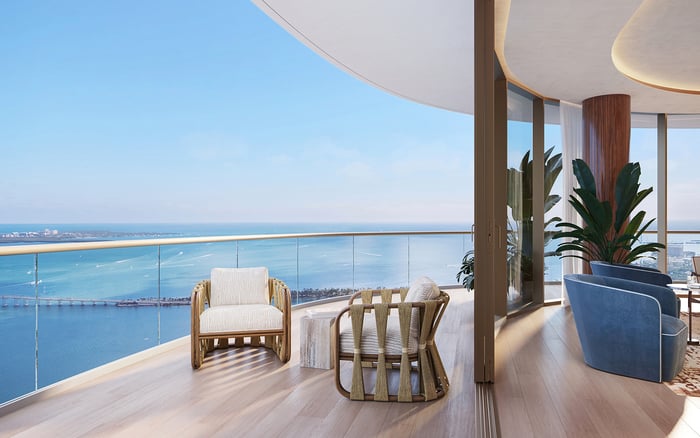
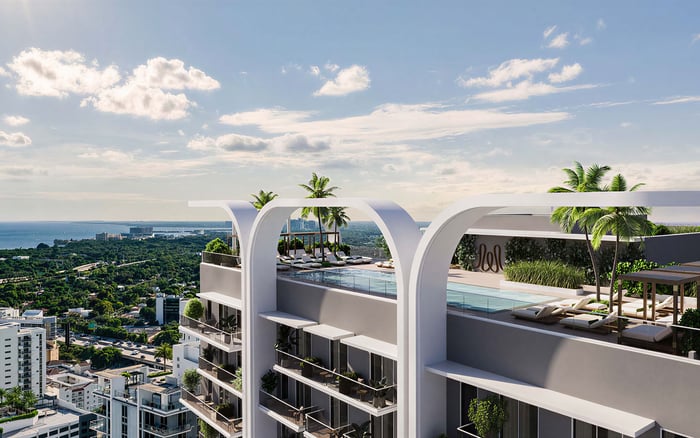
Balcony shade is one of the most persuasive promises in South Florida luxury real estate, yet the difference between a serene outdoor room and a sun-struck ledge is often found in the details. This guide explains how discerning buyers can read renderings, plans, exposure, and lifestyle language with sharper eyes.
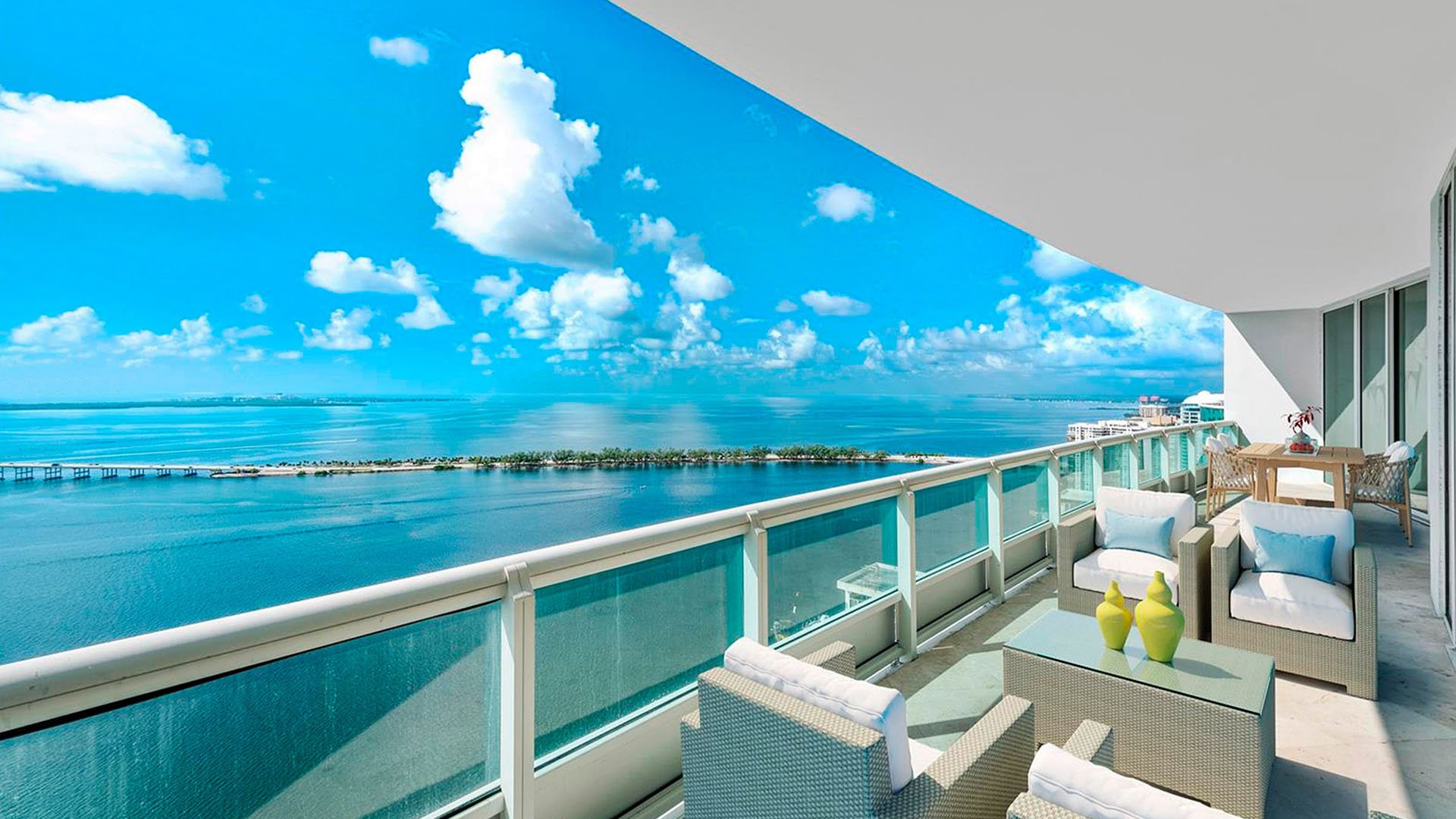
In South Florida luxury real estate, the balcony has become a signature stage. It frames the water, softens the skyline, and gives a residence its most immediate connection to climate. It is also where marketing language can turn theatrical. A rendering may show linen curtains, pale stone, sculptural seating, and a breakfast tray in gentle light. The buyer’s question is more practical: will this space be comfortable when the sun is high, the air is humid, and the glass is reflecting heat?
Balcony shade deserves the same scrutiny as ceiling height, floor plan, privacy, and parking. A true outdoor room works at multiple times of day. It allows reading, dining, conversation, and quiet without forcing the owner back indoors. A decorative overhang may photograph beautifully, but usable shade depends on orientation, depth, structure, and the relationship between the balcony and the building envelope.
A buyer comparing Brickell, Miami Beach, Sunny Isles, and oceanfront residences should treat balcony and terrace language as a prompt for due diligence, not a conclusion.
Marketing theater often begins with atmosphere. The scene is composed at the most flattering hour, usually when shadows are long and the light is warm. Furniture is placed where it looks elegant, not necessarily where it remains usable. Plants appear fresh. Stone never radiates heat. Glass railings disappear. The effect is seductive, but it may not answer how the balcony performs at noon, after rain, or through a long summer afternoon.
Real shade is measured by experience, even when it is difficult to reduce to a single number. It is the ability to sit without squinting. It is the ability to leave cushions in place without constant fading. It is the difference between using the balcony as an everyday extension of the living room and treating it as a view platform for brief visits.
The most credible residences do not rely on mood alone. They show restraint in the way outdoor living is described. They acknowledge exposure, celebrate proportion, and make the terrace feel integrated into the plan rather than pasted onto the facade.
Start with the slab. A deeper balcony can offer more flexibility than a narrow projection, but depth alone is not the answer. The slab above, the shape of the facade, the height of adjacent walls, and the spacing of neighboring terraces all affect how shade behaves. A balcony tucked within the architecture may feel more protected than one fully exposed beyond the building line.
Next, study orientation. Morning sun, afternoon sun, and reflected light produce different living conditions. In South Florida, western exposure can feel dramatically different from a softer morning orientation, particularly for buyers who imagine outdoor dinners or late-day work calls. Southern and eastern conditions can also vary by season and surrounding context. The right question is not simply which direction faces the view, but when that view can be enjoyed comfortably.
Then look at glazing and interior heat gain. A balcony without meaningful shade can change how the adjacent living room feels. Large glass walls are part of the luxury vocabulary, but their beauty should be matched by thoughtful protection, usable curtains or shades, and a plan that does not turn the main room into a heat collector.
Finally, examine privacy. Shade structures, recesses, side walls, and overhangs may also determine whether a balcony feels intimate. A beautifully shaded terrace that is fully exposed to neighboring units may become less useful than expected.
The first sign is imagery that shows only sunrise, sunset, or evening scenes. Golden light is not false, but it is incomplete. If every balcony image is captured at the softest hour, ask how the same space feels at midday.
The second sign is furniture scaled for a larger space than the plan suggests. Renderings sometimes place lounge chairs, dining tables, planters, and side tables with cinematic ease. A buyer should compare the furniture footprint with the actual terrace dimensions and circulation paths.
The third sign is language that substitutes emotion for performance. Phrases about seamless indoor-outdoor living can be meaningful, but they should be supported by visible architectural logic. A balcony should not need a paragraph of romance to explain why it works.
The fourth sign is an absence of shadow studies or practical discussion. Not every sales conversation will include technical analysis, but serious buyers can still ask for plan details, elevation context, and confirmation of how exposure changes throughout the day.
The fifth sign is a balcony that looks dramatic from outside but feels compromised from within. Some facade gestures are designed for skyline identity. The buyer’s priority is different: chair placement, wind comfort, privacy, door swing, drainage, and shade where people actually sit.
Ask where the sun falls on the balcony in the morning, at midday, and in late afternoon. Ask whether the balcony above provides meaningful cover. Ask how much of the terrace remains shaded during the hours you expect to use it. Ask whether the building permits additional outdoor shading elements, and whether those elements must meet aesthetic rules.
Ask about furniture depth. A terrace that fits a dining table in a rendering may feel tight once chairs are pulled out. If outdoor entertaining is central to your lifestyle, confirm the usable zone rather than the total square footage. A long, shallow balcony may create a dramatic line of glass but offer fewer true seating arrangements than a more compact, deeper plan.
Ask about maintenance. Shade affects more than comfort. It can influence fabric selection, plant survival, flooring temperature, and how often the space needs attention. The most elegant balcony is not always the one with the most accessories. Often, it is the one where the architecture quietly carries the burden.
The best balcony shade in South Florida feels calm. It is not necessarily dark, enclosed, or heavily screened. It allows brightness without glare. It tempers heat without sacrificing the view. It lets the owner move from the living room to the terrace without a change in mood or comfort.
Sophisticated shade also shows restraint. It does not need oversized umbrellas in every image or theatrical landscaping to imply softness. It may come from a well-proportioned overhang, a recessed terrace, a thoughtful facade rhythm, or a plan that understands how people actually live outdoors.
For high-floor buyers, shade can also shape the emotional quality of the residence. A balcony that feels exposed may be thrilling for a moment, while one that feels protected can become a daily ritual. Coffee, reading, a quiet call, or a glass of wine before dinner all depend on comfort more than spectacle.
When touring or reviewing materials, create a simple hierarchy. First, decide when you want to use the balcony. Morning coffee, afternoon lounging, sunset dining, and weekend entertaining each ask for different conditions. Second, match that lifestyle to orientation and depth. Third, look for architectural cover that is built into the residence, not merely implied by styling.
Resist the urge to judge the balcony only from the view outward. Stand inside the living room and imagine the sun entering the space. Consider where art, upholstery, and seating would be placed. Notice whether the terrace invites daily use or simply extends the glass line.
In the luxury market, the most valuable outdoor spaces often feel inevitable. They do not beg for attention. They make the residence easier to inhabit. That is the quiet distinction between a balcony designed for a brochure and a terrace designed for life.
Is a deeper balcony always better for shade? Not always. Depth helps, but orientation, overhead cover, facade shape, and adjacent walls are equally important.
Can renderings accurately show balcony shade? They can suggest mood, but buyers should not rely on them alone. Ask how the space performs at different times of day.
What exposure is most challenging in South Florida? Late-day sun can be especially intense for many outdoor spaces. The right answer depends on the building, height, and surrounding context.
Should I ask for shadow studies? Yes, when available. Even a practical discussion of sun path and overhang depth can clarify whether the terrace is truly usable.
Do glass railings affect balcony comfort? They preserve views, but they can also contribute to glare and reflected heat. Comfort depends on the full design, not one element.
How do I judge furniture shown in renderings? Compare it with the actual plan dimensions. Confirm that chairs, tables, and circulation can coexist comfortably.
Can I add my own umbrellas or shades later? Possibly, but building rules may limit what is allowed. Confirm restrictions before assuming you can modify the terrace.
Does shade affect resale appeal? A comfortable outdoor space can broaden daily usability. Buyers often respond to terraces that feel calm, private, and practical.
What is the biggest red flag in balcony marketing? A beautiful image with no practical explanation. If the architecture does not support the promise, the mood may be doing too much work.
How should I evaluate balcony shade during a tour? Visit at the time you expect to use the space most. Stand where seating would go and judge glare, heat, privacy, and comfort.
For a confidential assessment and a building-by-building shortlist, connect with MILLION.
If branded residences are on your mind — as a home or as an allocation — we would be glad to share what we are seeing, privately.
Begin a quiet conversation