A discreet luxury buyer’s guide to interpreting short-term visitor exposure in South Florida, with attention to privacy, building culture, amenity pressure, circulation, and long-term ownership confidence.
A tourist reads South Florida through immediacy: the view, the pool, the restaurant downstairs, the walk to the sand, the evening energy in the lobby. A luxury buyer reads the same scene differently. The question is not whether the building feels desirable for a few days. It is whether the property remains composed after the novelty fades, when privacy, access, acoustics, and resident culture become part of daily life.
Short-term visitor exposure is not a moral judgment on rentals or hospitality. It is a due diligence category. In the most coveted addresses, the issue is rarely one dramatic inconvenience. It is the accumulation of small signals: unfamiliar faces in elevators, luggage traffic at peak hours, pool chairs turning over quickly, staff pulled between resident service and guest orientation, and common spaces that begin to feel less like an extension of home and more like a lobby in transit.
The luxury buyer’s advantage is restraint. Instead of asking whether visitors are present, ask how their presence is absorbed. The best buildings do not merely limit exposure. They design for it, govern it, and make it feel nearly invisible.
A building that feels exciting during a weekend stay may not be the building you want to own in. Hospitality energy can be seductive: busy arrival courts, social pools, cabanas in motion, dining options close by, and a sense that the property is always alive. For a short visit, that rhythm can feel like abundance. For ownership, it can become friction.
Luxury buyers should distinguish vitality from volatility. Vitality means a building has strong lifestyle appeal, desirable amenities, and enough energy to support long-term demand. Volatility means the building’s rhythm is shaped too heavily by guests with no enduring stake in the property. The former can support value. The latter can dilute the emotional premium ultra-prime buyers pay for serenity.
This distinction is especially important in markets where second-home ownership, seasonal occupancy, and investment thinking overlap. A buyer may appreciate optional rental flexibility without wanting the property to feel transient. The question is not simply, “Can people rent here?” It is, “Does the building still feel residential when they do?”
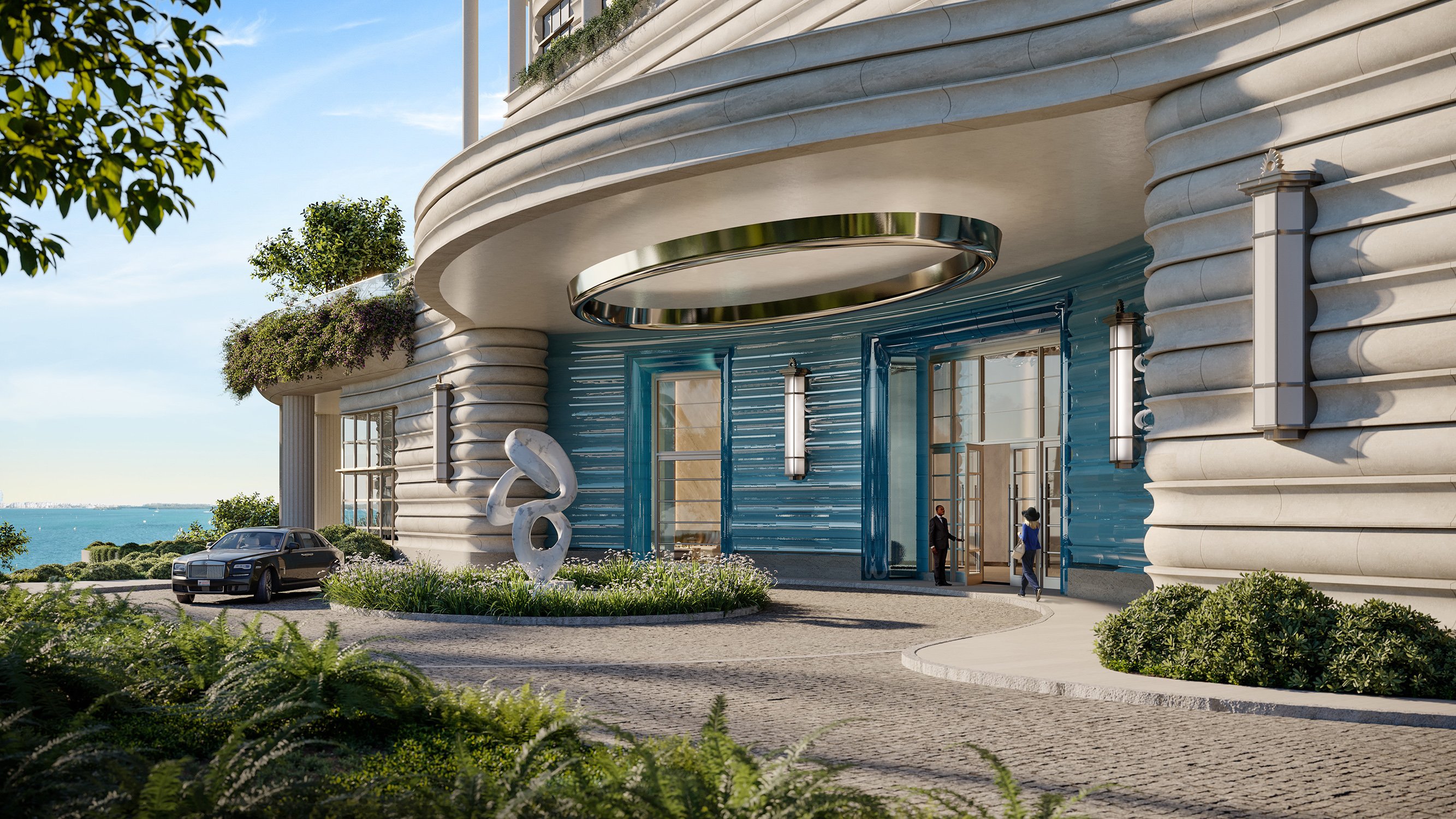
The first exposure point is arrival. A refined building creates a clear procession from street to valet, from valet to reception, from reception to elevator, and from elevator to private residence. When that sequence is calm, even a building with visitors can feel controlled. When it is confused, even moderate guest activity can feel intrusive.
Observe whether staff appear to recognize residents, whether luggage creates congestion, whether guests linger in the lobby seeking directions, and whether service teams must constantly explain building rules. None of these details needs to be dramatic to matter. In a luxury setting, repeated uncertainty is itself a cost.
The best arrival sequences protect resident identity. They allow guests to be handled graciously without placing residents in the role of witness, guide, or gatekeeper. A buyer should look for subtle separation: service corridors that function, elevators that are not overloaded, reception teams that know the cadence of the property, and common areas that remain composed even during peak arrival windows.
Amenity exposure is often more revealing than lobby exposure. A lobby can be staged and managed. A pool deck, gym, spa, children’s area, beach club, or lounge shows the daily truth of a building’s culture.
A tourist sees whether the pool is beautiful. A luxury buyer sees whether it is usable. Are seats treated as temporary territory or as part of a shared residential environment? Is the gym a quiet daily ritual or a rotating parade of visitors discovering the equipment? Do residents appear relaxed, or do they withdraw from the most visible amenities during busy periods?
The issue is not perfection. South Florida is seasonal, social, and international. Even highly private properties have guests, family members, and shifting occupancy patterns. The buyer’s concern is whether the amenity program is robust enough to absorb those patterns without eroding the owner experience.
Rules matter. Minimum rental periods, registration procedures, guest limits, fines, and access controls all shape exposure. Yet rules alone do not define the experience. Culture does.
A building can have formal restrictions and still feel loosely managed if enforcement is inconsistent. Another can permit some flexibility yet remain serene because ownership culture, staff discipline, and physical design reinforce discretion. Buyers should listen carefully to how policies are described. Vague assurances are less useful than clear, practiced explanations.
This is where vocabulary can sharpen the conversation. Internally, many buyers sort exposure through plain labels: short-term rentals, hospitality-style usage, investment, second-home, Miami Beach, and Brickell. The labels are not conclusions. They are prompts. Each should lead to a more refined question about governance, lifestyle, and resale fit.
Visitor exposure is not contained within the building. It is amplified or softened by the neighborhood. A tower in a high-energy urban core may accept a more active ground plane because residents expect proximity, dining, nightlife, and movement. A beachfront or enclave property may be judged more harshly if its common spaces feel too porous.
In Brickell, for example, a buyer may tolerate more visible movement in exchange for walkability, business access, and a cosmopolitan daily rhythm. In Miami Beach, the premium often rests on a more delicate balance: resort pleasure without the loss of residential privacy. Neither standard is universal. The right interpretation depends on why the buyer is purchasing.
For a primary residence, consistency may matter most. For a seasonal residence, lock-and-leave service and amenity quality may lead. For an investment-leaning purchase, the buyer may accept more activity if the building’s reputation, management, and physical durability support long-term demand. Sophisticated buyers do not apply one rule to every address. They read context.
Resale is emotional before it is mathematical. Future buyers may review fees, floor plans, and views, but they will also feel the building within minutes. If the arrival seems chaotic, if amenity spaces feel overrun, or if elevators suggest constant turnover, the property may need to work harder to justify its premium.
Conversely, a building that handles visitor exposure elegantly can preserve desirability even when rental flexibility exists. The highest standard is not the absence of guests. It is the absence of disruption. When visitor movement is discreet, verified, and operationally absorbed, owners retain the feeling they paid for: privacy without isolation, service without spectacle, and liquidity without compromise.
A luxury buyer should therefore treat exposure as part of the asset’s character. It touches livability, staff performance, maintenance pressure, insurance perception, and the way the building is discussed in private circles. In ultra-prime real estate, reputation moves quietly, but it moves.
Before committing, visit at different times of day if possible. Watch the entrance during check-in hours. Walk the amenity level when the weather is ideal. Note whether elevators feel residential or transient. Ask how guests are registered, how access is controlled, and how violations are handled. Listen less for promises and more for operational confidence.
Then ask the most important question: Would you feel at home here on the busiest day of the season? If the answer is yes, the building may have the infrastructure and culture to protect ownership quality. If the answer depends on avoiding certain hours, amenities, or entrances, the exposure may be more meaningful than it first appears.
Luxury is not only what a building offers. It is what it shields you from.
What is short-term visitor exposure in a luxury building? It is the degree to which short-stay guests affect privacy, circulation, amenity use, staff attention, and the residential atmosphere.
Is visitor exposure always negative for owners? No. It becomes a concern when guest activity overwhelms the building’s design, rules, or service culture.
Should buyers avoid every building with rental flexibility? Not necessarily. Some buildings manage flexibility discreetly while preserving a calm owner experience.
What is the first thing a buyer should observe? Start with the arrival sequence, including valet, lobby control, luggage movement, and elevator flow.
Why do amenities reveal so much? Amenities show how residents and guests actually share space when the building is active, not just staged.
Do written rules matter more than building culture? Both matter, but rules are only as strong as enforcement, staffing, and resident expectations.
How does neighborhood context affect the analysis? A lively urban setting may tolerate more movement, while a private beachfront setting may demand greater quiet.
Can visitor exposure affect resale? Yes. Future buyers often sense whether a building feels private, transient, or well controlled within minutes.
What should second-home buyers prioritize? They should focus on access control, staff consistency, amenity usability, and the property’s lock-and-leave ease.
What is the simplest luxury test? Ask whether the building still feels like home on its busiest day of the season.
For a confidential assessment and a building-by-building shortlist, connect with MILLION.
If branded residences are on your mind — as a home or as an allocation — we would be glad to share what we are seeing, privately.
Begin a quiet conversation