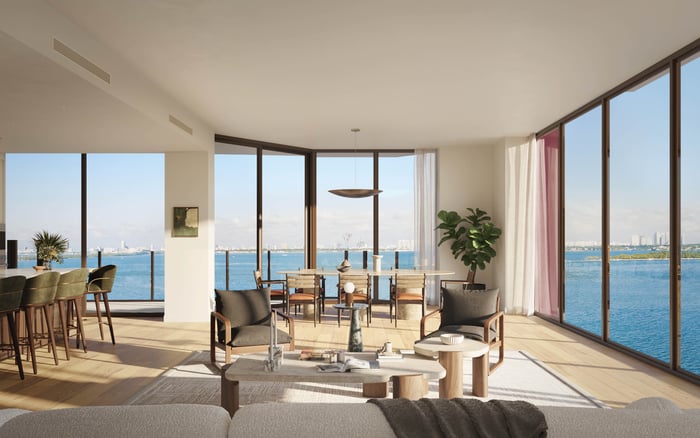
A luxury buyer’s guide to reading roof-rights clarity with discretion, focusing on ownership language, access, improvements, privacy, maintenance, and resale risk.

In South Florida luxury real estate, a rooftop can seduce quickly. The horizon feels private, the breeze carries a sense of arrival, and the right terrace can make a residence feel less like an apartment and more like a sky villa. Yet roof-rights clarity is not about romance. It is about control.
A sophisticated buyer reads rooftop language the way a collector reads provenance. The question is not simply whether a roof exists, whether a listing calls it private, or whether a rendering shows lounge chairs under the stars. The question is what, exactly, the owner may use, improve, exclude, insure, maintain, alter, and transfer.
Tourists buy the sunset. Luxury buyers buy the paperwork behind it.
Roof rights usually take shape through a narrow set of documents and phrases. A buyer should listen for whether the rooftop area is described as deeded, appurtenant, a limited common element, exclusive use, licensed, or simply available by custom. Those words are not interchangeable.
Deeded language tends to carry the most weight because it suggests the rooftop area is tied directly to ownership. Limited common element language can also be meaningful, but the governing documents must explain who may use the space and who must maintain it. Exclusive use sounds powerful, but it should be paired with a clear boundary, access path, and enforcement mechanism. A license may be more fragile, especially if it can be changed, revoked, or narrowed by an association or developer.
A buyer does not need to become a lawyer. A buyer does need to know when a beautiful phrase is supported by a binding document and when it is merely sales language.
Privacy is one of the great luxuries of a rooftop, but it is also one of the easiest qualities to overstate. A space may feel private during a showing and still be visible from neighboring towers, service corridors, adjoining amenity decks, or future upper-level improvements. A penthouse buyer should distinguish emotional privacy from legal exclusivity.
Ask who can access the roof, how access is controlled, and whether building staff, vendors, neighboring owners, or association representatives have routine entry rights. If an elevator or stairwell opens near the area, understand whether there is a lock, gate, camera, fob system, or written access protocol. If mechanical equipment shares the roof, examine how service visits occur and whether they interfere with residential enjoyment.
In Brickell, where vertical adjacency can matter as much as waterfront exposure, the clearest rooftop rights define both the area and the path to reach it. In Miami Beach and Surfside, where outdoor living is part of the lifestyle proposition, the most elegant rooftop story is still the one that survives a careful document review.
Words like expansive, private, rare, and spectacular are not substitutes for a plan. Roof-rights clarity should include a defined footprint. Ideally, the buyer can review a drawing, exhibit, survey, condominium plan, or recorded diagram that shows where the roof area begins and ends.
This matters for furniture placement, planters, cabanas, shade structures, kitchens, plunge features, lighting, audio, and storage. It also matters for conflict. If a neighbor believes a planter crosses a line, or an association believes a seating area intrudes into a service zone, the buyer with a clear boundary is in a stronger position than the buyer relying on memory and marketing language.
A balcony is usually easier to understand because its edges are visible and familiar. A roof can be more ambiguous. The higher the price point, the less tolerance there should be for ambiguity.
The luxury mind often sees possibility immediately. A bare roof becomes a dining salon, wellness deck, summer kitchen, sculpture garden, or cinematic lounge. The documents may see something else.
Before attributing value to potential improvements, determine whether alterations require board consent, architectural review, engineering sign-off, municipal approval, or developer approval. Determine whether there are restrictions on weight, drainage, waterproofing, wind exposure, fire safety, screening, lighting, sound, cooking equipment, vegetation, or hours of use. Do not assume that because a neighboring residence has a feature, the same feature is permitted for yours.
The most refined rooftop acquisition is not the one with the longest fantasy list. It is the one where the buyer knows which improvements are already permitted, which are plausible with approval, and which should be valued at zero until proven otherwise.
Rooftops are beautiful because they touch the sky. They are complicated because they protect the building. A roof is not merely an amenity surface; it is part of the structure’s environmental envelope. That makes maintenance responsibility central to value.
A buyer should understand who maintains the membrane, pavers, railings, drains, doors, lighting, irrigation, waterproofing, and any private fixtures. If the owner is responsible, assess whether the obligation is ordinary upkeep or a more serious duty tied to damage prevention. If the association is responsible, determine whether private use creates exceptions, reimbursements, or repair obligations.
This is especially important for oceanfront and coastal properties, where outdoor elements must be treated with respect. Even without technical detail, the principle is simple: a roof-rights premium should be matched by a maintenance map.
A rooftop used for entertaining carries a different profile from a quiet observation deck. Luxury buyers should review insurance expectations before closing, not after the first event. If furniture, planters, cooking equipment, or guests are involved, the owner should understand whether additional coverage, indemnity, or association approval is expected.
This is not a reason to avoid rooftop residences. It is a reason to price them intelligently. A pristine roof-rights package makes the residence easier to enjoy because the owner is not improvising rules after possession.
The strongest roof-rights language does more than protect present enjoyment. It supports future resale. In the ultra-premium market, the next buyer’s counsel, family office, lender, or advisor may examine the same documents with equal or greater skepticism.
If the rights are clear, transferable, and easy to explain, the rooftop becomes a durable differentiator. If the rights depend on custom, personal permission, vague plans, or informal understandings, the value can become softer. A luxury buyer should ask: could this rooftop be described to the next buyer in one precise paragraph, without qualification?
If the answer is yes, the asset has a cleaner story. If the answer requires a long verbal explanation, the risk has not disappeared. It has merely been postponed.
A disciplined buyer should request the governing documents, recorded plans, roof exhibits, association rules, alteration policies, maintenance provisions, insurance requirements, and any approvals tied to existing rooftop improvements. The goal is not to bury the experience in paperwork. The goal is to preserve the experience by removing uncertainty.
Walk the roof at the hour you expect to use it. Note sightlines, wind, sound, lighting, neighboring views, service access, and the practical route from the residence. Then compare what you saw with what the documents permit. Where the two align, value becomes more credible. Where they diverge, proceed slowly.
The best roof rights in South Florida do not merely elevate a floor plan. They elevate confidence.
What are roof rights in a luxury residence? Roof rights describe what an owner may use, control, alter, maintain, and transfer on a rooftop or roof-adjacent space.
Is a private rooftop always deeded? No. A rooftop may be deeded, assigned as exclusive use, treated as a limited common element, or governed by another arrangement.
Why does the exact wording matter? Small wording differences can affect access, maintenance, resale, improvement rights, and the owner’s ability to exclude others.
Should I value possible rooftop improvements? Value them cautiously unless the documents and approval path clearly support the work you envision.
Can an association access a private roof area? Often, access may be retained for maintenance, inspections, repairs, or emergencies, so the rules should be reviewed carefully.
What is the biggest red flag? A rooftop marketed as private without a clear document, plan, boundary, or written access right deserves closer review.
Do roof rights affect resale? Yes. Clear, transferable rights are easier for a future buyer to understand, finance, insure, and value.
Who should review roof-rights language? A real estate attorney, experienced advisor, and appropriate building professionals should review the documents before closing.
Is a rooftop more valuable than a large terrace? It depends on clarity, privacy, access, usability, maintenance, and whether the rights are durable and transferable.
How should a luxury buyer approach the decision? Treat the rooftop as both lifestyle space and legal asset, then buy only the rights that are clearly documented.
For a tailored shortlist and next-step guidance, connect with MILLION.
If branded residences are on your mind — as a home or as an allocation — we would be glad to share what we are seeing, privately.
Begin a quiet conversation