A discreet buyer’s guide to evaluating acoustic glass in South Florida luxury residences, from the full window wall assembly to installation quality, exposures, terraces, and resale-grade calm.
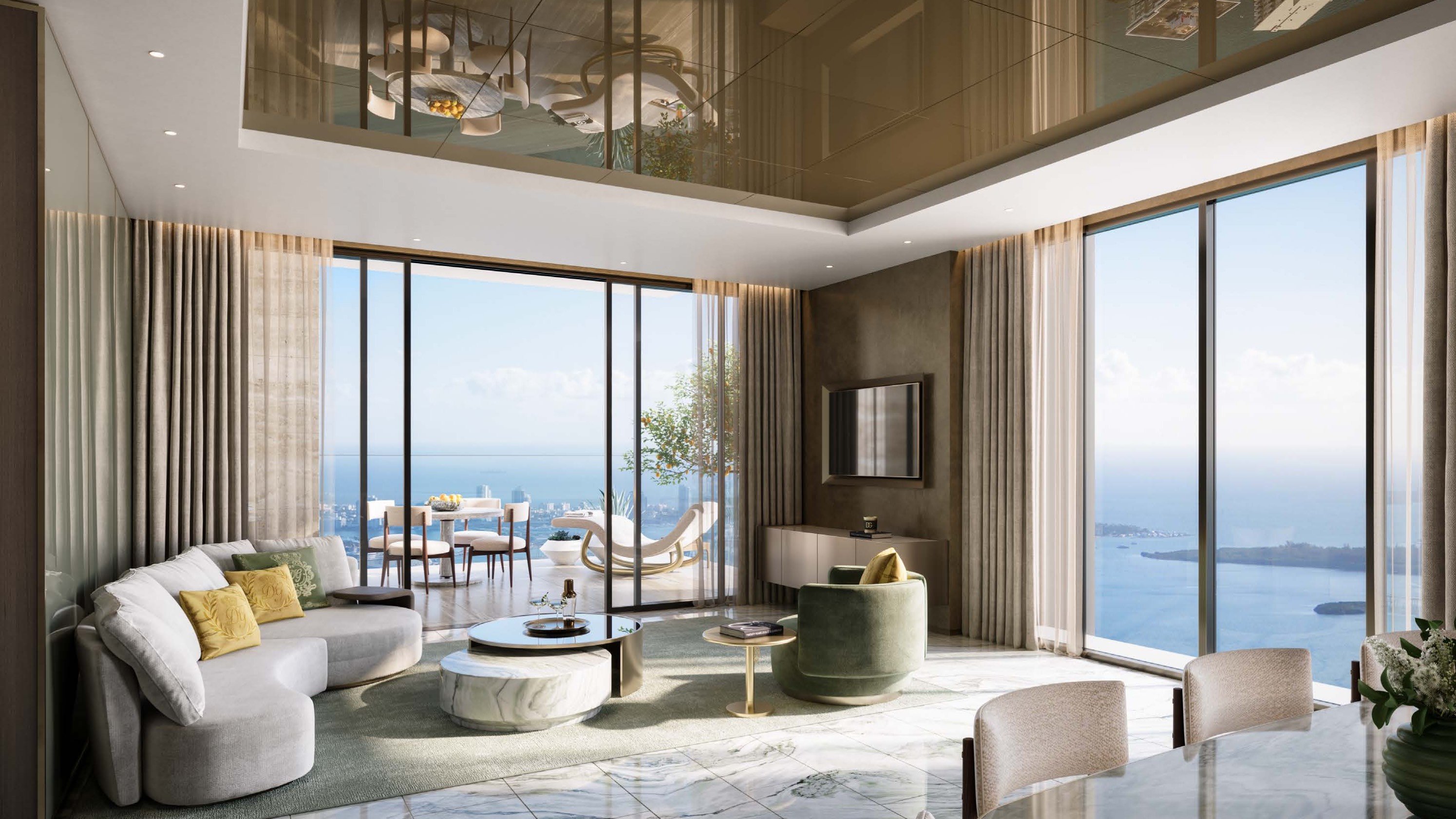
A tourist steps into a model residence, hears a soft room, and assumes the glass is excellent. A luxury buyer reads more carefully. They ask why the room is quiet, whether that quiet will hold up to daily life, and how the entire enclosure will perform once the building is occupied, furnished, maintained, and eventually resold.
Acoustic glass is not a magic pane. It is one part of a complete exterior envelope: glass, interlayers, air space, framing, seals, tracks, doors, installation, penetrations, and the residence’s orientation toward sound. In South Florida, that matters because premium living often comes with the very conditions that create noise: water views, active streets, aviation paths, dining districts, marinas, bridges, beach corridors, and construction cycles.
A sophisticated buyer does not need to become an acoustical engineer. But they should know how to read the conversation. The point is not to chase a technical acronym in isolation. The point is to understand whether the residence has been designed for sustained calm.
The most common mistake is treating acoustic glass as a product sticker. A beautiful window wall can still disappoint if the surrounding system is weak. Frames, operable panels, gaskets, sliding tracks, balcony doors, vents, and small perimeter gaps all matter because sound will find the easiest path.
When touring a residence, listen from the center of the room, then near the glass, then near operable doors. If the acoustic character changes sharply, the issue may not be the glass itself. It may be leakage, alignment, or a weak transition. Luxury buyers should also pay attention to consistency from room to room. A primary suite that feels composed while a secondary bedroom hums with street noise is not a complete acoustic result.
Ask for the window and door schedule, not just a sales description. Ask whether the acoustic performance being discussed applies to fixed glass, operable doors, or both. Ask whether the same assembly is used throughout the residence or whether different elevations receive different treatments. A calm home is rarely accidental.
Sound is site-specific. A buyer comparing Brickell, Miami Beach, and Sunny Isles should not use the same listening assumptions in each location. A dense urban tower may carry traffic rhythm, sirens, nightlife, and construction movement. A beachfront residence may feel serene at midday but more exposed to wind, events, service activity, or mechanical sound at other times. An elevated home may receive sound differently than a low-floor residence surrounded by podiums and landscaping.
For internal planning notes, buyers often label priorities as Oceanfront, High-floors, or New-construction, but those tags are only a starting point. The real work is exposure mapping. Which rooms face the most active side of the site? Where are loading areas, bridges, major streets, pool decks, restaurant terraces, or neighboring mechanical systems? Does the primary suite face the view, the quiet side, or both?
A luxury buyer should listen at different points in the day if possible. Morning, evening, weekday, and weekend conditions can feel like different buildings. If a private showing is brief, use it to identify questions rather than reach a final judgment.
No serious buyer should rely on the word soundproof. It is too absolute and too vague. The more useful question is: what kinds of exterior noise was the assembly designed to reduce, and how was that decision integrated into the residence?
Ask whether the project team considered the acoustic profile of the site. Ask how operable doors were handled. Ask whether larger glass spans required different framing decisions. Ask whether terrace access changes the acoustic expectation in adjoining rooms. Ask whether the developer can provide documentation for the glass and assembly being installed.
The best answers are specific without becoming theatrical. They do not simply promise silence. They explain the design intent, the limits of the assembly, and the conditions under which the residence should feel composed. In the ultra-premium market, credibility is often found in restraint.
South Florida buyers love terraces because they extend the residence into the view. Acoustically, terraces also complicate the envelope. Large sliding doors, pocketing systems, thresholds, and frequent operation introduce more variables than fixed glass.
That does not mean a terrace residence cannot feel quiet. It means the buyer should inspect the interface carefully. Open and close the doors. Listen for the firmness of the seal. Notice whether the door glides cleanly or requires force. Look at the threshold, corners, and meeting rails. A luxury system should feel precise, not merely heavy.
Also consider lifestyle. If a terrace door will remain open during dinner, the acoustic performance of the closed assembly is less relevant in that moment. If the primary suite depends on closed-door calm at night, the quality of the door system becomes central. Luxury is not just what the residence can do. It is how naturally it supports the way you live.
Even a strong specification can underperform if installation is careless. Buyers do not need to see behind every wall, but they should respect the difference between product quality and installed quality. The finished residence should show alignment, clean perimeter details, smooth operation, and consistent closure.
During inspection, have the glass systems reviewed with the same seriousness as stone, millwork, lighting, and appliances. Luxury buyers often obsess over visible finishes while treating the exterior envelope as background. That is backward. The envelope determines privacy, quiet, comfort, and the daily emotional temperature of the home.
For pre-delivery residences, ask what closeout materials will be available. For resale residences, ask about service history, door adjustments, seal replacements, water events, and any complaints related to noise. Calm is a condition that should be maintained, not assumed.
Acoustic comfort is not always photographed well, but it is felt immediately. A buyer may forget the brand of a fixture, but they remember whether a bedroom felt restful, whether conversation felt private, and whether the city stayed outside when the doors closed.
In a high-end showing, quiet creates confidence. It slows the buyer down. It makes the view feel more private and the plan feel more livable. It also reduces the sense of compromise in otherwise desirable locations. A spectacular address with poor acoustic control can feel exhausting. A well-composed residence in an active setting can feel rare.
This is why acoustic glass should be read the way a luxury buyer reads provenance: not as decoration, but as evidence. The best residences do not merely look expensive. They protect the owner’s attention.
What should I ask first about acoustic glass? Ask whether the stated performance applies to the full window and door assembly, not only to the glass panel.
Is thicker glass always better for quiet? Not necessarily. The overall assembly, seals, framing, and installation quality can matter as much as the glass itself.
Should I test quiet during a showing? Yes. Listen near the glass, near operable doors, and in each bedroom to judge consistency across the residence.
Are terraces a problem for acoustic comfort? Not inherently. They simply require more attention to door systems, thresholds, seals, and how the owner will use them.
What is a red flag in a luxury residence? A room that feels quiet in the center but noticeably louder near a closed door or frame deserves closer inspection.
Can a high-floor residence still have noise concerns? Yes. Elevation changes the way sound is perceived, but it does not automatically remove exterior noise.
Should acoustic glass affect resale thinking? Yes. Quiet is a subtle but powerful part of perceived quality, especially in view-driven urban and waterfront homes.
Is a model residence enough to judge performance? It is useful, but buyers should still ask how the delivered residence compares in exposure, height, and assembly details.
Who should review the glass before closing? A qualified inspector or specialist familiar with high-end window and door systems can help identify practical concerns.
What is the best way to shortlist comparable options for touring? Start with location fit, delivery status, and daily lifestyle priorities, then compare stacks and elevations to validate views and privacy.
For a confidential assessment and a building-by-building shortlist, connect with MILLION.
If branded residences are on your mind — as a home or as an allocation — we would be glad to share what we are seeing, privately.
Begin a quiet conversation