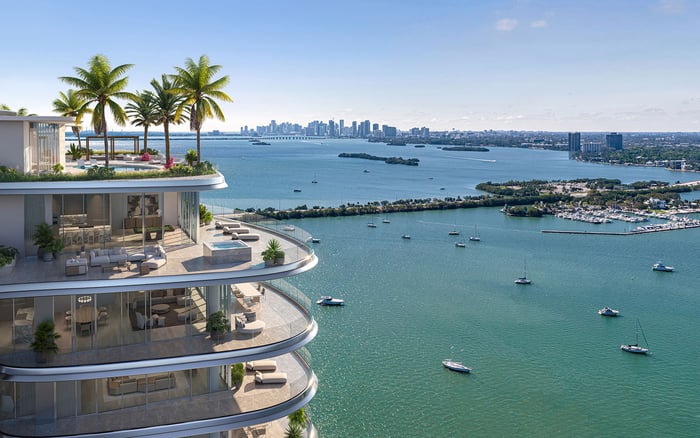
A disciplined framework for weighing wellness facilities, healthcare access, recurring costs, operational quality, and future resale appeal in Bay Harbor Islands.

In Bay Harbor Islands, a persuasive wellness narrative begins with one question: will the facilities improve daily life after the novelty fades? A focused, coherent program that residents can use comfortably and consistently may offer more value than an extensive amenity inventory.
Tour each space when you would normally use it. Assess privacy, circulation, acoustics, natural light, equipment spacing, reservation policies, guest access, and the route from the residence. A beautiful fitness room that feels crowded at peak hours-or a treatment suite constrained by difficult scheduling-may deliver less practical value than its presentation suggests.
Consider The Well Bay Harbor Islands as one point in a broader comparison, then examine alternatives such as Alana Bay Harbor Islands through the same disciplined lens. The objective is not to choose the longest list, but to identify the building whose spaces, rules, and operating model best suit your routine.
Durable amenities support recurring habits: movement, recovery, rest, outdoor time, and social connection. Buyers should distinguish those functions from highly specialized features that may be costly to maintain or difficult to repurpose.
Ask how each major space could evolve. Can a studio support different classes? Can treatment rooms accommodate changing service providers? Is there enough storage to keep shared areas orderly? Are wet areas designed for straightforward maintenance? Flexibility matters because wellness preferences change, while the building must continue to operate long after launch.
For MILLION readers, this belongs equally to Buyer's Guides and Investment analysis: Lifestyle value must be measured against Resale depth, particularly in Waterfront property. In a Bay Harbor search, the strongest amenity is often one that a future buyer immediately understands, can afford to support, and expects to use.
Wellness spaces are services as much as architecture. Request the governing documents, current budget, reserve information, insurance details, staffing plan, maintenance contracts, and rules governing residents and guests. Determine which services are included in common charges and which require separate payment.
Ask who manages programming, how vendors are selected, what happens when specialized equipment requires replacement, and whether residents can use the facilities without purchasing treatments or memberships. If a service depends on a single operator, understand the contingency plan should that relationship change.
Apply these questions consistently when reviewing Onda Bay Harbor and La Maré Bay Harbor Islands. Do not infer operational quality from renderings or branding alone. The relevant evidence lies in budgets, contracts, rules, staffing, and the observed condition of completed spaces.
Medical proximity is not a single mileage figure. Build a network around the care you are likely to use: primary care, specialists, diagnostics, pharmacy, urgent needs, rehabilitation, and emergency treatment. Confirm whether preferred physicians practice at the facilities under consideration and whether insurance, appointment availability, and continuity of care suit your circumstances.
Test representative journeys rather than relying on a map pin. Consider routine appointments, peak travel periods, nighttime needs, and the experience of an older relative or guest. If privacy matters, assess arrival, waiting, parking, and the feasibility of in-residence support.
Create both a primary plan and a backup. A residence may feel medically convenient when routine care is straightforward, yet prove less resilient if a preferred specialist, imaging facility, or emergency option is difficult to reach. Buyers with complex needs may wish to have the proposed network reviewed by their physician or care coordinator before committing.
Resale strength rests on broad usefulness, understandable ownership costs, and a residence capable of serving more than one buyer profile. Wellness can reinforce that proposition, but it should not compensate for compromises in layout, light, privacy, storage, parking, views, building condition, or financial stewardship.
Score the residence and the amenity platform separately. A compelling shared program cannot correct an awkward interior plan. Conversely, an excellent residence may retain its appeal even if future buyers place less value on a specialized wellness concept. Review Origin Bay Harbor Islands with the same distinction between private-home fundamentals and shared-building benefits.
Pay particular attention to recurring charges. Estimate the full annual carrying cost, identify the portion supporting specialized amenities, and model reasonable increases rather than assuming today’s figure will remain static. Future purchasers will compare both the acquisition price and the monthly obligation.
Use a weighted scorecard with five categories: residence quality, wellness utility, medical access, building governance, and resale versatility. Weight each according to your priorities, but require a minimum standard across all five. This prevents one emotionally compelling feature from overwhelming the complete ownership picture.
Before making an offer, revisit the building at different hours, review documents with qualified legal and financial advisers, test medical routes, and price foreseeable improvements within the residence. Ask your representative to identify genuinely comparable alternatives as well. A defensible purchase decision should remain persuasive even if a favored class, practitioner, or wellness trend changes.
The best outcome is not merely a residence close to care or rich in amenities. It is a home whose wellness proposition is usable, financially supportable, operationally credible, and clear to the next buyer.
What makes a wellness amenity valuable for resale? Broad usefulness, reliable upkeep, sensible capacity, and manageable operating costs make an amenity easier for future buyers to value.
Should buyers prioritize the number of amenities? No. Prioritize the quality, accessibility, flexibility, and practical usefulness of the spaces you are likely to use.
How should medical proximity be measured? Test actual travel times to preferred providers and essential services under varied conditions, while confirming appointment availability and insurance compatibility.
Are branded wellness services automatically more valuable? No. Review the operator, contract structure, service access, additional charges, and continuity plan before assigning a premium.
What documents matter most during diligence? Review governing documents, budgets, reserves, insurance, maintenance arrangements, vendor contracts, staffing plans, and amenity rules with qualified advisers.
How can buyers assess future fee pressure? Examine the cost of staffing, insuring, maintaining, and replacing specialized facilities, then model carrying costs using more conservative assumptions.
Can excellent amenities offset a compromised floor plan? Usually not. Evaluate private-residence fundamentals independently because they remain central to daily living and future marketability.
Why visit a building at different times? Multiple visits can reveal patterns in crowding, noise, privacy, staffing, traffic, and the practical availability of shared spaces.
Should a second-home buyer evaluate wellness differently? Yes. Consider whether the facilities remain useful during shorter stays and whether services require advance booking, memberships, or ongoing commitments.
What is the simplest resale safeguard? Favor a strong residence with flexible rooms, understandable costs, credible management, and amenities that appeal beyond a narrow wellness trend.
For a tailored shortlist and next-step guidance, connect with MILLION.
If branded residences are on your mind — as a home or as an allocation — we would be glad to share what we are seeing, privately.
Begin a quiet conversation