A practical guide to separating condominium privileges, dock rights, private-club membership, social programming, and seasonal rental permissions in Bay Harbor Islands.
For a buyer relocating from Dallas, Bay Harbor Islands presents a condominium-centered model of luxury. Shared spaces may provide much of a building’s social infrastructure, but the presence of an amenity does not by itself explain the rights, procedures, or restrictions attached to it.
The essential question is not simply whether an amenity appears in a presentation or listing. Buyers should determine what legal or contractual right accompanies the residence, who may exercise that right, and under what conditions. A building clubroom, a dock, and a private club are distinct categories that require separate review.
In Bay Harbor Islands, proximity and ownership should never be mistaken for access.
This distinction should guide every tour and document review. It is especially important for a second-home buyer who expects the residence to function smoothly during concentrated periods of occupancy.
A Bay Harbor Islands purchase should not be treated as automatic admission to a nearby private club. Real estate ownership and club membership are separate, and buyers should independently confirm any application process, eligibility requirement, guest privilege, fee, or reciprocal arrangement that matters to their plans.
Marketing language can blur the difference between a club-inspired amenity and membership in an independent organization. Before relying on either, ask who operates the facility, whether access is tied to the unit, whether privileges can change, and whether guests or family members receive the same access as the owner.
The prudent approach is to treat private-club membership as a separate possibility unless binding documents expressly establish otherwise. The same caution applies to reciprocal privileges through an existing club network.
Buildings can differ in access procedures, guest policies, reservation systems, operating hours, fees, and resident events. A useful comparison therefore extends beyond architecture and finishes to the practical rhythm of ownership.
Prospective residents evaluating Alana Bay Harbor Islands and The Well Bay Harbor Islands should request the current governing documents and operating rules for each property under consideration. The same discipline applies to resale and new-construction options: presentations convey a vision, while controlling documents define the applicable rights and procedures.
Ask whether shared spaces require reservations, whether private bookings affect general resident use, and whether guests must be accompanied. Confirm event-hosting procedures, booking windows, charges, and any distinctions relevant to seasonal residents. These details should be resolved at the individual-building level.
A room does not create a community on its own. Buyers who value an active social life should distinguish physical amenities from organized programming. An attractive gathering space may support resident events, private functions, informal use, or some combination of the three.
Ask who manages the calendar, how often it is updated, whether events are resident-only, and whether registration is required. A recent building calendar can help a buyer understand the type and frequency of programming without relying on a generalized lifestyle description.
Seasonal buyers should also consider whether the calendar aligns with their expected periods of occupancy. Event availability, guest rules, reservation priority, and private bookings can shape the lived experience as much as the design of the space itself.
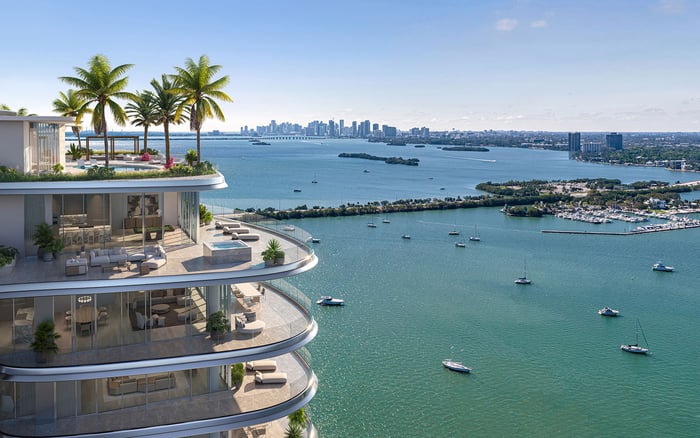
Waterfront positioning does not, by itself, establish a right to use a boat slip. Any boating privilege should be reviewed as a dedicated due-diligence matter rather than inferred from a view, shoreline location, or marina-themed presentation.
When considering Onda Bay Harbor or La Maré Bay Harbor Islands, buyers with a vessel should request the documents governing dock use. Confirm the legal form of access, permitted vessel dimensions, transferability, assignment procedures, guest docking, route considerations, and separate charges. These terms can vary by property and should not be projected from one residence to another.
A buyer should also determine whether a claimed boating benefit belongs to a particular unit, depends on availability, or is managed separately from the condominium. Written confirmation is more reliable than an assumption based on waterfront proximity.
Seasonal use has two dimensions: the owner’s personal access and any plan to rent the residence while away. For personal use, review guest registration, amenity reservations, storage procedures, arrival protocols, and any rules relevant to extended absences. A smooth high-season arrival depends on clear operating procedures.
Rental assumptions require equal care. Before relying on short-term or seasonal rental income, buyers should review current municipal requirements together with the condominium declaration, rules, rental minimums, application procedures, and approval requirements.
Building and municipal requirements should be evaluated together. A buyer should have qualified advisers review the current documents and avoid basing an acquisition decision on rental income until the intended use has been confirmed.
An access schedule can make competing residences easier to compare. For every material privilege, record the controlling document, authorized users, applicable dates, reservation terms, fees, and transfer conditions. Include building amenities, social programming, docks, guest use, private-club expectations, reciprocal privileges, and rental permissions.
This framework turns an abstract promise of coastal living into an operational plan. It helps relocating buyers compare residences according to the terms that will define ownership: where they may go, whom they may bring, when access is available, and which privileges remain separate from the residence.
For discreet guidance on selecting and evaluating a Bay Harbor Islands residence, connect with MILLION.
If branded residences are on your mind — as a home or as an allocation — we would be glad to share what we are seeing, privately.
Begin a quiet conversationNo such access should be assumed. Buyers should verify club eligibility and membership terms independently from the real estate purchase.
They should identify who operates the facility and which documents govern access. A club-inspired space within a condominium is not necessarily membership in an independent club.
No. Access procedures, reservations, guest policies, charges, and operating rules should be confirmed for each building.
Yes. A recent calendar can help clarify the type and frequency of resident programming.
They should review event registration, guest access, reservation priority, private bookings, and how programming aligns with their expected occupancy.
No boating right should be inferred from waterfront proximity alone. The applicable property and dock documents should establish the actual privilege.
Review the form of dock access, vessel limits, transferability, assignment procedures, guest use, route considerations, and separate charges.
No. Buyers should review current condominium rules and applicable municipal requirements before relying on a rental plan.
They should not be assumed. Any reciprocal arrangement should be independently confirmed with the organizations involved.
It should identify each privilege, its controlling document, authorized users, dates, reservation terms, fees, and transfer conditions.