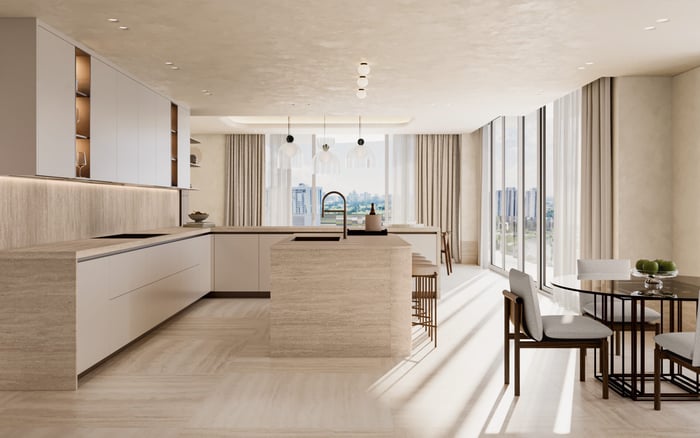
Buyers who entertain should evaluate amenity reservation rights, guest access, costs, capacity, permitted uses and the entity responsible for each shared space before assigning practical value to it.

For buyers who entertain, a shared space has practical value only if its operating framework supports the occasion they envision. At One Park Tower by Turnberry North Miami, buyers should look beyond presentation and ask how reservation procedures, guest access and permitted uses would affect their plans.
Access and control are different privileges. Permission to use an amenity does not necessarily establish a right to reserve it privately, bring a particular number of guests, engage vendors or host recurring events. Those points require confirmation in current written materials.
A buyer should determine which entity controls every social space relevant to the purchase. Different spaces may be subject to different booking procedures, access standards or fee schedules, so each should be reviewed individually rather than treated as part of a single amenity package.
The review should identify whether a space is exclusive, shared, reservable or intended for general use. It should also clarify which documents govern day-to-day access and where buyers can obtain the current operating rules.
The same method can help buyers compare One Park Tower with Avenia Aventura, Continuum Club & Residences North Bay Village and The Well Bay Harbor Islands. The useful comparison is not the number of amenities alone, but whether each property’s documented procedures suit the buyer’s intended use.
A formal dinner, a family celebration and an informal gathering can place different demands on a property. Buyers should ask which spaces accept reservations, when booking opens, whether frequency or duration limits apply and whether a booking provides exclusive use.
Timing deserves particular attention. A buyer who expects to host on holidays, weekends or other preferred dates should verify how availability and priority are handled. No booking method or peak-period policy should be assumed without written confirmation.
A practical review can begin with three sample occasions: a typical dinner, the buyer’s largest expected gathering and a spontaneous visit. For each scenario, trace the preferred space, booking process, guest arrival, vendor access, applicable costs and cleanup obligations.
Guest procedures influence both convenience and the arrival experience. Buyers should confirm registration requirements, escort rules, capacity limits, parking arrangements and any distinctions among residents, guests and service professionals.
Anyone planning to use caterers, florists, musicians or other vendors should ask whether advance approval, insurance documentation, designated access routes or restricted service hours apply. These are review questions rather than statements about the current rules at One Park Tower.
The financial review should extend beyond a possible reservation charge. Buyers can request current information concerning deposits, cleaning, staffing, security, cancellation and responsibility for damage. A cost should not be treated as applicable unless it appears in the relevant current materials.
Permitted-use provisions may address food service, alcohol, music, decorations, furniture movement, photography, commercial activity, noise and event end times. Buyers should verify the provisions that affect their preferred style of entertaining instead of relying on general amenity descriptions.
Cleanup and restoration procedures also matter. Written rules can clarify who removes waste, resets furniture or completes any required post-event inspection. These operational details help determine whether hosting will feel convenient or burdensome.
Buyers should request the governing documents and the latest materials addressing reservations, fees, guests, vendors, capacity, conduct and cleanup. Verbal explanations may help frame the inquiry, but purchase decisions should rely on the applicable current written documents reviewed with appropriate advisers.
A simple comparison worksheet can make the review more useful. List each desired space, the controlling entity, reservation method, booking window, guest conditions, costs, restrictions and cancellation terms. Mark unanswered points for follow-up rather than filling gaps with assumptions.
For a buyer who entertains, the central question is whether documented operating procedures support real plans. Reservation rights, availability, guest access, capacity, costs and permitted uses should all be confirmed before a shared space is valued as an extension of the residence.
Are all One Park Tower amenities privately reservable? The supplied information does not establish that. Buyers should confirm reservation rights for each space in the current written rules.
Why should access and reservation rights be reviewed separately? General access does not necessarily establish exclusive or private booking rights. Each privilege should be verified independently.
How can a buyer identify who controls an amenity? Review the governing documents and current operating materials for the entity responsible for that specific space.
Which booking details matter most? Ask about booking windows, priority, exclusivity, frequency limits, duration, cancellation and peak-period availability.
Should buyers assume that reservation fees apply? No. Request the current fee information and confirm any deposits, cleaning charges or other costs in writing.
Can residents bring outside caterers or vendors? The supplied information does not specify vendor rules. Buyers should verify approvals, documentation, access routes and service-hour requirements.
Do guest limits necessarily apply uniformly across all spaces? Buyers should not assume uniform limits. Capacity and guest procedures should be checked for each intended gathering space.
What conduct rules should an entertainer review? Verify provisions concerning food, alcohol, music, decorations, noise, furniture movement, photography and event end times.
Which documents are useful for this review? Request governing documents and current materials covering reservations, fees, guests, vendors, capacity, conduct and cleanup.
How should shared amenities affect a purchase decision? Evaluate them according to documented usability for the buyer’s lifestyle rather than presentation alone.
If you'd like a private walkthrough and a curated shortlist, connect with MILLION.
If branded residences are on your mind — as a home or as an allocation — we would be glad to share what we are seeing, privately.
Begin a quiet conversation