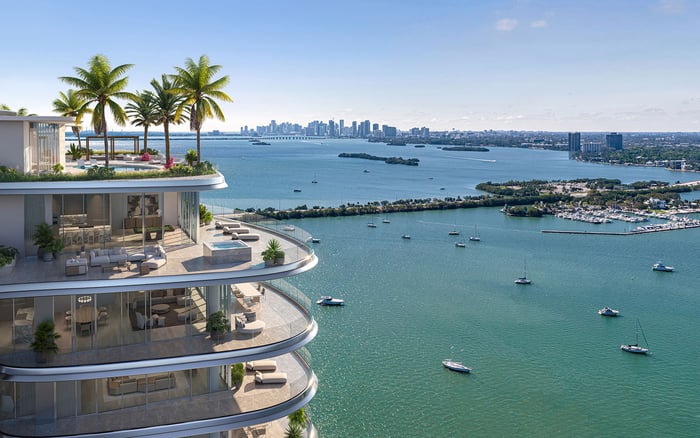
A disciplined North Bay Village condominium review separates structural condition from reserve funding, tests the budget against the SIRS schedule, and identifies capital obligations that could affect ownership costs and future resale.

In North Bay Village, consequential condominium diligence often extends beyond the residence itself. Water views, private terraces, and architectural character may establish desire, but the building’s structural record and capital plan can shape the durability of an acquisition.
A Structural Integrity Reserve Study, or SIRS, addresses covered building components and associated reserve planning. A milestone inspection addresses structural condition. Because the documents serve different purposes, review each independently and then examine how their findings relate.
A favorable structural record does not by itself establish adequate reserve funding, and a reserve balance does not answer every question about structural condition. Both areas deserve focused review before a buyer reaches a conclusion.
Look beyond the headline reserve balance. Review the components identified in the study, their anticipated timing, estimated costs, and the contribution schedule presented for the association.
Next, compare the study with the adopted budget and current reserve information. The central diligence question is whether the association’s financial plan aligns with the work and contributions described in its records. Any mismatch should prompt a request for clarification and supporting documentation.
The review should also distinguish money already held from future contributions, approved assessments, and costs that remain under discussion. Those categories may affect an owner differently and should not be treated as interchangeable.
Do not infer an inspection deadline solely from a building’s apparent age or waterfront location. Request the association’s inspection disclosures, available reports, and correspondence concerning applicable timing, then verify unresolved questions with the appropriate North Bay Village records and qualified Florida professionals.
If an association says one inspection or report satisfies part of another requirement, request the documented basis for that conclusion. The objective is not to interpret technical or legal requirements without assistance, but to identify what has been completed, what remains pending, and which records support the association’s position.
Place the SIRS, milestone materials, reserve statements, adopted budget, recent expenditures, contracts, assessment information, and board minutes side by side. Look for consistency among identified work, approved projects, funding plans, and reserve activity.
Ask about assessments that have been approved but not yet billed, contracted capital work, unpaid obligations affecting the association, and projects discussed in meeting minutes but not reflected in the current budget. A seller’s current account status may not reveal every future building-level obligation.
When records appear inconsistent, seek written clarification rather than relying on a verbal summary. Engineering, legal, and financial questions should be directed to professionals qualified to evaluate the specific building and documents.
Long-term resale may depend partly on how readily a future buyer can understand the building’s condition and obligations. Consistent inspection records, documented repair plans, and coherent capital planning can reduce uncertainty. Unresolved structural questions, unexplained reserve gaps, or changing assessment narratives can make a later transaction harder to evaluate.
Planned work is not automatically negative. A clearly documented and funded capital program may be easier to assess than deferred work with no defined scope or budget. Focus on whether obligations are disclosed, supported by records, and incorporated into a credible financial plan.
North Bay Village options include Continuum Club & Residences North Bay Village and Shoma Bay North Bay Village. Nearby waterfront comparisons include La Maré Bay Harbor Islands and Onda Bay Harbor.
These references can broaden a buyer’s comparison, but they do not replace building-specific diligence. For any condominium, request the governing association’s records and evaluate its inspection status, reserve obligations, contracts, and assessment structure.
Before the inspection period expires, request the complete SIRS, milestone inspection disclosures, reserve information, current budget, recent board minutes, assessment ledger, and details of pending or contracted capital work. Confirm unanswered timing and compliance questions with the association, local records, and qualified Florida engineering and legal professionals.
Model ownership under more than one scenario, including scheduled reserve contributions, approved but unbilled assessments, and potential changes to identified work. The objective is not perfect prediction; it is a purchase decision supported by records that can withstand scrutiny now and at eventual resale.
Are a SIRS and a milestone inspection the same? No. They address different aspects of condominium diligence and should be reviewed separately before their findings are considered together.
Can structural records and reserve funding point to different conclusions? Yes. A buyer should evaluate structural information and financial preparedness independently rather than assuming one resolves the other.
What should a buyer examine in a SIRS? Review the identified components, anticipated project timing, estimated costs, and the contribution schedule presented in the study.
Why compare the SIRS with the adopted budget? The comparison helps reveal whether the association’s current financial plan aligns with the work and contributions described in its records.
How should a buyer confirm inspection timing? Request association disclosures and supporting records, then direct unresolved local, technical, or legal questions to qualified professionals.
Which association records should be reviewed together? Compare inspection materials, reserve statements, budgets, expenditures, contracts, assessment information, and recent board minutes.
Which potential costs deserve special attention? Examine approved but unbilled assessments, contracted work, association obligations, and projects discussed but not yet reflected in the budget.
Is a planned capital project necessarily a warning sign? Not by itself. The key questions are whether the project is documented, funded, and incorporated into a coherent plan.
How can these records affect future resale? Clear inspection histories and capital plans can make a building easier for a future buyer to evaluate, while unresolved gaps may increase uncertainty.
Who should interpret technical or legal questions? Buyers should use qualified Florida engineering and legal professionals familiar with the specific building and its records.
For a tailored shortlist and next-step guidance, connect with MILLION.
If branded residences are on your mind — as a home or as an allocation — we would be glad to share what we are seeing, privately.
Begin a quiet conversation