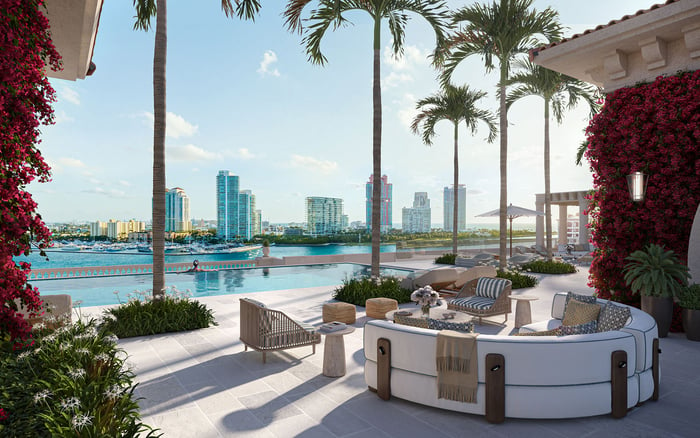
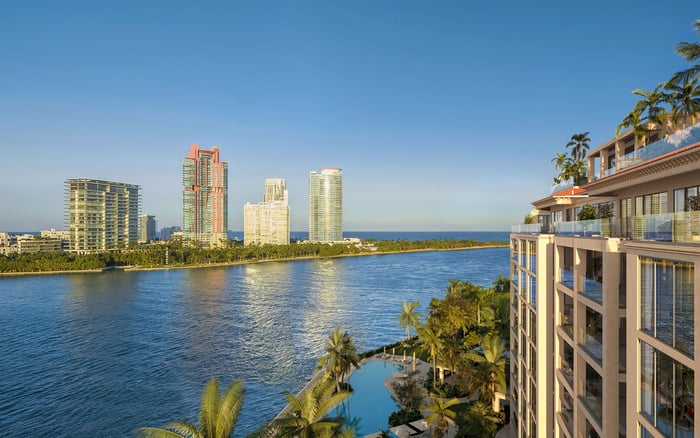
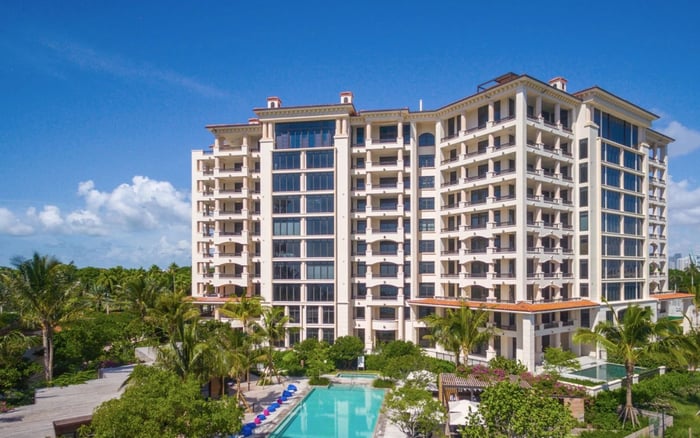
On Fisher Island, a seasonal residence should be evaluated as a specific asset, not simply as admission to an exceptional address. Thin transaction volume, longer marketing periods, line quality, exposure, condition, and view scarcity can matter decisively at resale.
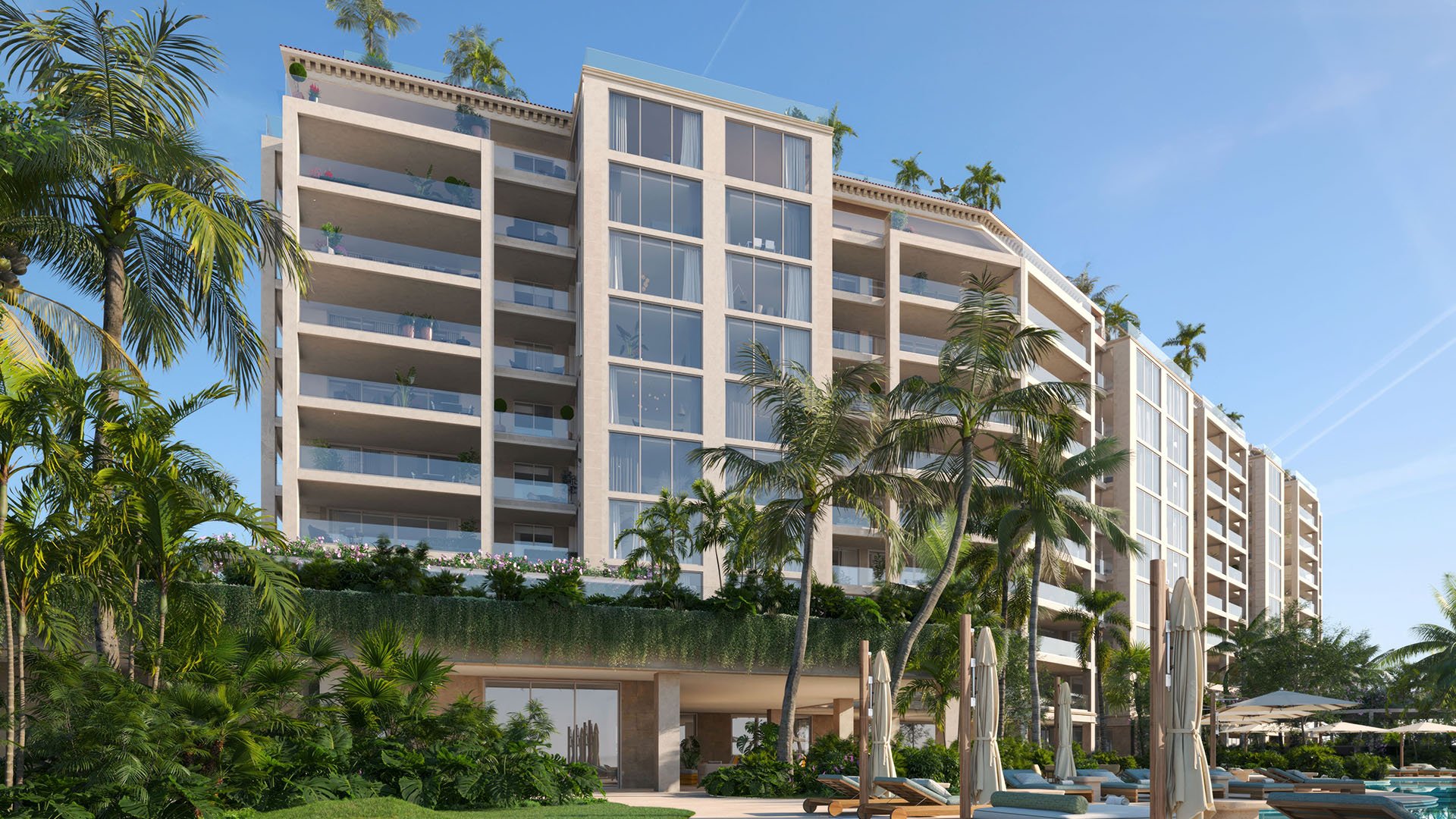
Fisher Island offers an unusually compelling proposition for a seasonal owner: privacy, waterfront living, and a rare sense of separation from Miami despite its proximity to the city. Yet those shared attributes can lead buyers to overestimate how interchangeable the island’s residences are.
They are not. In a market with relatively few transactions, distinctions among buildings, lines, exposures, floor levels, conditions, and view corridors can matter more than the amenity brochure. The island may attract a common caliber of buyer, but each residence reaches a narrower audience when it returns to market.
That is the central issue in a second-home acquisition. Enjoyment remains paramount, but a buyer who may occupy a property for only part of the year should also understand how readily that specific asset can be compared, priced, and sold.
Over one trailing 12-month period, Fisher Island resale velocity ran roughly 30% to 40% below the 2019 to 2022 average. Average days on market also roughly doubled from the 2021 to 2022 period. Those figures do not diminish the address, but they place greater weight on price discipline and comparable-sale analysis.
Broad statistics require particular caution. In July 2026, only five active listings were recorded, with no closings in June 2026 and no recorded year-to-date closings. With samples that small, a single transaction can meaningfully shift an average.
For resale analysis, the more useful question is not how Fisher Island performs in aggregate. It is how many buyers are likely to compete for a residence of the same size, configuration, building generation, exposure, and price tier.
A floor plan describes circulation. A line defines market position. Seasonal buyers should study the orientation of primary rooms, terrace exposure, privacy from neighboring buildings, and the continuity of the water view from the spaces they will use most.
The strongest comparison is usually within the same building and, where possible, the same stack. Exact premiums for individual lines and views are not publicly standardized. As a result, a broad price-per-square-foot benchmark can obscure meaningful differences between a renovated residence with a compelling exposure and a larger home with a less distinctive outlook.
This applies across established addresses such as Palazzo del Sol and Palazzo della Luna. The building name establishes context, but the residence’s line, condition, and visual experience define its individual scarcity.
A beautiful view is not automatically a scarce one. Buyers should distinguish among broad water outlooks, directional vistas, framed views, and exposures shared by numerous residences. They should also consider whether the view is equally persuasive from the living room, primary suite, kitchen, and terrace.
Seasonal use can sharpen these distinctions. Morning light, afternoon glare, wind exposure, and terrace usability may shape daily enjoyment during the owner’s preferred months. These qualities are experiential, yet they can also influence resale because the next buyer will make the same observations.
The same discipline applies when considering the lower-density proposition of The Links Estates at Fisher Island. A buyer should identify what is genuinely difficult to replicate within the island’s available housing stock rather than assume every private setting offers equal market depth.
Headline pricing can provide directional context, but it should not replace a tailored comp set. The median sale price stood at $5.89 million, with an average marketing time of 167 days, while the median asking price among active listings was $8.35 million. Differences in properties and reporting periods can explain part of that gap.
By mid-2025, the last reliable average sold price was approximately $2,160 per square foot. Yet an earlier 7,630-square-foot condominium at 7021 Fisher Island Drive sold for $12.2 million after 92 days, or about $1,598.95 per square foot. It closed 12% below its $13.86 million asking price. The contrast shows why an island average cannot price a specific residence.
More broadly, better-priced homes have closed in the high single digits below ask, while aspirational listings have required low-double-digit discounts. The initial asking price therefore shapes both negotiation and the quality of early market attention.
Singular new development can generate demand that does not transfer evenly to older resale inventory. The Residences at Six Fisher Island was positioned through an invitation-based purchase process, and a combination of upper penthouses sold for more than $150 million.
That transaction demonstrates exceptional appetite for an extraordinary offering. It should not be read as evidence that every residence on the island offers equivalent liquidity, scarcity, or pricing power. Trophy demand is often highly specific.
Before making an offer, request the median time to contract for genuinely comparable units during the preceding six months. Review closed, pending, withdrawn, and long-marketed residences where available, then distinguish condition-driven discounts from line-driven discounts.
Test the asking price against the closest building and stack evidence. Consider carrying costs during a potentially extended sale period, and determine whether a renovation represents personal customization or an improvement the next buyer is likely to value. The objective is not to reduce a lifestyle purchase to a spreadsheet. It is to understand which elements of the residence are replaceable-and which are not.
Why can resale depth matter to a seasonal owner? Seasonal plans can change, and a narrow buyer pool may extend the time required to sell a highly specific residence.
Is an island-wide price per square foot sufficient? No. Building, line, exposure, condition, floor level, and view quality can create substantial unit-level differences.
What is the most useful time-on-market measure? Request the median time to contract for closely comparable residences over the prior six months rather than rely solely on an island-wide average.
Why does line selection matter? The line determines orientation, privacy, the relationship to the terrace, and the views from primary rooms.
Does a higher floor always command stronger demand? Not necessarily. The practical view, exposure, layout, condition, and credibility of the asking price should be assessed together.
How should buyers evaluate a view corridor? Study its breadth, direction, privacy, and consistency from the living areas, primary suite, and terrace.
What do longer marketing periods imply? They increase the importance of realistic pricing, close comparable sales, and carrying-cost planning.
Do record new-development sales lift every resale equally? No. Singular penthouses and controlled new-development inventory can attract demand that does not transfer uniformly to other residences.
How should renovation quality enter the analysis? Distinguish improvements with broad resale appeal from highly personal finishes that a future buyer may replace.
What should an offer strategy prioritize? It should prioritize same-building evidence, line quality, condition, credible pricing, and the likely depth of the future buyer pool.
To compare the best-fit options with clarity, connect with MILLION.
If branded residences are on your mind — as a home or as an allocation — we would be glad to share what we are seeing, privately.
Begin a quiet conversation