A disciplined insurance review can reveal how a North Bay Village penthouse divides risk between the condominium association and the owner, and whether storm deductibles could lead to a material assessment after closing.
For a North Bay Village penthouse buyer, the existence of a condominium master policy is a starting point, not a conclusion. The master policy generally covers the building exterior, structure, and common areas. The owner's HO-6 policy typically covers the unit interior, personal property, and personal liability. The decisive question is where one contract ends and the other begins.
Request the complete master-policy declarations and schedules, not merely a certificate of insurance. The closing file should detail insured values, carriers, deductibles, exclusions, sublimits, ordinance-or-law protection, and flood coverage. Compare that language with the condominium declaration and the proposed HO-6 form. A polished management summary cannot substitute for the operative documents.
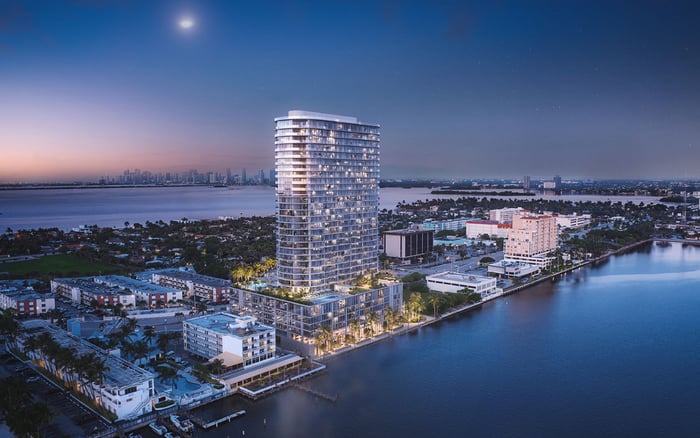
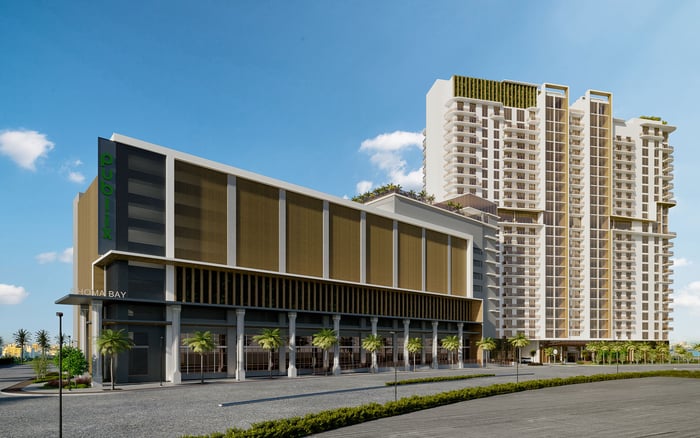
This scrutiny applies across the local luxury market, whether a buyer is considering Continuum Club & Residences North Bay Village, Shoma Bay North Bay Village, or another waterfront residence. Newer positioning and elevated design do not resolve insurance questions. The objective is to establish the coverage boundary in writing.
The most consequential insurance number may be the owner's share of a building-level deductible.
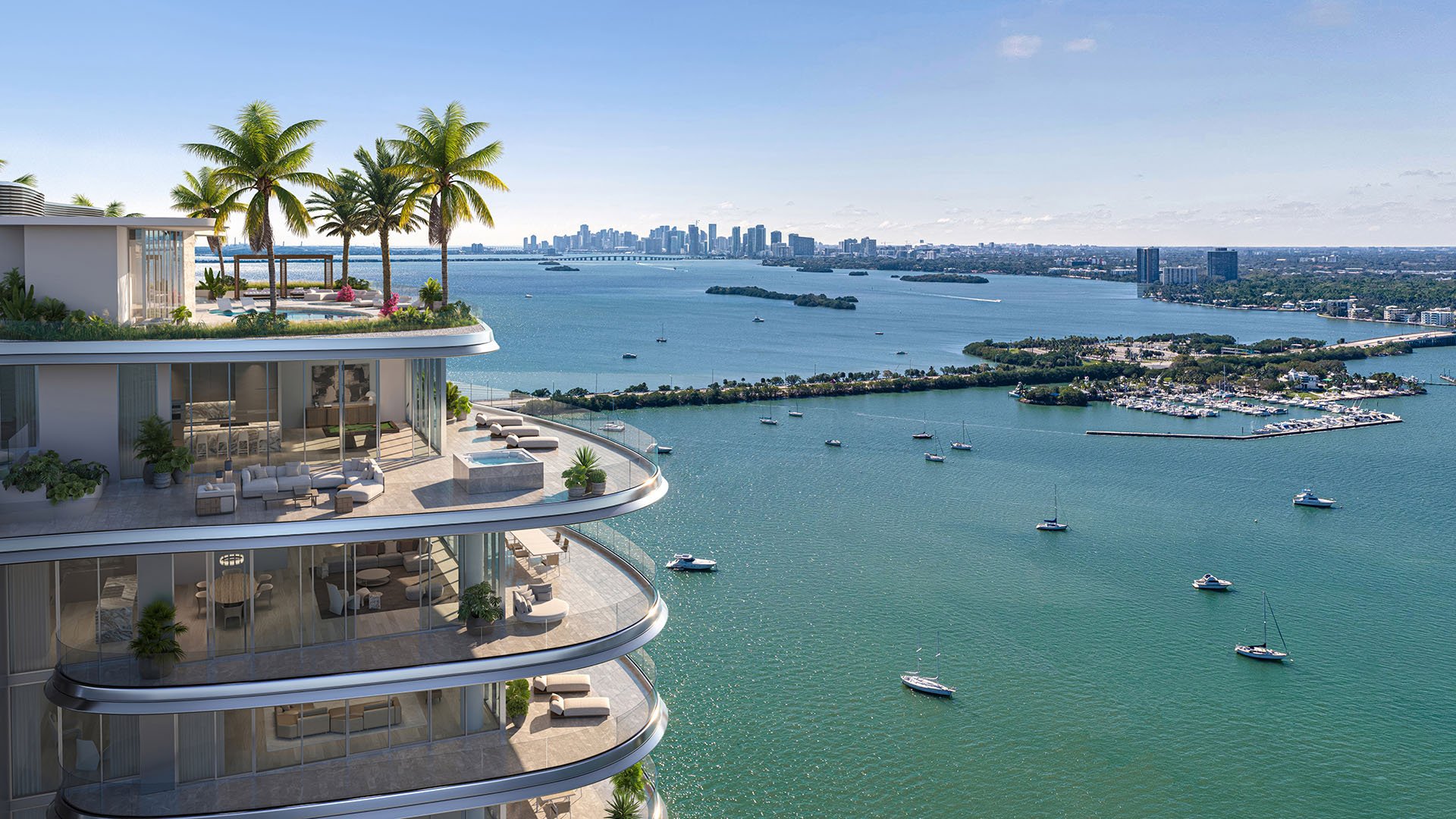
A penthouse interior can represent a substantial concentration of value. Custom millwork, imported stone, built-ins, specialty lighting, integrated shades, and smart-home systems should be reflected in HO-6 dwelling and contents limits-not presumed to fall under the master policy. Replacement-cost assumptions should reflect the actual residence and its improvements, not a generic cost per square foot.
Ask the broker to separate dwelling improvements from contents, identify valuation terms, and explain what documentation would support a claim. When available, collect invoices, specifications, photographs, and design records before closing. If a prior owner made the improvements, determine whether they fall within the unit owner's responsibility under the governing documents.
This matters in both a resale acquisition and a newly delivered residence such as Tula Residences North Bay Village. The insurance analysis should reflect what is actually being acquired, including finishes and installed systems, without assuming the association insures every element visible inside the unit.
Florida condominium master policies commonly carry hurricane or windstorm deductibles equal to 2% to 5% of the building's insured value. A percentage may appear modest until applied to the full building. A 3% hurricane deductible on a building insured for $50 million, for example, equals $1.5 million before master-policy coverage responds.
Ask the association or its broker to convert every percentage deductible into a current dollar amount using the latest insured value. Review hurricane, named-storm, windstorm, and all-other-perils deductibles separately. A master policy may apply different deductibles to different loss categories, making a single headline number insufficient.
Then ask how the obligation would be funded. An association may use reserves, levy a loss assessment against owners, or combine the two. Review reserve strength and the association's historical practice following prior claims. Thin reserves can increase the likelihood of an owner assessment soon after a covered event.
Begin by multiplying the building's insured value by the hurricane-deductible percentage. Then allocate the resulting amount under the formula in the condominium declaration. Do not assume it will be divided evenly by unit count.
Some condominiums allocate common expenses equally; others use each residence's percentage interest. Under a percentage-interest formula, a penthouse may bear a larger share. Ask counsel or the association to identify the exact percentage attached to the residence and illustrate the owner's obligation under each master-policy deductible.
The exposure extends beyond direct damage inside the penthouse. An owner may face an assessment after a major storm even if the residence sustained little damage, because the charge may fund damage to shared property or the master deductible. For an investment purchase, that contingent liability belongs in the acquisition analysis alongside carrying costs. Buyers comparing North Bay Village with nearby boutique options such as Onda Bay Harbor should apply the same building-specific calculation rather than generalizing across the bay.
HO-6 loss-assessment coverage is designed to pay an owner's share of certain association assessments arising from covered losses to shared property. Florida HO-6 policies must include at least $2,000 of property loss-assessment coverage, with a deductible of no more than $250 for that coverage. Against a multimillion-dollar building deductible, that statutory floor may be inadequate.
A larger headline limit does not necessarily resolve the issue. Some endorsements separately restrict the amount available when an assessment is attributable to the master-policy deductible, commonly to about $1,000. Ask the HO-6 insurer to confirm in writing how much would apply specifically to a master-policy hurricane deductible. The response should identify any separate sublimit that cannot be increased.
Also ask the broker to price several loss-assessment limits and compare policy forms carrier by carrier. Coverage can differ materially in hurricane deductibles, wind exclusions, assessment provisions, and ordinance-or-law terms. The lowest premium may preserve the largest uninsured gap.
Some HO-6 forms permit windstorm or hail exclusions. Confirm affirmatively that wind, hail, hurricane, and named-storm losses are included for the coastal residence. Florida HO-6 hurricane-deductible options vary by carrier and may include $500, 2%, 5%, or 10% choices tied to the applicable coverage amount. For each quotation, request both the percentage and the resulting dollar deductible.
Flood must be reviewed separately from wind. Ask whether the association carries a separate flood policy and which property it covers. Then determine whether the owner's flood protection, water-backup terms, wind-driven-rain provisions, and additional living expense limits align with the residence's intended use.
Ordinance-or-law coverage deserves equal attention. Some forms may limit it to 25% of Coverage A, potentially leaving code-upgrade costs after a covered loss. Penthouses with extensive improvements warrant a specific discussion of whether that limit would be sufficient.
Loss-assessment coverage generally responds only when an assessment arises from a loss covered by the HO-6 policy. It typically does not cover reserve shortfalls, routine maintenance, capital improvements, milestone repairs, or other structural obligations unrelated to a covered insured event. Insurance diligence and condominium financial diligence are complementary, not interchangeable.
Request the building's history of hurricane claims and special assessments, including the amounts charged to owners and whether earlier loss-assessment claims were paid or denied. Every condominium has distinct contracts, reserves, governing formulas, and claim history.
Before approving the closing, the buyer's attorney, condominium insurance specialist, and personal broker should reconcile the master policy, declaration, reserve position, and HO-6 proposal. The result should be a concise written schedule identifying who insures each major component, every applicable deductible, the penthouse's allocation share, and the assessment exposure that remains uninsured.
For discreet guidance on South Florida luxury real estate opportunities, connect with MILLION.
If branded residences are on your mind — as a home or as an allocation — we would be glad to share what we are seeing, privately.
Begin a quiet conversationIt generally covers the building exterior, structure, and common areas. The exact boundary must be confirmed in the policy and condominium documents.
It should address the unit interior, belongings, personal liability, and owner-responsible improvements such as custom millwork, stone, and smart-home systems.
The percentage applies to the building's insured value, so the resulting obligation can be substantial. A 3% deductible on $50 million is $1.5 million.
Yes. An assessment may fund damage to common property or the condominium master-policy deductible.
Multiply the building's insured value by the applicable deductible percentage, then allocate the result using the governing formula in the condominium declaration.
Yes. If assessments follow percentage interest rather than equal division, a penthouse may carry a larger share.
Not necessarily. The $2,000 statutory floor can be inadequate when owners share a multimillion-dollar hurricane deductible.
No. Some endorsements impose a separate sublimit for assessments attributable to the master-policy deductible, commonly around $1,000.
No. Flood is distinct from wind coverage, so the association's flood policy and the owner's flood protection should be reviewed separately.
Reserve shortfalls, routine maintenance, capital improvements, and milestone or structural repairs generally are not covered unless tied to a covered loss under the policy.