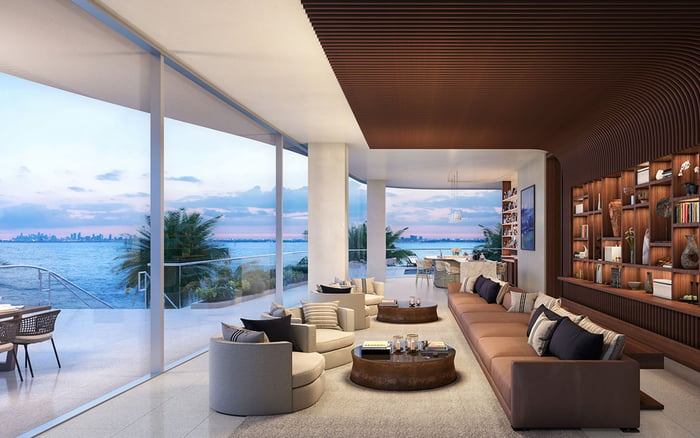
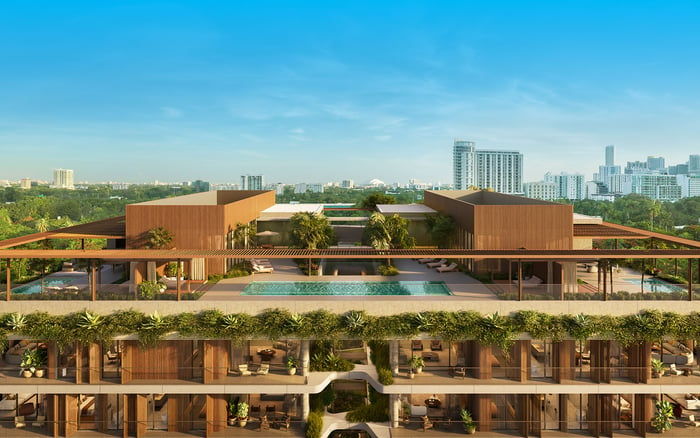
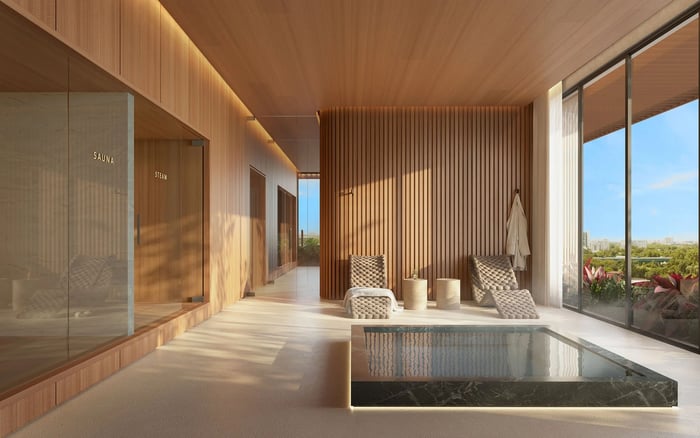
A discreet buyer’s guide to judging plunge pools in trophy residences, from privacy and service access to finish quality, terrace proportion, and resale appeal.
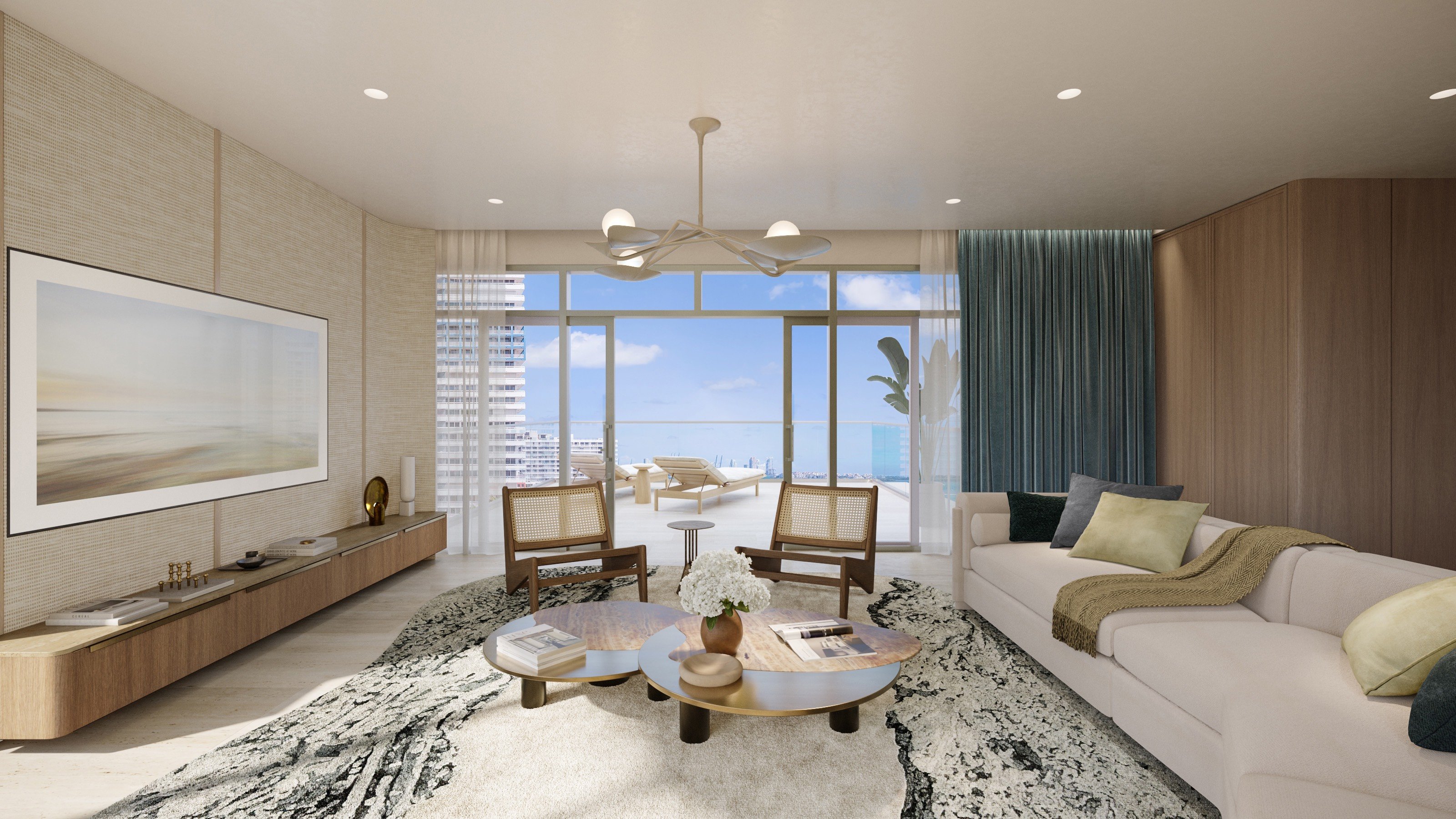
In South Florida’s trophy market, a plunge pool is no longer a decorative flourish. It is a private-room decision: part architecture, part wellness ritual, part resale signal. The best examples do more than photograph well. They make a terrace feel composed, quiet, and privately owned, even when the residence sits within a vertical neighborhood.
For buyers comparing Brickell, Miami Beach, Palm Beach, Fort Lauderdale, or island settings, the right question is not whether a plunge pool is desirable. The better question is whether the pool strengthens the residence. A poorly placed pool can reduce usable outdoor living, complicate service, and expose daily rituals to neighboring sightlines. A properly integrated pool, by contrast, can elevate a terrace into a genuine outdoor suite and make a penthouse or trophy-level residence feel meaningfully rare.
The evaluation should be calm and forensic. Look beyond the water surface. Study the approach, the privacy envelope, the mechanical plan, the edge condition, the seating geometry, and the way the pool supports entertaining without overtaking the home.
Privacy is not a single view corridor. It is a layered condition that changes with time of day, lighting, neighboring occupancy, and the owner’s own habits. A plunge pool that appears secluded in daylight may become conspicuous at night, when interior lighting turns glass into a stage.
Begin by standing where the owner will actually stand: at the water’s edge, seated on the terrace, stepping out from the primary suite, and moving between the indoor living room and the pool. Then reverse the perspective. Ask what can be seen from adjacent towers, higher floors, pool decks, amenity levels, neighboring homes, and service areas. In a trophy residence, privacy should not depend on constantly drawing shades or avoiding certain times of day.
Screening should feel architectural rather than defensive. Planters, parapets, fins, overhead elements, and landscape massing can soften exposure, but they must not turn the terrace into a walled-in court with no air, light, or view. The strongest designs create selective privacy: open where the view is valuable, shielded where the body is most exposed.
Also consider sound privacy. A plunge pool near a primary suite can be serene, but only if the surrounding hardscape, equipment placement, and water movement do not create a persistent acoustic signature. Privacy is visual, physical, and auditory.
The more exclusive the residence, the less visible the service choreography should be. A plunge pool requires maintenance, access, storage, and mechanical coordination. If those needs are not resolved elegantly, the owner inherits friction.
Ask how service personnel reach the pool without crossing intimate living zones. In a single-family estate, this may involve side access, landscape screening, or a service path. In a condominium or penthouse setting, it may involve elevator protocols, staff corridors, building rules, terrace access procedures, and the practical movement of equipment. The point is not simply whether service is possible. It is whether service can happen discreetly.
Equipment placement deserves particular attention. Buyers should understand where pumps, controls, drains, covers, lighting systems, and related components are located, and how they are accessed. If maintenance requires moving furniture, entering bedrooms, or exposing mechanical areas to guests, the pool will feel less refined over time.
The same principle applies to cleaning and storage. Where do towels go? Where are cushions kept during weather events? Is there a logical place for pool accessories, service tools, and outdoor dining items? A trophy pool should not require improvisation. Its maintenance life should feel as designed as its opening photograph.
A plunge pool succeeds when it edits the outdoor experience rather than dominating it. Too large, and it can eliminate lounge areas, dining zones, and circulation. Too small or awkwardly placed, and it can read as a token amenity rather than an intentional feature.
Study the terrace as a plan, not as a rendering. There should be comfortable movement around the water, intuitive furniture placement, and at least one dry zone that feels fully usable. The pool should relate to the main indoor rooms without blocking the best path to the view. In the best compositions, water becomes a foreground element, not an obstacle.
The relationship to doors is also critical. Large openings can make the pool feel connected to the living area, but the transition must be safe, elegant, and practical. A narrow threshold, wet surface, or furniture bottleneck will become apparent the first time the home is used for a weekend gathering.
For resale, proportion may matter more than spectacle. Future buyers often respond to the way an outdoor room lives, not merely to the existence of private water. A balanced terrace can support wellness, dining, sunset drinks, and quiet reading. A pool that consumes the terrace supports only one idea.
In a trophy residence, the tactile experience around a plunge pool should match the interior standard. Stone, tile, decking, coping, lighting, railings, planting, and hardware all contribute to perceived value. The issue is not only expense. It is coherence.
Materials should be appropriate to water, sun, salt air, bare feet, and frequent use. Surfaces should feel refined without becoming precious. Edges should be resolved with the same discipline as interior millwork. Lighting should flatter the water and the architecture, not create glare for the owner or neighboring residences.
A buyer should also look for continuity. Does the pool terrace feel like an extension of the home’s interior language, or like a later insertion? Are the materials consistent with the residence’s broader palette? Does the waterline align with the architecture, or does it fight the geometry of the facade?
The most valuable plunge pools often feel inevitable. They do not announce themselves as amenities. They feel like the reason the terrace exists.
The resale value of a plunge pool is rarely about water alone. It is about scarcity, privacy, ease, and emotional clarity. Future buyers will ask whether the pool makes the residence feel more complete. They will also ask whether it introduces obligations that are not matched by daily pleasure.
A strong plunge pool can help distinguish a residence when it offers a private alternative to shared amenities. It can add lifestyle depth to a large terrace, reinforce a wellness narrative, and create a memorable arrival moment from the living room or primary suite. But if the pool is exposed, noisy, difficult to service, or visually disconnected, it may become a point of negotiation rather than a premium.
Think like a future buyer walking through for the first time. Is the pool immediately understandable? Does it enhance the best view? Does it feel private enough for real use? Does the terrace still offer dry entertaining space? Does service feel invisible? If the answer is yes, the pool is likely supporting long-term desirability.
Begin outside, not inside. Stand on the terrace during daylight and, if possible, after dark. Observe who can see the pool, what the water reflects, and whether surrounding buildings or homes feel present. Then test circulation from the kitchen, living room, primary suite, and service entry.
Next, ask for a clear explanation of maintenance access and operational responsibilities. In a condominium, understand the line between private owner responsibility and building protocol. In an estate setting, understand how staff, vendors, and guests will move without disturbing the residence.
Finally, evaluate emotional fit. A plunge pool should support the owner’s actual life. Some buyers want a meditative morning ritual. Others want a cinematic evening terrace. Others want a private place for family use away from the main pool scene. The best pool is not necessarily the most dramatic. It is the one that gives the residence a private rhythm.
Is a plunge pool always an advantage in a trophy residence? Not always. It is an advantage when privacy, proportion, service access, and terrace usability are all resolved.
What is the first thing a buyer should inspect? Start with sightlines. Stand in and around the pool area and determine who can see the space from nearby residences or amenities.
Can a plunge pool hurt resale? Yes, if it consumes the terrace, feels exposed, or creates service complications that outweigh its lifestyle value.
How important is equipment placement? Very important. Equipment should be accessible for maintenance without intruding on bedrooms, entertaining zones, or principal circulation.
Should the pool connect directly to the primary suite? It can be highly desirable, provided the connection remains private, quiet, and practical for daily use.
What makes a pool terrace feel more valuable? A balanced mix of water, dry seating, dining potential, view orientation, and discreet circulation typically creates the strongest impression.
Is nighttime privacy different from daytime privacy? Yes. Interior and terrace lighting can make a private-feeling daytime pool more visible after dark.
What should condominium buyers ask about? They should ask about access, maintenance protocols, responsibility boundaries, and any rules that affect terrace use.
Do materials matter beyond aesthetics? Yes. Poolside materials shape comfort, durability, safety, and the perceived continuity between indoor and outdoor living.
What is the best sign of a well-designed plunge pool? It feels inevitable, private, easy to service, and proportioned to the residence rather than added for effect.
For a discreet conversation and a curated building-by-building shortlist, connect with MILLION.
If branded residences are on your mind — as a home or as an allocation — we would be glad to share what we are seeing, privately.
Begin a quiet conversation