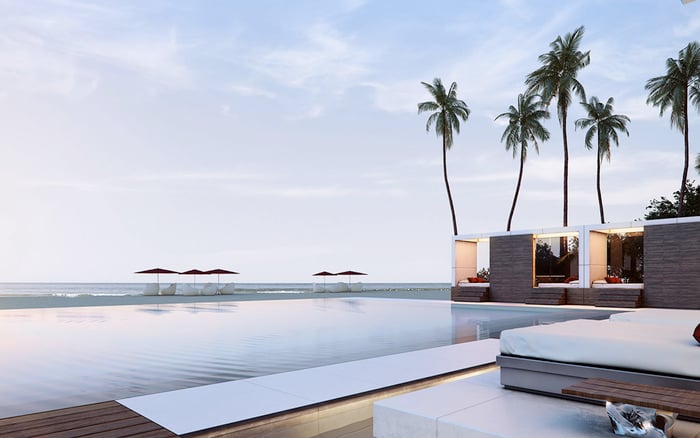
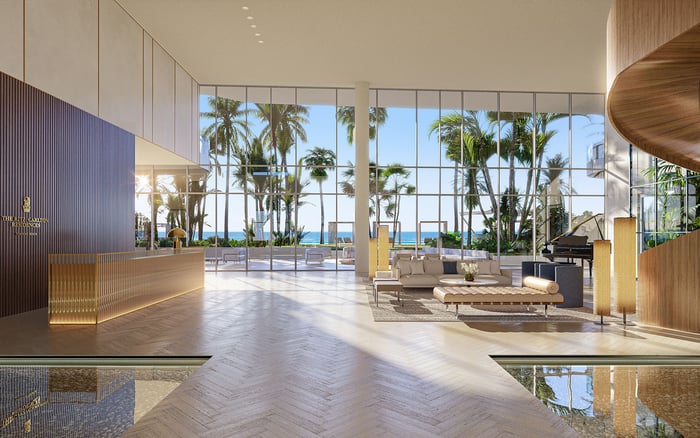
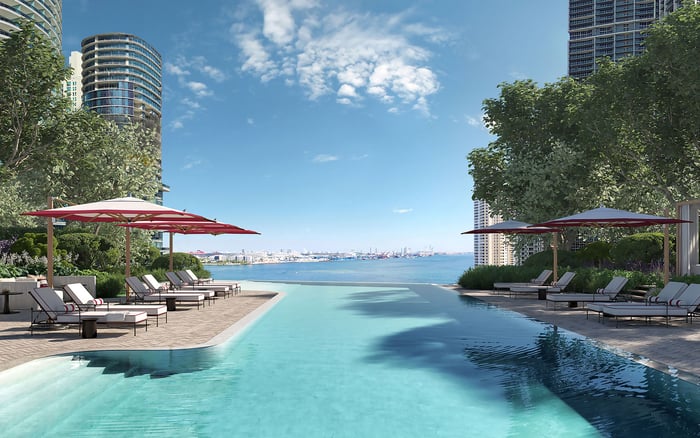
A refined buyer’s guide to assessing outdoor rooms in a trophy residence, with emphasis on privacy, service circulation, entertaining logic, daily livability, and long-term resale clarity.
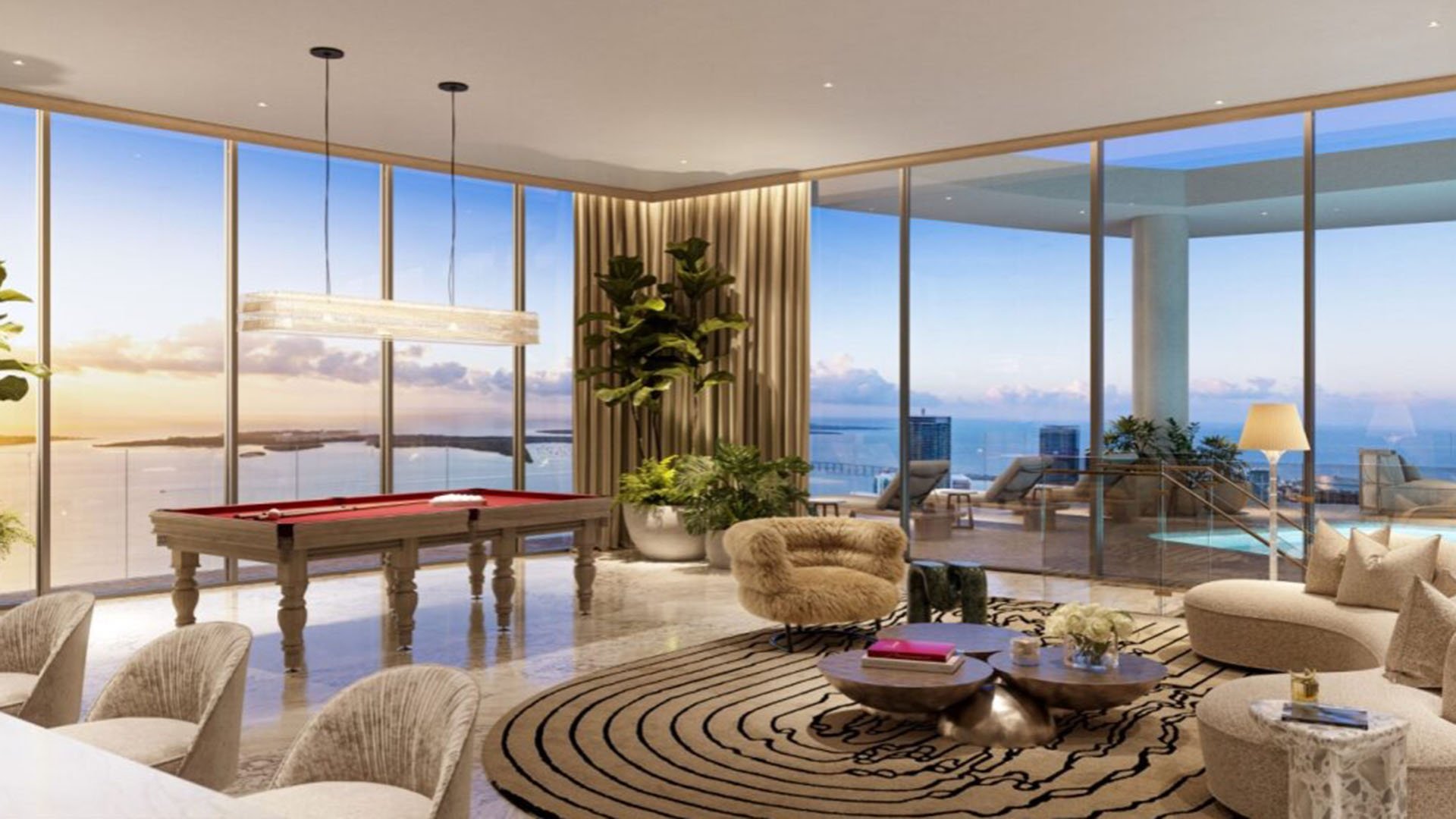
In a trophy residence, the outdoor room is not an amenity to admire from behind glass. It is part of the living program. For a South Florida buyer, the question is not simply whether a terrace is large, whether the pool photographs well, or whether the sunset angle flatters the furniture. The sharper question is whether the outdoor room performs with the same discretion, comfort, and architectural intelligence as the interiors.
A serious evaluation begins with use. Will breakfast, cocktails, reading, exercise, family gatherings, and formal entertaining compete for the same area, or has the plan created distinct zones? A beautiful outdoor room that can support only one activity at a time may be less valuable than a quieter, better organized space with shade, privacy, and a graceful service path.
Buyers comparing estates, penthouses, and waterfront condominiums in areas such as Brickell or Aventura should treat exterior space as a room with walls, thresholds, circulation, acoustics, and operational demands. The best outdoor rooms do not feel exposed or improvised. They feel inevitable.
Privacy is often misunderstood as distance from neighbors. In practice, it is more exacting. A residence can feel private even in a dense setting when sightlines are controlled, approach sequences are thoughtful, and outdoor seating does not sit in the direct view corridor of another residence, building, dock, path, or service area.
Stand where people will actually sit, dine, swim, and recline. Then look outward and inward. Can another property see the dining table? Does the primary suite look directly onto the entertainment zone? Is the outdoor shower visible from an arrival path? Are neighboring balconies above, beside, or across from the principal outdoor room?
Privacy also has a vertical dimension. A ground-level garden may feel protected by planting, walls, or elevation, while a high-floor balcony may need architectural screening, deep overhangs, or careful furniture placement. The buyer should evaluate privacy at seated height, standing height, and after dark. A room that feels secluded in daylight can become exposed at night, when interior lighting turns glass into a stage.
The most elegant outdoor room can be undermined by sound. Privacy is not only about being seen. It is also about being heard. Dining areas near mechanical equipment, service entries, pool equipment, elevator cores, garage ramps, or active streets can carry an invisible burden that becomes obvious only during a quiet evening.
A careful visit should include moments of silence. Listen from the primary seating area, the outdoor dining zone, the pool edge, and the bedroom terrace. Consider how sound travels between the outdoor room and neighboring properties. A residence designed for entertaining should allow conversation to remain intimate, not broadcast across the property.
For resale, sound comfort matters because it affects both daily life and emotional perception. Buyers may not articulate it immediately, but they respond quickly to outdoor rooms that feel calm. Quiet is a luxury finish.
In a trophy residence, service is not merely about having a kitchen nearby. It is about whether food, glassware, towels, deliveries, floral arrangements, maintenance staff, and event support can move without crossing the principal resident experience.
The ideal outdoor room has a clear service logic. A catering team should be able to reach the dining or bar zone without passing through the most intimate seating area. Towels and pool necessities should be stored where they are used. Trash removal should not require a walk through the main entertaining path. If the home has staff areas, elevators, side entries, or secondary corridors, the outdoor room should connect to them intelligently.
Buyers should trace the path of a tray from the kitchen to the table, the path of a guest from arrival to cocktails, and the path of a housekeeper resetting the space the next morning. If these routes collide, the design may look glamorous but live awkwardly.
A trophy outdoor room should be evaluated across the day, not only at the golden hour. Morning light may be ideal for coffee but harsh for a breakfast table. Afternoon exposure may make a lounge zone difficult to use unless shade, fans, planting, or architectural cover are integrated. Evening conditions may reveal whether lighting is flattering, functional, and gentle enough for conversation.
The best spaces offer choice. Covered and open areas should coexist. A dining area should not depend entirely on perfect weather. A pool deck should have nearby shaded recovery space. A reading chair should not require moving cushions and umbrellas every time the sun shifts.
This is where exterior space becomes architecture rather than staging. A terrace that supports multiple times of day will usually feel more valuable than a larger space with no refuge from glare or exposure.
Many trophy residences are designed to impress guests, but the better test is whether the outdoor room remains pleasant when only one or two people are using it. Overscaled terraces can feel ceremonial rather than intimate. Conversely, a smaller outdoor room with layered seating, planting, water, and good proportions can feel more luxurious because it supports real life.
Ask how the space behaves in three modes: private daily use, family use, and formal entertaining. The same plan rarely serves all three well unless it has zones. A quiet breakfast corner, a principal lounge, a dining area, and a flexible open zone can allow the room to expand and contract without feeling empty or crowded.
Furniture should never be the only solution. If every use depends on rearranging pieces, the architecture is not doing enough work. Built-in edges, shaded thresholds, exterior storage, and logical access to interiors make the room easier to live in and easier to present to future buyers.
Outdoor rooms age in public. Materials, planting, drainage, hardware, lighting, furniture, and pool systems all contribute to the long-term impression of quality. A buyer should look for signs that the space can be maintained without constant intervention or visual clutter.
Where are cushions stored? How is irrigation concealed? Are planters integrated or temporary? Does water drain away from seating areas and thresholds? Can exterior floors be cleaned without moving every object? Is lighting serviceable without disrupting finishes?
Maintenance should not feel like a compromise. In the best homes, operational needs are absorbed into the design. That discretion matters for daily enjoyment, and it matters when the property returns to market. A buyer evaluating resale should remember that exterior disorder is often read as broader neglect, even when the interiors are pristine.
The most valuable outdoor rooms are personal enough to feel special but not so specific that only one owner can understand them. Highly customized features may delight the current resident while narrowing the next audience. Flexible space usually travels better.
A future buyer should be able to imagine breakfast, children, guests, quiet evenings, fitness, reading, and celebrations without needing to redesign the entire exterior program. That does not mean the space should be generic. It means the architecture should provide a strong framework for different lifestyles.
In markets where buyers compare waterfront estates, high-rise residences, and private compounds, outdoor rooms help separate properties that merely have views from properties that truly live outdoors. The strongest examples offer privacy, service clarity, comfort, and emotional ease. They make the buyer feel that life has already been edited.
Approach the outdoor room as if you already live there. Enter from the primary interior room and notice whether the transition feels generous or constrained. Sit in every principal position. Look for exposed angles, awkward adjacencies, noisy equipment, poor shade, and confusing service paths.
Then reverse the experience. Arrive as a guest. Walk from entry to terrace, from terrace to powder room, from dining to pool, and from lounge back to the interiors. A strong plan should make these movements intuitive. Nothing should feel like a detour through private or operational space.
Finally, imagine the property empty. Without furniture, flowers, music, or sunset, does the outdoor room still have proportion and purpose? If the answer is yes, the value is likely architectural rather than decorative.
What is the first thing to evaluate in an outdoor room? Start with how the space will actually be used each day, then test privacy, shade, circulation, and service access from those use points.
Is a larger terrace always better for resale? Not necessarily. A smaller terrace with stronger privacy, shade, and zoning can be more compelling than a larger space that feels exposed or difficult to furnish.
How should buyers test privacy during a showing? Sit and stand in each main use area, then look toward neighboring homes, balconies, paths, docks, and service zones to understand real sightlines.
Why does service circulation matter outdoors? Service circulation determines whether entertaining feels seamless or disruptive. Food, towels, staff, and cleanup should move without crossing intimate guest areas.
What makes a pool area feel more luxurious? A pool feels more refined when it has shaded recovery space, discreet storage, comfortable circulation, and privacy from neighboring views.
Should outdoor rooms be evaluated at night? Yes. Night visits reveal lighting quality, reflected visibility through glass, sound conditions, and whether the space still feels private after dark.
How does a balcony differ from a ground-level outdoor room? A balcony depends more on vertical sightlines, wind comfort, overhangs, and furniture scale, while ground-level spaces often rely on planting and enclosure.
What should Brickell buyers watch for in outdoor rooms? Brickell buyers should pay close attention to adjacent sightlines, sound, shade, and whether the exterior space feels calm despite an urban setting.
What should Aventura buyers prioritize outdoors? Aventura buyers should focus on practical zoning, easy movement between interior and exterior spaces, and outdoor rooms that support both privacy and family use.
What outdoor features support long-term resale? Flexible layouts, low visual clutter, durable finishes, privacy, shade, and clear service logic tend to make outdoor rooms easier for future buyers to value.
For a tailored shortlist and next-step guidance, connect with MILLION.
If branded residences are on your mind — as a home or as an allocation — we would be glad to share what we are seeing, privately.
Begin a quiet conversation