
A buyer-focused guide to assessing art-scale walls in South Florida penthouses, from proportion and light control to structure, circulation, conservation, and resale logic.
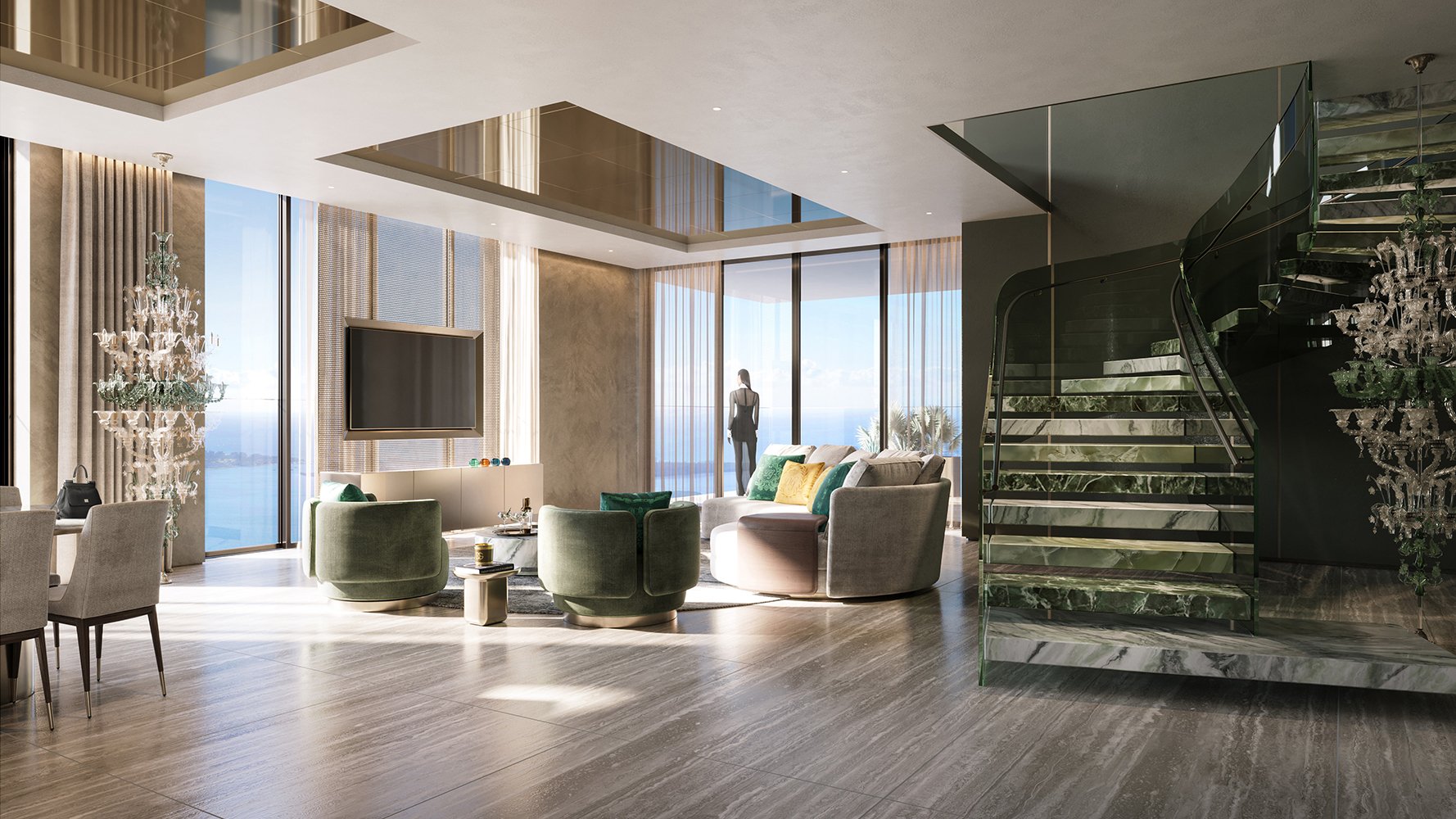
In South Florida’s upper tier, a penthouse is often judged by views, terraces, ceiling presence, privacy, and arrival sequence. For a serious collector, however, one quieter measure can be just as decisive: whether the residence has walls that can hold art with dignity.
An art-scale wall is not simply a large blank surface. It is a composed architectural plane with the right proportion, light, distance, structure, and calm around it. It gives a major work room to breathe without making the residence feel like a gallery. For a penthouse buyer, that balance is essential. The wall must support daily life, entertaining, and preservation while still allowing a collection to feel intentional.
This is especially relevant in South Florida, where buyers may be weighing Brickell verticality, Miami Beach ocean light, Sunny Isles glass, or Palm Beach discretion. The best spaces do not treat art as an afterthought. They anticipate scale from the first viewing.
Many buyers ask whether a room is large enough for art. The sharper question is whether the wall has the correct proportion for the art you intend to live with. A long, uninterrupted surface can be more valuable than a larger room broken by doors, switches, speakers, return grilles, or competing openings.
Look for a wall that reads as a single visual field. It should have enough width for the work, enough height above and below it, and enough visual quiet on either side. If a painting or textile feels squeezed between a sliding door and a media panel, the room may be impressive, but it is not truly collection-ready.
Ceiling height matters, but so does the relationship between the wall and the furniture plan. A grand wall loses power if the only possible sofa location blocks the ideal viewing axis. In a penthouse, art-scale evaluation should happen while standing, seated, and entering the room. Each perspective reveals a different truth.
South Florida penthouses often celebrate brightness, reflection, and broad exposure. For art, those same qualities require discipline. Before considering wall color or plaster finish, study how light moves across the surface during the day. A wall that looks perfect at a morning showing may become visually difficult at another hour.
The most successful art walls are protected from harsh glare and uncontrolled reflection. This does not mean the residence must be dim. It means the architecture should offer a hierarchy: luminous rooms for living, controlled planes for art, and transitional zones where the eye can rest.
Window treatments, glass specification, lighting design, and fixture placement should be considered together. A collector should not rely on a single ceiling track to solve a poorly selected wall. If art is central to the purchase, bring the lighting conversation forward before closing, not after installation.
An art-scale wall must be more than beautiful. It must be capable. Heavy works, sculptural pieces, large framed canvases, and specialized mounts require confidence in what sits behind the surface. During due diligence, ask the appropriate professionals to confirm substrate, blocking potential, anchoring options, and any limitations created by mechanical, electrical, plumbing, or life-safety systems.
This is not only about weight. It is also about avoiding awkward compromises. A wall with hidden services in the wrong location may force visible devices, relocated controls, or asymmetrical hanging. A perfect art wall should allow the composition to feel inevitable.
Buyers should also consider future flexibility. Collections change. A wall that can accommodate several hanging strategies will serve better over time than a highly customized niche designed for only one work. In the luxury market, flexibility is its own form of value.
The best penthouses choreograph arrival. Elevator entry, foyer compression, corridor width, and the first long view into the main room all shape how art is experienced. A major work deserves a moment of reveal, not a collision with a powder room door or service entry.
Walk the residence as a guest would. Where does the eye land first? Is there a natural pause point? Can a work be seen from enough distance to register its scale? Does the route from private elevator to living room create anticipation, or does it expose too much at once?
For collectors, circulation is not merely functional. It is curatorial. A strong plan may offer one commanding wall for a signature piece, quieter walls for secondary works, and intimate areas for smaller pieces. This rhythm keeps the home from becoming visually exhausting.
True luxury is not only acquisition; it is stewardship. A penthouse intended for meaningful art should be evaluated for environmental consistency, protection from direct exposure, and the practical realities of maintenance. The goal is not to turn a home into an institution. It is to create a refined domestic environment that respects the collection.
Ask how the residence handles temperature, humidity, ventilation, shade, and daily use. Consider whether terrace doors, cooking zones, fireplaces, or high-traffic entertaining paths could create avoidable risk. A dramatic wall beside a frequently opened exterior door may be less desirable than a calmer interior plane.
This is where discretion matters. The finest collector residences rarely announce their technical sophistication. They simply feel composed. Art hangs cleanly, lighting is controlled, surfaces remain quiet, and daily life moves around the collection with ease.
In South Florida, the view can dominate every design decision. Ocean, skyline, bay, and garden exposures are powerful, and they often justify the premium attached to a penthouse. But a residence made entirely of glass can leave a collector with limited options.
The ideal penthouse balances openness with anchoring walls. A view-facing room still needs moments of opacity, depth, and shadow. These elements make the interior livable and give art a place to belong. Without them, the collection may feel temporary, as if staged against architecture that was never meant to hold it.
For buyers attending Art Basel season events or building a collection across years, this balance becomes practical. A residence with fewer but better walls can be more compelling than one with expansive glass and no curatorial discipline.
Before assigning a wall to a major work, imagine the residence fully occupied. Where will guests gather? Where will children, pets, staff, or service carts pass? Will flowers, bar service, or dining chairs compete with the work? Does evening entertaining place reflections or shadows across the surface?
An art-scale wall should be protected by the plan without feeling isolated from it. The strongest locations are visible enough to matter, calm enough to preserve, and integrated enough to become part of everyday life.
If the penthouse will function as a second home, consider whether the wall can remain visually strong with minimal furnishing. If it will be a primary residence, consider how the wall performs through routine, not just during a showing. Luxury real estate is judged in the long term by how gracefully it supports the owner’s habits.
Not every buyer is a collector, but most sophisticated buyers understand composure. A well-planned art wall can enhance the perceived quality of a penthouse because it signals architectural intention. It gives scale to a room, creates a memorable focal point, and helps buyers imagine a refined life within the residence.
The reverse is also true. A penthouse with no suitable walls can feel difficult to furnish, even when the views are extraordinary. Buyers may not articulate the issue as an art concern. They may simply feel that the space lacks grounding.
For this reason, art-scale walls should be part of acquisition strategy, not merely decoration. They influence interior design budgets, installation planning, insurance conversations, and long-term satisfaction. In the most considered South Florida penthouses, the wall is not blank. It is potential, proportioned.
What makes a wall art-scale rather than simply large? It has proportion, uninterrupted surface, proper viewing distance, controlled light, and enough architectural calm to support significant work.
Should I prioritize views or art walls in a penthouse? The strongest residences balance both, using glass for openness and solid planes to anchor the interior and the collection.
Can a glass-heavy penthouse still work for a collector? Yes, if the plan includes protected interior walls, controlled lighting, and enough distance for major works to be viewed properly.
When should I involve an art installer or designer? Bring specialists in during due diligence or early design planning, before finishes, lighting, and furniture layouts are finalized.
Does ceiling height automatically make a wall better for art? Not always. Height helps, but proportion, surface continuity, glare control, and furniture placement are just as important.
What should I look for behind the wall? Ask qualified professionals to review structure, anchoring possibilities, hidden services, and any constraints that may affect installation.
Is a media wall also a good art wall? Usually only with careful planning. Screens, speakers, controls, and reflections can compete with art and reduce curatorial flexibility.
How does South Florida light affect art placement? Bright coastal light can be beautiful but demanding, so buyers should assess glare, shade, reflection, and daily exposure before hanging.
Can art-scale walls influence resale? They can strengthen a penthouse’s perceived refinement by making the interior feel grounded, flexible, and architecturally resolved.
What is the first question a collector should ask during a showing? Ask where the most important work would live, then test that answer against light, circulation, structure, and daily use.
To compare the best-fit options with clarity, connect with MILLION.
If branded residences are on your mind — as a home or as an allocation — we would be glad to share what we are seeing, privately.
Begin a quiet conversation
.jpg&width=700&height=438&fit=cover)