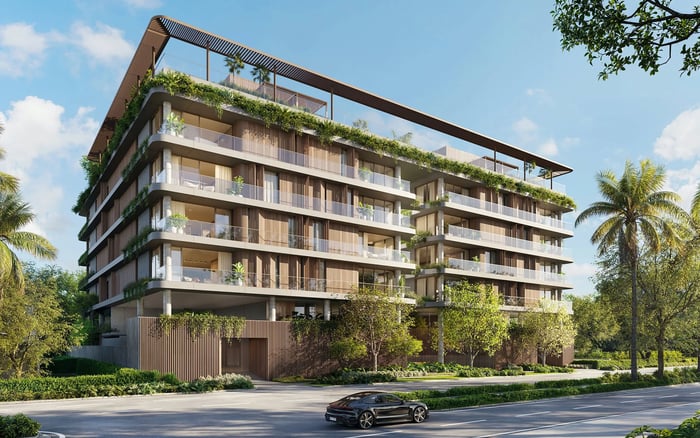
A discreet guide to assessing lower-floor condominium value in South Florida, with attention to view, privacy, amenity access, construction premium, and resale discipline.

Lower-floor residences occupy a distinctive place in South Florida luxury real estate. They are often discussed as a discount category, but that framing can be too blunt for a market where lifestyle, architecture, privacy, amenity access, and building culture all shape value. A lower floor is not automatically inferior. It is a different proposition, and in the right building, it can be the more intelligent buy.
The essential question is not whether the residence is high or low. It is whether the price properly reflects the experience. A buyer comparing new construction with resale should ask how the home lives in the morning, how it feels after dark, how private the outdoor space is, how quickly one can move through the building, and how future buyers will interpret the same attributes.
In Brickell, that may mean testing a lower residence against street activity, neighboring towers, and ease of daily access. In a quieter coastal setting, it may mean studying the relationship between the unit, the pool deck, the landscape canopy, and the water view. The floor number matters, but the lived experience matters more.
A lower-floor view should be studied in layers. The first layer is obvious: water, skyline, garden, pool, marina, street, or neighboring building. The second layer is more important: how much of that view is protected by angle, setback, elevation, or site planning. A partial water view can be more valuable than a broad but compromised outlook if it feels serene, private, and architecturally framed.
Buyers should stand where daily life actually happens: the primary bedroom, main seating area, kitchen island, and terrace doors. The most compelling view from the entry corridor may not matter if the living room looks into another facade. Conversely, a lower-floor residence with mature landscaping, filtered water glimpses, and gentle morning light may feel more intimate than a higher unit exposed to glare and wind.
The best comparison is not floor against floor. It is usable view against asking price. If a new-construction unit offers fresh finishes but a constrained outlook, a well-kept resale residence with a calmer exposure may deserve closer attention.
Privacy can be more valuable than height, particularly for buyers who use the residence as a primary home or seasonal retreat. Lower floors must be tested for sightlines from amenity decks, neighboring balconies, parking podiums, sidewalks, porte-cocheres, and adjacent buildings. A lower unit that appears attractive in daylight may feel exposed at night, when interior lighting turns glass into a stage.
This is where architecture becomes financial. Deep terraces, angled balconies, landscape buffers, recessed glazing, and thoughtful building orientation can transform lower levels. A residence that is technically low may still feel secluded if its sightlines are controlled. A higher floor can feel less private if it faces directly into another tower.
Balcony depth also deserves careful attention. A narrow outdoor ledge may add visual appeal but offer limited utility. A more generous balcony can support dining, reading, and shaded living, improving both daily enjoyment and future marketability.
New construction often commands attention because it offers a clean design narrative: new systems, contemporary amenity programming, current finishes, and the emotional appeal of being first in residence. Yet a lower-floor new-construction home should still be measured against a disciplined value framework. What premium is being paid for newness? How much of that premium is supported by architecture, services, location, and floor plan quality rather than novelty?
Resale can offer a different kind of clarity. The building is already operating. The lobby has a rhythm. The amenity spaces have a real-world feel. The residence may reveal how sunlight, sound, privacy, and maintenance actually perform over time. For some buyers, that certainty can be worth as much as a new finish package.
The strongest approach is to compare adjusted value. Place the new-construction residence beside a resale alternative with similar bedroom count, exposure, outdoor space, parking, building quality, and lifestyle profile. Then isolate the differences: newness, warranty comfort, assessments, customization needs, furniture scale, and likely exit appeal. This creates a cleaner view of what the buyer is truly paying for.
Lower floors may offer a convenience advantage that high-floor buyers sometimes underestimate. Shorter elevator rides and easier access to pools, wellness areas, lounges, pet spaces, and parking can make daily life smoother. For families, pet owners, frequent travelers, and buyers who entertain often, this convenience is not trivial.
The question is whether the access feels elegant or merely close. A residence near amenities can be highly desirable if circulation is quiet, separation is well planned, and privacy is preserved. It can be less desirable if the unit is exposed to noise, foot traffic, service doors, or pool activity. The difference is often visible during a careful walk through the building at more than one time of day.
For investment purposes, amenity proximity should be translated into buyer language. Future purchasers may value a lower-floor home if it offers resort-like convenience without sacrificing calm. If it feels busy, overlooked, or acoustically compromised, the lower price may not be enough.
South Florida buyers tend to focus on view and finishes, but lower-floor value is also shaped by light quality, sound transfer, and microclimate. A lower residence may benefit from shade, reduced wind, and a more comfortable terrace environment. It may also face more street noise, pool sound, mechanical hum, or reflections from nearby structures.
Natural light should be observed with the lights off. Look for brightness at the back of the living area, not only near the glass. Consider whether deep overhangs, neighboring buildings, or vegetation create welcome softness or excessive shadow. In a luxury residence, the goal is not maximum brightness at all hours. The goal is flattering, livable light.
Sound deserves equal discipline. Close the doors, stand quietly, and listen. Then open the doors and listen again. The difference can shape whether the home feels like a sanctuary or a compromise.
A lower-floor purchase should pass a simple exit test: will the next buyer immediately understand why this residence is desirable? If the answer requires too much explanation, the price should reflect that. If the advantages are evident, such as a gracious terrace, strong privacy, easy amenity access, elegant proportions, and a pleasing outlook, the floor level becomes less of a liability.
The best lower-floor values have a clear identity. They are not merely cheaper versions of higher residences. They offer something specific: garden intimacy, larger outdoor space, convenience, softer light, or a quieter relationship to the building. When that identity is strong, the residence can appeal to buyers who prioritize how a home feels over the status of an elevator button.
Before making an offer, compare each residence across five categories: view quality, privacy, outdoor usability, building experience, and future liquidity. Assign each category a plain-language grade rather than relying only on price per square foot. A lower-floor unit with strong marks in four of five categories may be a better value than a higher unit with a stronger view but weaker livability.
Luxury buyers should also consider customization cost. A resale residence may need design updates, while a new-construction residence may require window treatments, lighting enhancements, closet systems, and furnishings to become truly complete. The fairest comparison includes the full cost to occupy beautifully.
Ultimately, lower-floor value is not found by chasing the largest discount. It is found by identifying where the market has overlooked livability, privacy, or convenience. In that sense, the most sophisticated buyer is not asking, “How low is it?” The better question is, “What does this floor allow me to enjoy?”
Are lower-floor condos always less valuable? No. Lower floors often trade differently, but privacy, outdoor space, convenience, and view quality can support strong value.
How should I compare a lower-floor new-construction condo with a resale condo? Compare the complete experience: view, privacy, floor plan, amenity access, condition, customization cost, and future resale appeal.
Is a partial view acceptable on a lower floor? Yes, if the view is pleasant, private, and well framed from the main living spaces. A compromised view should be reflected in pricing.
Does amenity proximity help or hurt value? It depends on design. Convenient access can be a luxury advantage, while noise, traffic, or exposure can reduce appeal.
What is the biggest risk with a lower-floor residence? The biggest risk is poor privacy or an outlook that future buyers immediately perceive as compromised.
Can a lower-floor condo be better for daily living? Yes. Shorter elevator rides, easier access, calmer terraces, and shaded outdoor areas can make the home more comfortable.
Should price per square foot drive the decision? It should inform the decision, not control it. Floor plan efficiency, light, privacy, and outdoor usability may matter more.
Are lower floors better for buyers with pets or children? They can be, especially when elevator access is easy and amenity circulation is well planned. Privacy and sound should still be tested.
How do I know if the discount is enough? The discount should match the actual compromise. If the residence lives beautifully, the right discount may be modest.
What makes a lower-floor condo easiest to resell? Clear advantages such as privacy, usable outdoor space, elegant proportions, and a calm outlook make the value story easier to understand.
For a tailored shortlist and next-step guidance, connect with MILLION.
If branded residences are on your mind — as a home or as an allocation — we would be glad to share what we are seeing, privately.
Begin a quiet conversation