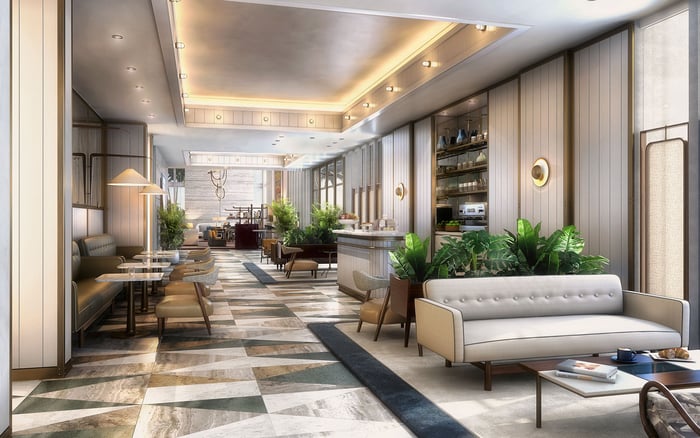
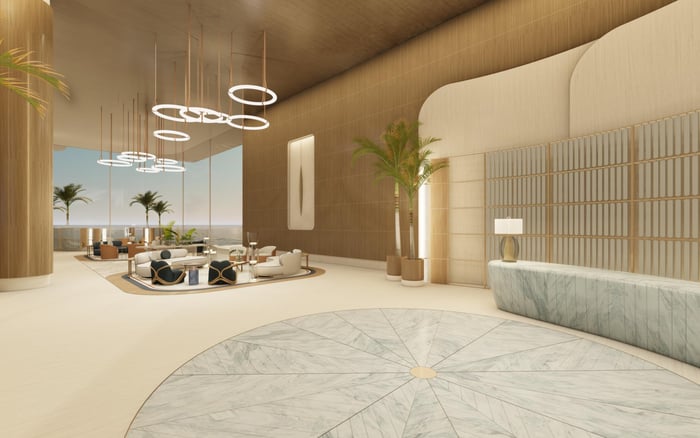
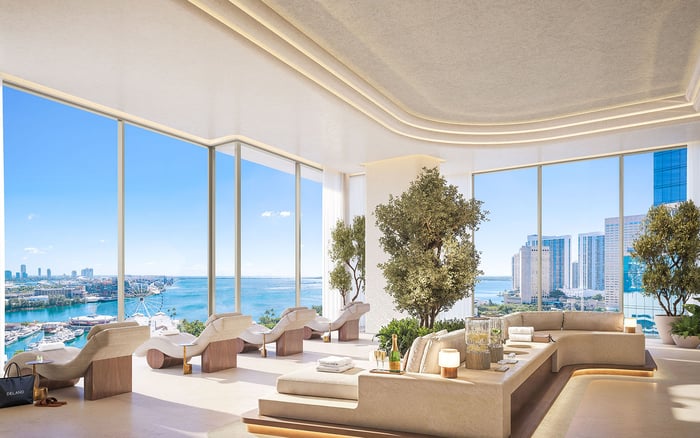
A practical luxury buyer’s guide to reading lobby volume, seating, and privacy when a South Florida residential building is under real arrival pressure.
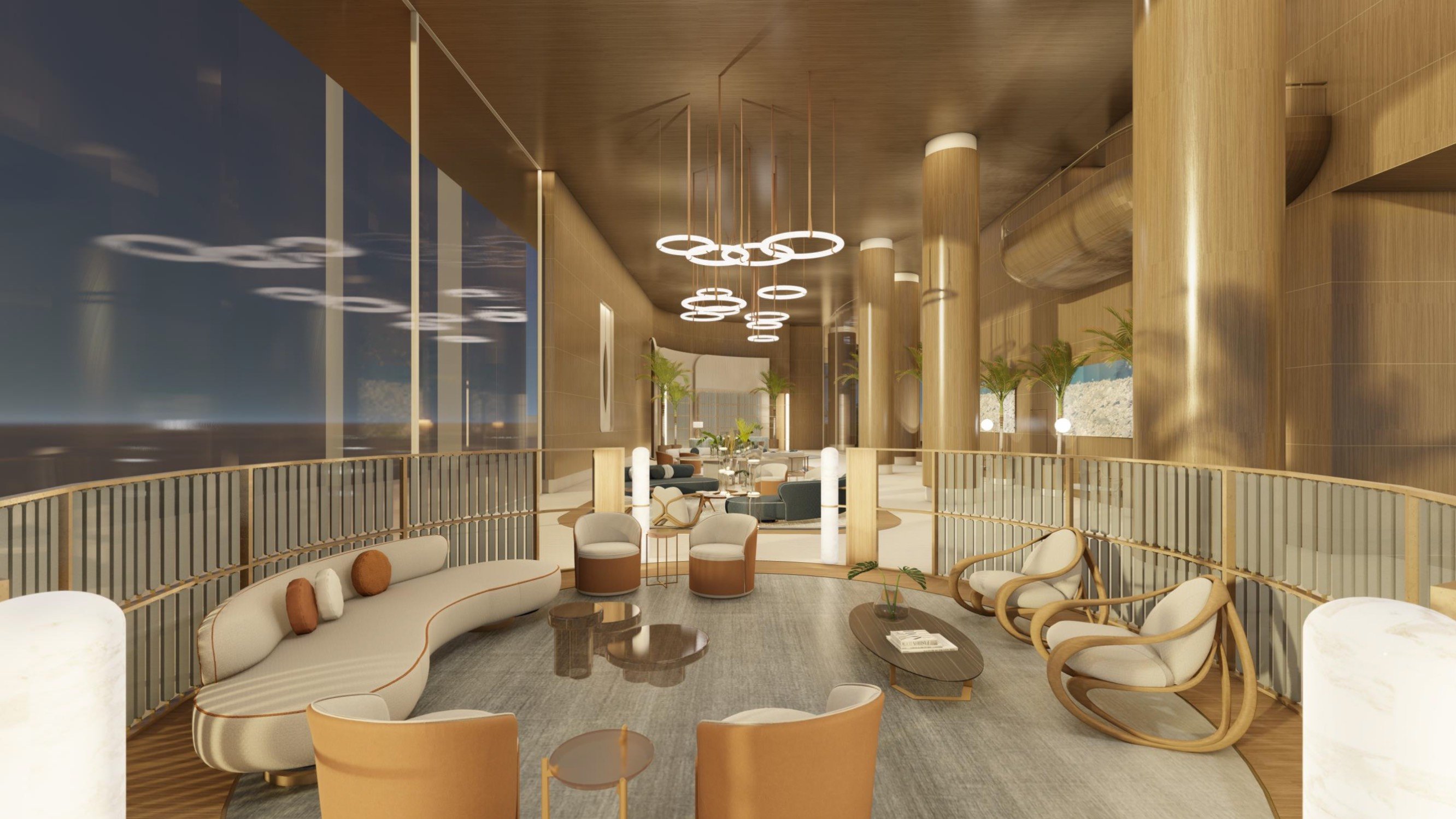
A luxury lobby can be persuasive when it is empty. Stone glows, lighting flatters, furniture reads as sculptural, and the concierge desk feels ceremonial. The more revealing question is how that same room performs when residents, guests, drivers, delivery staff, pets, and luggage arrive within the same compressed window. Peak arrival is not a design inconvenience. It is the moment when architecture, staffing, acoustics, and privacy either coordinate gracefully or reveal friction.
For South Florida buyers, this matters because arrival is part of the daily residential experience. In Brickell, the test may involve urban cadence and multiple simultaneous appointments. In Surfside or Sunny Isles, it may involve beach returns, family guests, service access, and evening arrivals. A polished building should not require residents to perform around congestion. It should absorb activity without making anyone feel observed, delayed, or displaced.
Lobby volume is often mistaken for simple grandeur. Height and width can impress, but the more important measure is whether the room allows movement without collision. Watch where people naturally pause. If every pause occurs in the main path, the space may feel larger than it functions. If arrival, check-in, elevator access, and seating each have their own intuitive zone, the lobby can remain composed even when several parties enter at once.
Consider the sequence from curb to elevator. A strong lobby gives residents a clear path while allowing guests to be greeted without blocking circulation. Buildings such as Baccarat Residences Brickell are useful reference points for buyers comparing how branded residential environments present arrival, service, and discretion as part of a broader lifestyle promise. The comparison should focus less on spectacle and more on whether the room protects ease of movement.
Sound is part of volume as well. A lobby that visually expands but acoustically amplifies conversation can feel public. During a visit, stand in more than one position. Listen near the desk, near the seating, and near the elevator approach. The best spaces allow staff to communicate efficiently without broadcasting names, residence numbers, or guest details across the room.
Seating is not merely a decorative gesture. It reveals how a building treats waiting. A resident may pause briefly for a car, a guest may wait for approval, or family members may gather before leaving for dinner. The question is whether those moments feel elegant or exposed.
Look for seating that offers choice. A single dramatic grouping can photograph beautifully, yet it may force strangers into one shared social field. More refined planning creates several seating moments with different levels of openness. A chair near the entrance suits a brief pause. A deeper lounge area may suit a guest waiting longer. A more tucked-away arrangement can serve residents who prefer not to be on display.
In Miami Beach, arrival often carries a resort sensibility, but private residential lobbies still need restraint. At properties such as Shore Club Private Collections Miami Beach, buyers can consider how hospitality-influenced design is translated into a residential setting. The ideal balance is gracious without becoming theatrical. Seating should welcome, not turn the lobby into a public lounge.
Also examine the relationship between seating and doors. If every seat faces the entrance, residents may feel watched. If seating backs onto circulation, guests may feel unsettled. Angled arrangements, partial screens, planting, art walls, and changes in ceiling treatment can create comfort without closing the room down.
Privacy in a lobby is not achieved by making the room silent or severe. It comes from controlled thresholds. The most discreet buildings separate public greeting, resident passage, and service movement so that each can operate without unnecessary visibility into the others.
Start at the point of recognition. Where does staff greet residents? Can a guest ask a question without standing directly beside the elevator path? Is there a place to resolve a delivery, confirm an appointment, or wait for authorization without interrupting residents who are simply going home? These are small operational details, but in daily life they define the feeling of being protected.
For oceanfront and coastal buyers, privacy can be especially nuanced because the lifestyle is social by nature. In Sunny Isles, residences such as St. Regis® Residences Sunny Isles invite buyers to compare how a high-service residential experience frames arrival while preserving personal space. The question is not whether the lobby is impressive. It is whether it can remain composed when residents arrive in evening attire, children return from the pool, and guests are being received.
Elevator control is another key issue. A beautiful lobby loses discretion if elevator waiting feels like a queue. Look for a transition that feels natural and protected. The approach should be obvious to residents, legible to guests, and not so exposed that everyone in the room can monitor who is coming and going.
A daytime tour can be useful, but buyers should try to experience the lobby when it is active. Arrive at a moment when residents are likely to be moving through the building. Observe without rushing. The most important clues are behavioral: whether staff seem strained, whether residents hesitate, whether guests cluster awkwardly, and whether luggage or deliveries dominate the visual field.
Ask practical questions in calm language. How are guests received when several parties arrive at once? Where do residents wait for cars? How are vendors directed? Is there a separate process for deliveries, private events, or household staff? The answers need not be elaborate. In a well-run building, they should sound practiced.
Boutique buildings require a different lens. A smaller lobby may feel more personal and discreet, but only if circulation is carefully managed. Larger towers may offer more spatial generosity, but scale alone does not guarantee privacy. Compare the choreography, not the square footage.
The right lobby is the one that matches how you actually live. A frequent host may value a gracious guest reception area. A highly private owner may prioritize a fast, protected path from car to elevator. A seasonal resident may care about luggage handling and the first impression after travel. A family may focus on whether children, pets, and visiting relatives can move through the lobby without making the room feel chaotic.
In Surfside, a project such as The Delmore Surfside can prompt a useful buyer question: does the arrival experience feel intimate enough for daily living while still carrying the polish expected of a premier coastal address? That same question applies across South Florida, whether the setting is urban, waterfront, or village-like.
The finest lobby does not simply announce luxury. It edits the experience of arrival. It keeps private life private, makes waiting feel intentional, and allows service to occur without becoming the main event.
Why should I visit a lobby during an active arrival period? It shows how the building performs when design, staffing, residents, and guests are all using the space at once.
Is a larger lobby always better for privacy? No. A smaller, well-planned lobby can feel more discreet than a large room with poor circulation and exposed seating.
What is the first thing to watch when I enter? Notice whether residents have a clear path from entry to elevator without crossing guest waiting or service activity.
How can I judge whether seating is functional? Look for varied seating zones that support brief waits, longer guest pauses, and quiet moments without forcing interaction.
What makes a lobby feel too public? Exposed waiting areas, loud conversations, visible queues, and unclear thresholds can all reduce the sense of privacy.
Should I ask about service and deliveries? Yes. The best residential arrivals keep service movement organized so it does not dominate the resident experience.
Does branded design guarantee a better lobby? Not by itself. The important test is how design, staffing, and circulation work together during real use.
How does an urban lobby differ from a coastal one? Urban lobbies often manage faster street-level movement, while coastal lobbies may balance leisure, guests, and beach-related returns.
Can furniture placement affect discretion? Absolutely. Angled seating, partial screening, and distance from main paths can make waiting feel more private.
What should I prioritize if I value privacy most? Prioritize controlled entry, a protected elevator approach, discreet staff interaction, and seating that does not face every arrival.
For a tailored shortlist and next-step guidance, connect with MILLION.
If branded residences are on your mind — as a home or as an allocation — we would be glad to share what we are seeing, privately.
Begin a quiet conversation