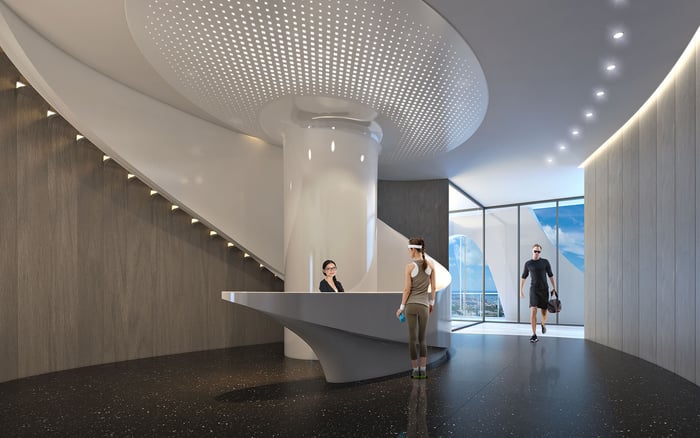
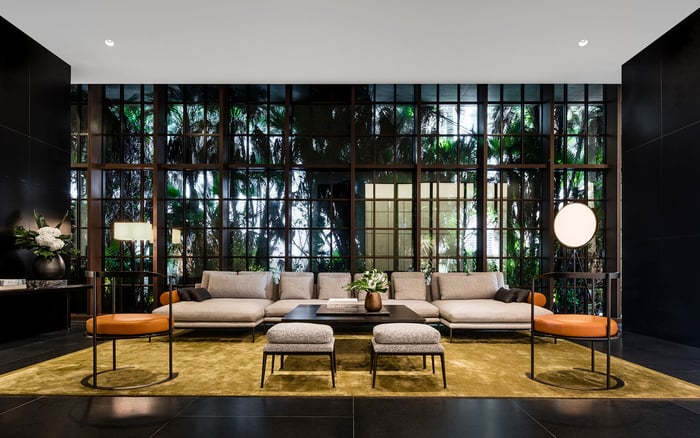
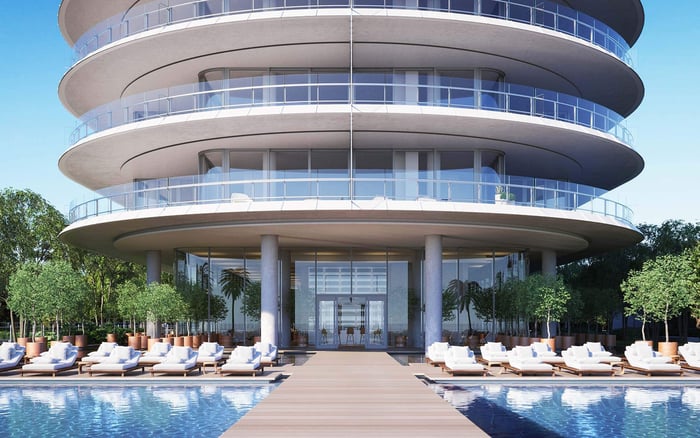
Surfside’s cited residences favor discreet arrivals, in-home service, and intimate resident spaces, while Sunny Isles Beach towers deliver a broader vertical-resort mix of restaurants, lounges, dining rooms, and event venues.
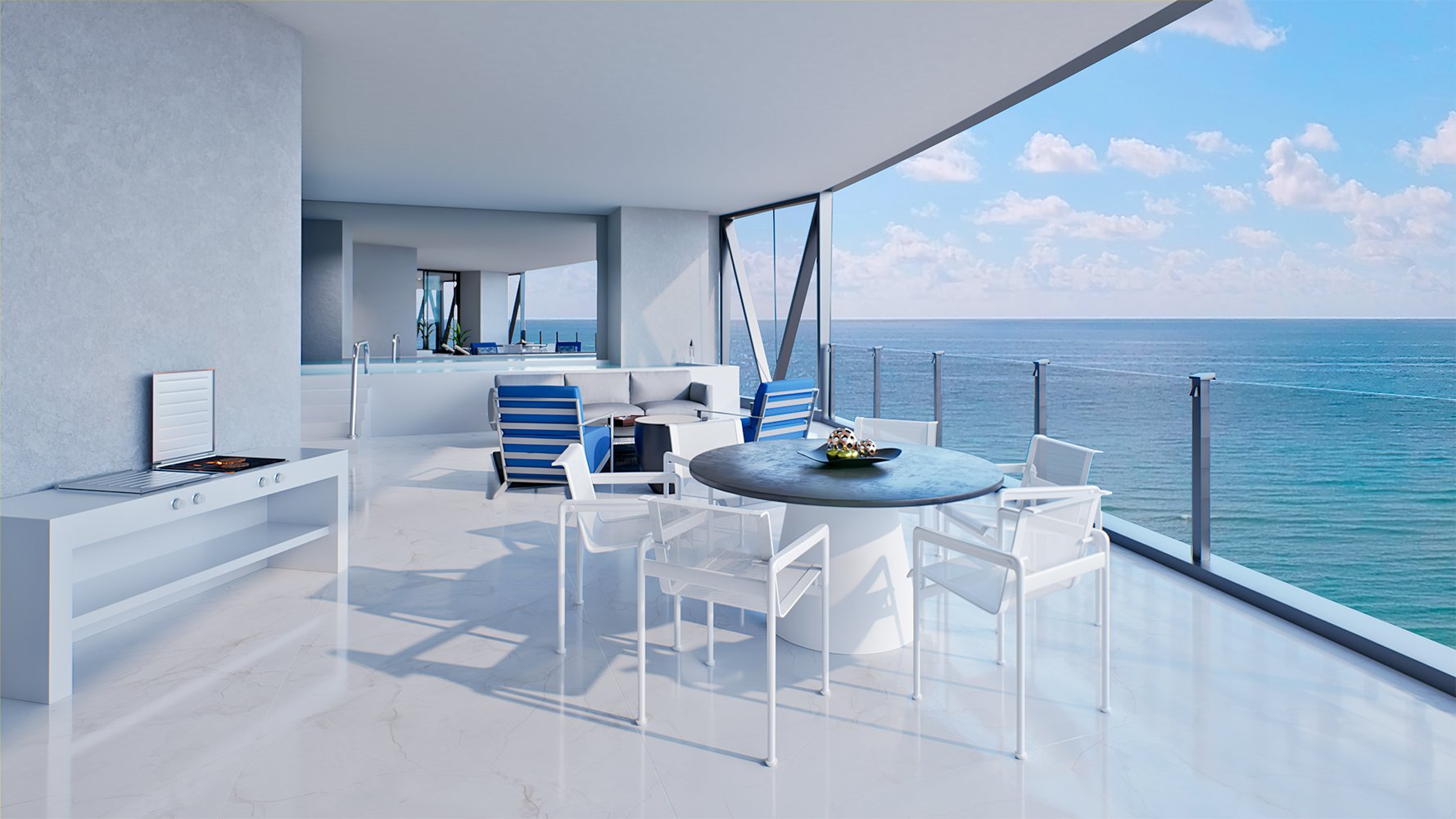
For buyers who entertain during Miami’s most active cultural, sporting, and social weeks, the decisive luxury is often not spectacle, but control. The ability to welcome guests elegantly, serve dinner without turning the residence into a loading zone, and preserve a calm route home can matter more than the number of amenities on a brochure.
Among the properties considered here, Surfside and Sunny Isles Beach present distinct approaches. Surfside’s strongest examples emphasize private arrivals, in-residence service, and intimate resident spaces. Sunny Isles Beach more often frames hospitality as a vertical resort, with restaurants, lounges, club levels, private dining rooms, and outdoor event settings contained within a single tower.
This pattern applies to the named luxury projects, not necessarily to every building in either neighborhood. The relevant question is not which destination is categorically more private, but which hospitality structure better matches an owner’s preferred way of entertaining.
The most valuable event-week amenity is control over how guests, staff, and service move.
At The Surf Club Four Seasons Surfside, private hosting can begin before an owner arrives. À-la-carte butler service, pre-arrival provisioning, housekeeping, grocery provisioning, in-residence dining, and in-residence spa treatments allow a household to be prepared with fewer visible errands or catering movements. During a busy week, this service model can help dinner feel like a private domestic occasion rather than an extension of a crowded hospitality scene.
The wider setting reinforces that sensibility. The Surf Club occupies nine acres of oceanfront gardens, palm stands, and pathways, creating an estate-like context in which landscaped space shapes both arrival and hosting. Privacy here is not simply a closed dining-room door. It is a sequence-from grounds to residence-organized around separation and service.
Ocean House Surfside offers another expression of this approach. Dedicated elevators open into private foyers, reducing reliance on conventional shared-corridor circulation. Its residents’ club lounge includes a library and dining table reservable for private events, while a ground-floor garden, outdoor kitchen, lounge, and recreational lawn offer settings for smaller outdoor gatherings.
These features suit a host who wants the home, private foyer, and reservable resident space to function as one discreet entertaining environment. The emphasis is less on moving among multiple public-facing venues than on controlling a compact sequence of arrival, dinner, and departure.
Sunny Isles Beach answers a different brief. Its notable towers appeal to owners who want several forms of hospitality available without leaving the property, particularly when a guest list may move from cocktails to dinner, a screening, or time by the pool.
St. Regis® Residences Sunny Isles is conceived as a private residential resort with more than 70,000 square feet devoted to wellness, fitness, dining, and entertainment amenities. Its dining program encompasses a signature restaurant open to the public, a bar lounge, a private dining room, an oceanfront terrace dining lounge, and a cityscape deck with dining, bar, and lounge facilities. A private-events lawn and in-residence dining broaden the choice between sociable on-property hospitality and quieter entertaining at home.
That range is valuable, but it makes operational detail essential. A private room connected to a public restaurant does not offer the same arrival experience as dinner delivered directly to a residence. Buyers should understand where restaurant patrons circulate, how private-room reservations work, and whether residential and public-facing activity intersect at elevators, valet areas, or common entries.
At The Ritz-Carlton Residences® Sunny Isles, the club level combines a lounge and bar, a private dining area with prep kitchen, a business center, and a media room. This arrangement suits owners who prefer a polished entertaining suite beyond the residence, with adjacent spaces accommodating different phases of an evening.
Bentley Residences Sunny Isles likewise illustrates the vertical-resort model through a residents-only restaurant, separate private dining room, coffee and breakfast lounge, lobby bar, movie theater, resort-style pool, and concierge services. For hosts who value choice, the attraction lies in creating several distinct experiences within one residential address.
Buyers should distinguish among three concepts often grouped under the same label. The first is in-residence dining, in which food and service come to the home. This format can provide the highest degree of domestic privacy, particularly when provisioning and housekeeping are coordinated in advance.
The second is a reservable residents-only dining room. It extends entertaining beyond the residence while keeping it within a controlled residential amenity setting. The experience depends on booking priority, guest limits, staffing, kitchen access, cleanup rules, and the route caterers use.
The third is a private room attached to a public restaurant. It may offer the most complete restaurant atmosphere and service, but reaching it can involve public-facing circulation. None of these formats is inherently superior. A family dinner, collector reception, business meal, and late-night gathering each place different demands on privacy and service.
Amenity count alone does not establish discretion. Buyers should walk the property as though an event were already underway. Begin with the residential arrival: Is there a dedicated elevator or private foyer? Determine whether hotel guests, restaurant patrons, residents, and vendors use overlapping entrances or elevator banks.
Guest parking and valet procedures merit equal scrutiny. A seamless dinner can become conspicuous if visitors queue beside a public venue or drivers must explain a private event at a busy porte cochère. Ask how guest names are registered, where cars wait, and whether large gatherings require advance coordination.
Catering routes provide another practical test. In-residence service may sound private, but its success depends on service elevators, delivery windows, staging areas, and building rules. For a reservable dining room, confirm whether the prep kitchen is available, which staffing is included, and when setup can begin.
Reservation policy is especially consequential in Sunny Isles Beach towers with multiple hospitality venues. Owners should clarify priority periods, minimum notice, cancellation terms, capacity, music restrictions, and whether a space is genuinely exclusive during a booking. In Surfside, attention may shift to provisioning lead times, butler or housekeeping availability, and permissions for private chefs or outside vendors.
Among these examples, Surfside is the clearer fit for a buyer who sees the residence as the principal venue and values private arrival, advance provisioning, and intimate resident settings. The ideal evening is composed quietly, with service moving toward the home and minimal dependence on public amenity traffic.
Sunny Isles Beach is compelling for a buyer who wants breadth. Restaurants, bars, lounges, private dining rooms, club levels, terraces, lawns, pools, and entertainment spaces can support a fuller itinerary within the building. The tradeoff is the need to examine how those venues operate when public hospitality and residential life coexist.
The final decision should follow behavior rather than prestige. Buyers who host small dinners may prioritize elevator privacy and in-residence service. Those planning larger, multi-stage occasions may prefer the flexibility of a vertical resort. In either market, true event-week privacy comes from the alignment of design, staffing, rules, and circulation.
For confidential guidance on selecting a South Florida residence around your hosting priorities, connect with MILLION.
If branded residences are on your mind — as a home or as an allocation — we would be glad to share what we are seeing, privately.
Begin a quiet conversationAmong the cited projects, Surfside more clearly emphasizes in-residence service, private arrivals, and intimate reservable resident spaces.
The cited Sunny Isles Beach towers offer a denser mix of restaurants, bars, lounges, private dining rooms, terraces, and event spaces.
It may refer to food served in the residence, a reservable residents-only dining room, or a private room attached to a public restaurant.
Dedicated elevators and private foyers can reduce contact with shared corridors and help owners control guest arrivals.
It can prepare the residence before an owner arrives and reduce visible grocery or catering activity during a busy week.
No. Privacy also depends on circulation, staffing, guest parking, catering routes, reservation policies, and venue operations.
It includes a reservable residents’ club lounge with a dining table, plus a garden, outdoor kitchen, lounge, and recreational lawn.
Its program includes a public signature restaurant, bar lounge, private dining room, terrace dining lounge, cityscape deck, and in-residence dining.
Buyers should clarify priority, notice periods, guest limits, staffing, kitchen access, setup timing, cleanup rules, and exclusivity.
It may suit owners who want several dining, social, pool, and entertainment settings available within one residential property.