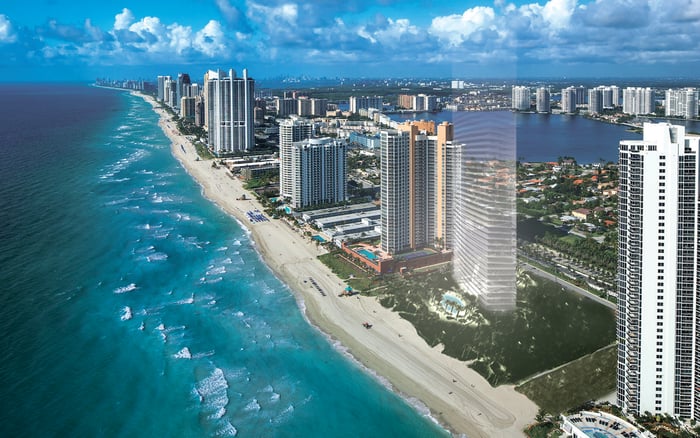
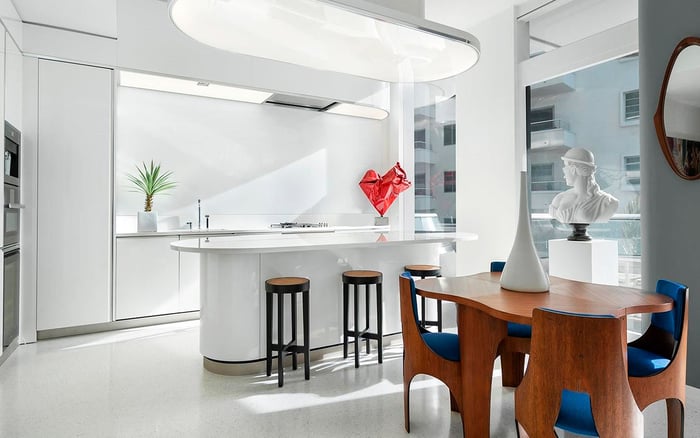
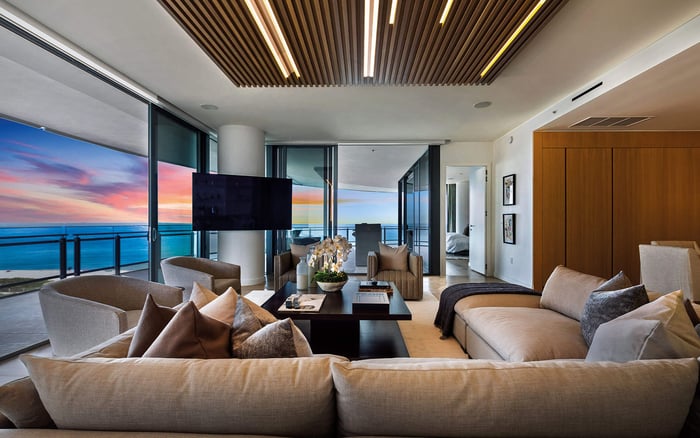
Choosing between Atlantic panoramas and bay-and-skyline views requires more than a preferred outlook. Private arrivals, guest access, household-staff routes, and the practical scope of daily service determine how comfortably a South Florida residence lives.
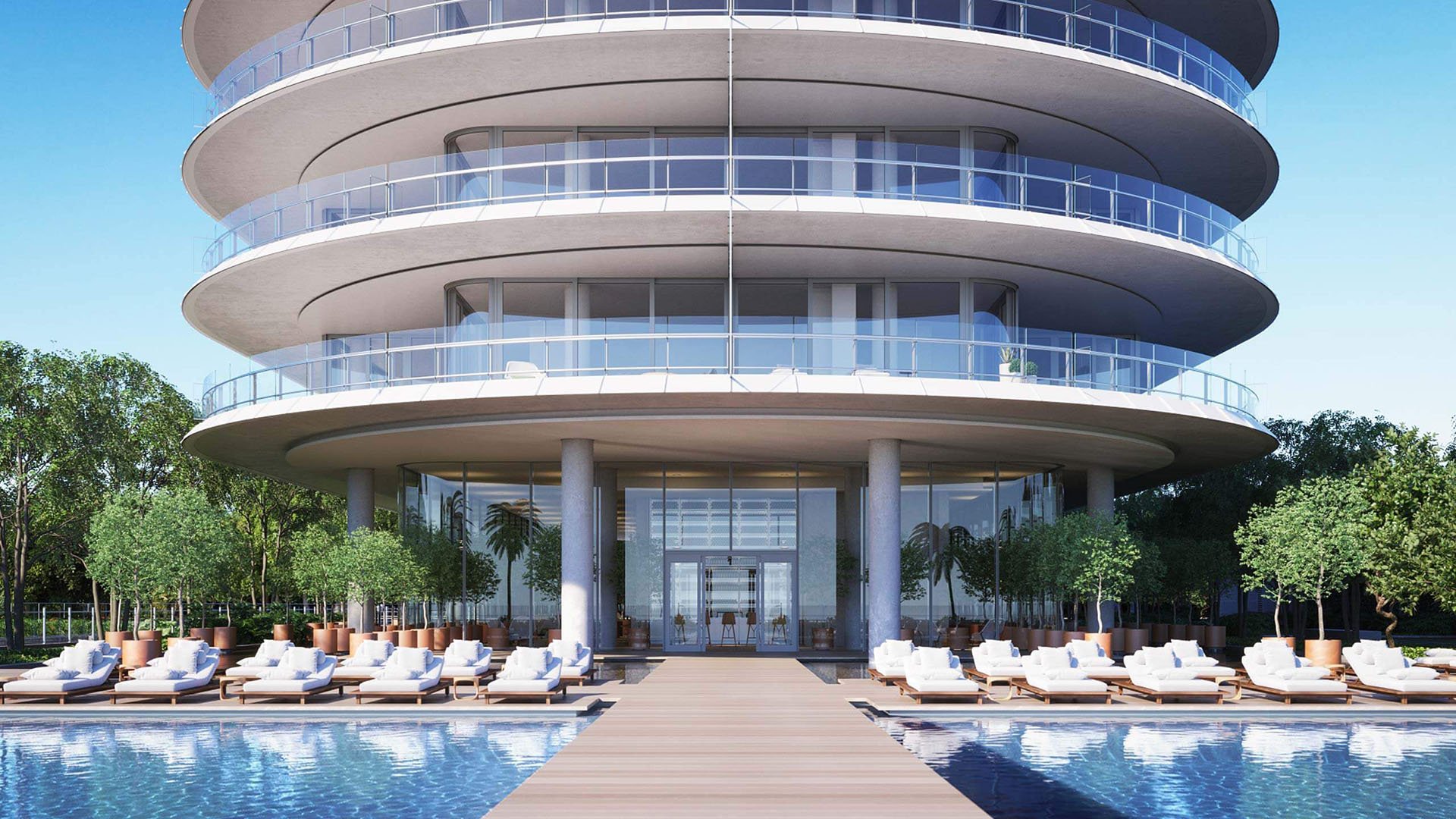
An uninterrupted Atlantic horizon and a layered composition of bay and skyline offer different pleasures. Neither tells a buyer how discreetly guests arrive, where groceries enter, or whether household staff can work without crossing an evening gathering. For a South Florida residence, the view is the emotional decision. Circulation and service deserve an equally deliberate evaluation.
The useful comparison is not simply oceanfront versus bayfront. It is the relationship between outlook, access, and household routine. A private elevator may refine the arrival experience without establishing an independent service route. A concierge may receive packages without providing the provisioning a seasonal household expects. These distinctions matter more than the length of an amenity menu.
For buyers who want the beach to become part of an ordinary day, direct access is a meaningful criterion. Trump Palace in Sunny Isles Beach combines an oceanfront setting, direct beach access, resort-style amenities, and panoramic Atlantic views. Those features establish a beach-oriented lifestyle, not a complete picture of household operations.
In Surfside, Fendi Château Residences Surfside offers beach and pool service, cabanas, and an on-site poolside restaurant. These offerings suit a household that wants time outdoors without arranging every detail independently. Private elevators, concierge, doorman, valet, and 24-hour security address other aspects of the residential experience.
Keep those categories separate during a tour. Beach service does not explain how a caterer reaches the kitchen. Valet does not establish where visiting staff may park. Ask management to describe the sequence behind each service, including hours, charges, eligibility, and any advance-notice requirements.
The choice of outlook need not be exclusive. Fendi Château offers east-west flow-through residences with sunrise and sunset views encompassing the ocean, bay, coastline, and skyline. For buyers drawn to both horizons, the individual residence and its orientation deserve closer attention than a broad waterfront label.
Bayfront should not automatically mean west-facing, either. Elysee Miami has east- and west-facing terraces with Biscayne Bay, Miami Beach, and downtown views, alongside private elevators and foyers. Private-entry features therefore belong on both sides of the comparison.
Examine each candidate room by room. Identify which outlook belongs to the principal living space, which terrace serves dining, and how guests reach it. If the brief calls for a protected bay setting, treat that as a description of the desired environment-not evidence of lower storm exposure, insurance expense, or maintenance obligations.
Fendi Château's 58 residences offer a concrete comparison of scale. South Bay Club, by contrast, has 510 units, with concierge services, a business lounge, and guest parking. Those figures describe building size; they do not establish elevator waits, visitor traffic, or the degree of privacy at a particular residence.
Evaluate privacy as a sequence: vehicle arrival, lobby entry, guest authorization, elevator access, and the threshold of the home. Consider visual privacy inside the residence separately. A private foyer does not resolve questions about sightlines from neighboring terraces or the exposure of entertaining spaces.
For a Miami Beach shortlist that also includes The Perigon Miami Beach, apply the same arrival-and-threshold assessment rather than assuming an address settles the question. Walk the route a dinner guest would take, and ask where access is authorized and where a visitor waits.
An elegant guest arrival and a functional working entrance solve different problems. At The Surf Club Four Seasons Surfside, residential circulation includes private elevator entry, private residential lobbies, and a dedicated Four Seasons arrival. These are specific arrival features, but they do not establish a separate service elevator or staff-only route.
Request the residence floor plan and the building's employee and vendor rules. Trace the path from the permitted entry to the kitchen, laundry, storage, and any proposed staff accommodation. Confirm whether deliveries and employees use the same elevator or foyer as residents, and whether access changes outside designated hours.
Then test three scenarios: a guest arriving while the owners are dressing, groceries arriving during lunch, and household staff entering before the family is awake. Ask management to explain each sequence rather than accepting a general assurance of discretion. The objective is to understand whether daily work can proceed without repeatedly interrupting private rooms or entertaining spaces.
The Surf Club occupies a nine-acre oceanfront site in Surfside, with residences featuring floor-to-ceiling glass and spacious terraces. Its service offerings include housekeeping, butler service, pre-arrival provisioning, grocery provisioning, in-residence dining, and in-residence spa services, alongside concierge, valet, security, and beach and pool service.
For a seasonal owner, pre-arrival provisioning may be more relevant than another shared amenity. For a household with its own employees, the more important question may be how building services coordinate with those employees. Confirm what is available, what requires booking, and what incurs a separate charge. Do not assume that an offering is included or available at every hour.
Bayview Terrace in Miami Beach offers a different operational comparison: Biscayne Bay and Miami skyline views, a 24-hour attended lobby, and concierge support for visitor management and package receiving. Those functions are not equivalent to housekeeping or grocery provisioning. Match the service to the task.
A single-family option changes the evaluation rather than eliminating it. One Biscayne Point home occupies a 12,000-square-foot lot in a gated community, with 80 feet of direct bay frontage. Selected properties there also offer private docks, ocean access, and no fixed bridges. Verify those boating attributes property by property.
For a house, map guest parking, vendor entry, grocery unloading, and the route to working rooms just as carefully as in a condominium. Establish who will perform the services the household needs and how they will enter. The decisive question remains the same: can the residence support the owner's preferred rhythm without making everyday logistics conspicuous?
Choose the outlook that gives the greatest pleasure, then require the access plan and service arrangements to earn equal confidence.
For a considered approach to South Florida waterfront living, explore MILLION.
If branded residences are on your mind — as a home or as an allocation — we would be glad to share what we are seeing, privately.
Begin a quiet conversationNo. Privacy depends on the specific arrival sequence, access controls, floor plan, and sightlines rather than the waterfront category alone.
No. Confirm service elevators, permitted employee entrances, and routes to the kitchen and laundry independently.
Yes. Fendi Château advertises east-west flow-through residences with views encompassing the ocean, bay, coastline, and skyline.
No. Elysee Miami advertises east- and west-facing terraces with Biscayne Bay, Miami Beach, and downtown views.
No. Residence counts establish building scale, but they do not establish visitor volume or elevator waiting times.
The Surf Club advertises private elevator entry, private residential lobbies, and a dedicated Four Seasons arrival. Separate service routes still require confirmation.
Listed offerings include housekeeping, butler service, pre-arrival provisioning, and grocery provisioning. Confirm availability, fees, and booking requirements with management.
Walk through a guest arrival, grocery delivery, and household-staff entry. Request floor plans and employee and vendor rules to understand each route.
No. The setting alone does not establish lower storm exposure, insurance costs, maintenance expenses, or seawall obligations.
No. Private docks, ocean access, and no fixed bridges are attributes of selected listings and must be verified for the individual property.