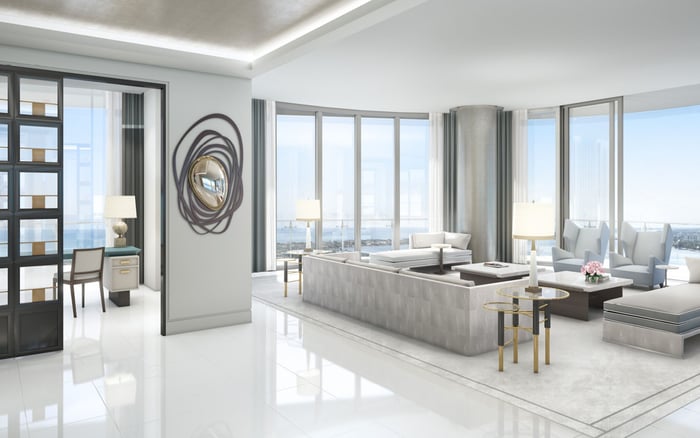
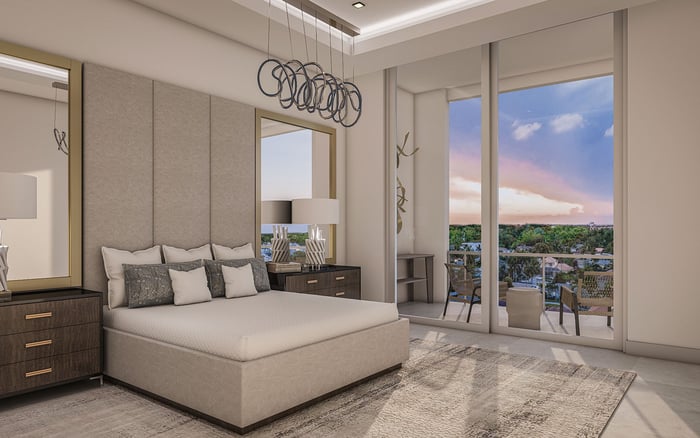
Shorecrest and The Ritz-Carlton Residences® West Palm Beach illustrate two distinct wellness narratives. For buyers, the meaningful comparison lies in current specifications, system verification, maintenance obligations, and measured performance rather than amenities alone.

In an exceptional residence, comfort is often felt before it is examined. Temperature, air movement, water at the tap, and the materials surrounding daily life belong to a quieter category of luxury than a dramatic lobby or an expansive terrace. Yet when wellness becomes part of a purchase decision, those invisible systems deserve visible evidence.
Shorecrest Flagler Drive West Palm Beach and The Ritz-Carlton Residences® West Palm Beach frame that conversation differently. Shorecrest explicitly advertises environmental features within residences. The Ritz-Carlton project emphasizes a wellness-oriented amenity experience. Neither narrative, on its own, establishes superior air quality, water quality, or health outcomes.
The essential distinction is between an advertised feature and demonstrated performance. Buyers need not dismiss wellness language, but they should translate it into specifications, operating responsibilities, and results they can evaluate before assigning it value.
Shorecrest's advertised offering in November 2024 included 199 one- to three-bedroom residences at 1901 North Flagler Drive. Its advertised wellness features in 2024 included ducted fresh air with multiple filtration points, filtered water, multi-zone climate control, low-VOC materials, and green cleaning. Together, these claims offer a concrete starting point for technical diligence.
They do not, however, answer every engineering question. MERV or HEPA ratings, filtration locations, outdoor-air exchange rates, and air-testing protocols remain unspecified in the disclosures reviewed. “Multiple filtration points” describes a feature, not a verified level of indoor-air performance.
The same distinction applies to filtered water. The advertised feature does not establish whether treatment occurs at the building entrance, inside each residence, at selected fixtures, or through point-of-use equipment. Filter certifications and contaminant-specific reductions for lead, PFAS, disinfection byproducts, or microorganisms also remain unspecified.
Because these specifications date from 2024, buyers should obtain current documents before treating advertised systems as installed or operational. Missing public detail calls for clarification; it is not evidence that a system is absent.
The Ritz-Carlton Residences® West Palm Beach promotes a pool deck, fitness and wellness center, spa, and exclusive beach-club membership. These offerings can be evaluated as lifestyle benefits without assuming they validate the environmental performance of an individual home.
Its advertised offering emphasizes amenities, with fewer directly comparable technical details about fresh-air delivery, filtration, water treatment, VOC controls, and cleaning protocols. That is a disclosure distinction, not a basis for declaring one project healthier than the other. Brand-wide amenity descriptions likewise should not be treated as West Palm Beach-specific engineering commitments.
Shorecrest's spa suite, fitness center, and yoga room belong in the same amenity category, separate from its air and water specifications. Buyers can appreciate both categories while evaluating each independently.
Location language also requires precision: The Ritz-Carlton condominium is not oceanfront, has frontage along Flagler Drive, and uses conceptual tower depictions and sight lines. Beach-club membership should not be confused with an oceanfront residential address.
For either project, begin with HVAC diagrams showing fresh-air delivery and filter locations. Request filter classifications, outdoor-air rates, humidity-control specifications, replacement schedules, and commissioning records. The objective is to establish what serves the residence, what serves shared areas, and who maintains each component.
Multi-zone climate control should be assessed separately from filtration and ventilation. A comfort feature does not independently establish contaminant removal or measured indoor-air quality. Similarly, ducted fresh air remains an advertised design characteristic until current documentation establishes the installed arrangement and its operation.
Ask whether indoor-air testing has been performed, where measurements were taken, and under what operating conditions. If testing or commissioning is planned rather than completed, distinguish that future obligation from an existing result. Buyers should also clarify whether technical descriptions represent contractual commitments or design intentions.
West Palm Beach's municipal treatment includes coagulation and sedimentation, carbon- and sand-based filtration, ultraviolet treatment, and other disinfection methods. Source-water investigations identified no potential contamination sources within the assessment area and classified the intake as low concern. During the 2025 algae season, source and finished drinking water were monitored biweekly for algal toxins.
These facts provide public-system context, not a residence-specific guarantee. Building plumbing, storage, stagnation, flushing practices, and private filtration require separate investigation. Drinking water can contain small amounts of contaminants, and detection alone does not necessarily indicate a health risk.
For a private treatment system, request its location, covered fixtures, plumbing materials, contaminant-specific certifications, testing results, and cartridge-replacement schedule. Clarify whether maintenance rests with the association, an operator, or the owner, and how that responsibility is documented.
For lead concerns, the relevant recommendation is to use lead-reduction filters certified by an ANSI-accredited certifier and to use them properly; boiling does not remove lead. Clear-looking water is no substitute for contaminant-specific evidence. Turbidity describes cloudiness and indicates filtration effectiveness, but does not establish every aspect of water quality.
Low-VOC materials and green cleaning warrant the same precision as mechanical systems. Quantified emissions limits and a detailed cleaning protocol remain unspecified in the reviewed disclosures for Shorecrest's advertised features. Request product-level emissions documentation and written cleaning standards rather than relying on broad terminology.
The evidence should progress from marketing claims to current design specifications, installed-system commissioning, operating records, and measured performance. Each step answers a different question. A specification describes the intended system; commissioning addresses installed operation; maintenance records and testing help evaluate what happens afterward.
Buyers who may occupy a residence intermittently should ask how flushing, filter replacement, and other maintenance obligations will be handled during absences. The diligence question is not merely what equipment is promised, but who will keep it operating and how that work will be recorded.
A buyer considering Alba West Palm Beach alongside these projects can apply the same document requests without assuming equivalent systems. Likewise, a shortlist that includes Forté on Flagler West Palm Beach benefits from consistent questions rather than comparisons driven by wellness vocabulary alone.
For Shorecrest and The Ritz-Carlton, the prudent conclusion is not a health ranking. It is a distinction between disclosed environmental features, amenity experiences, and the evidence still needed to establish performance. The strongest purchase file connects current promises to technical documents, identifies maintenance accountability, and keeps measured outcomes separate from aspiration.
For a considered approach to South Florida luxury residences, explore MILLION.
If branded residences are on your mind — as a home or as an allocation — we would be glad to share what we are seeing, privately.
Begin a quiet conversationIts 2024 specifications advertise ducted fresh air with multiple filtration points, filtered water, multi-zone climate control, low-VOC materials, and green cleaning. Buyers should obtain current specifications before treating these features as installed or operational.
The reviewed 2024 disclosures do not identify MERV or HEPA ratings, filtration locations, outdoor-air exchange rates, or air-testing protocols. That disclosure gap does not establish that filtration systems are absent.
The published language does not establish the treatment location or covered fixtures. Buyers should request documentation identifying whether filtration serves the building, individual residences, or selected points of use.
The project promotes a pool deck, fitness and wellness center, spa, and exclusive beach-club membership. These amenities do not independently demonstrate residence-level air or water performance.
No; the condominium has frontage along Flagler Drive, and beach-club membership is separate from an oceanfront residential address.
No; the disclosed features and amenities do not establish comparative measured air quality, water quality, or demonstrated health outcomes.
Request HVAC diagrams, filter classifications and locations, outdoor-air rates, humidity-control specifications, replacement schedules, commissioning records, and indoor-air testing. Clarify which systems serve residences versus common areas.
No; municipal treatment provides public-system context, while building plumbing, storage, stagnation, flushing, and private filtration require separate review.
No, boiling does not remove lead. For lead concerns, the relevant recommendation is a properly used lead-reduction filter certified by an ANSI-accredited certifier.
Buyers should request product-level emissions documentation and written cleaning standards. They should also establish whether advertised programs are contractual commitments or design intentions.